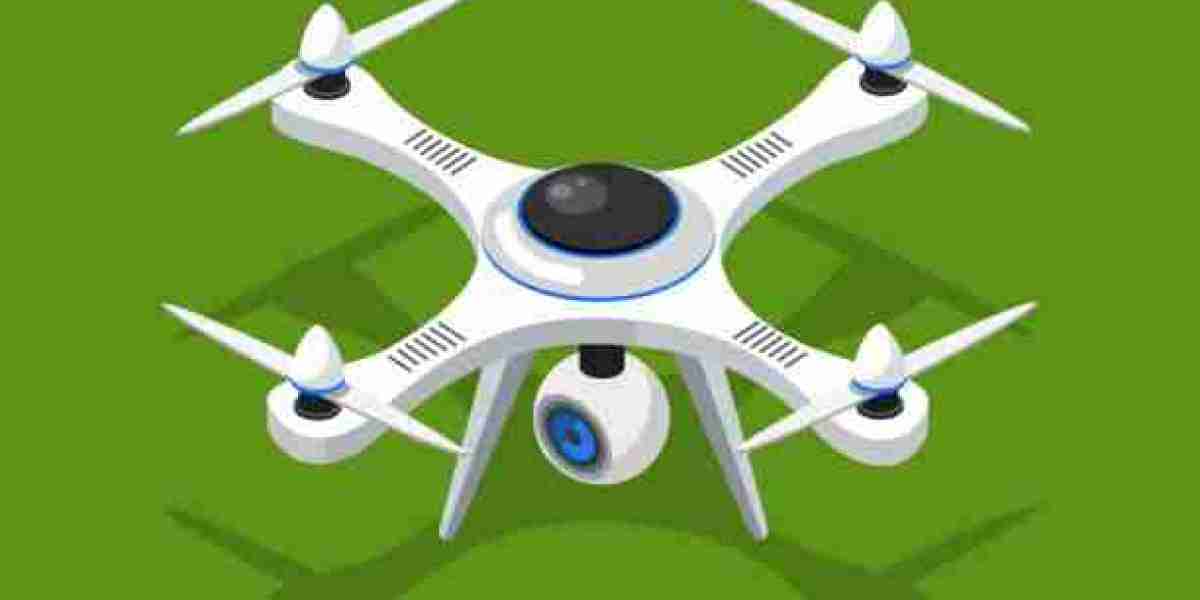

Aerial Robot Market development is gaining attention as businesses explore advanced ways to perform monitoring, inspection, mapping, and data collection. Aerial robots, including unmanned aerial vehicles and other autonomous flying systems, can access locations that may be difficult, costly, or risky for people to reach. Their growing capabilities are creating new possibilities across agriculture, infrastructure, logistics, public safety, and industrial operations. As sensors, navigation systems, and onboard computing continue to improve, organizations are evaluating how aerial robots can support operational efficiency, improve visibility, and help teams make better-informed decisions in complex working environments.
One major development is the wider adoption of autonomous aerial systems that combine flight control, sensors, and intelligent software. These systems can help organizations collect information, follow planned routes, and perform repeatable tasks with less direct manual control. Their suitability depends on operating conditions, mission complexity, safety requirements, and applicable regulations. Businesses are increasingly examining how autonomous flight can complement existing workflows rather than replace every human activity. This creates opportunities for manufacturers and service providers to develop reliable systems that address specific industry needs while maintaining appropriate human oversight.
Technological progress is shaping the design and performance of aerial robots. Improvements in cameras, positioning technologies, obstacle detection, communication systems, and battery management can support more capable operations. High-resolution imaging can help users inspect structures, while specialized sensors can collect data for environmental assessment and industrial monitoring. Software platforms may also assist with mission planning and the organization of collected information. However, system performance varies according to payload, weather, flight duration, connectivity, and operating conditions. Companies must evaluate these factors carefully when selecting aerial robots for specific commercial or operational applications.
Agriculture represents an important application area for aerial robotics. Farmers and agricultural service providers can use suitable aerial platforms to survey fields, observe crop conditions, map land, and identify areas requiring further inspection. These capabilities can help agricultural teams gather information more efficiently across large or difficult-to-access areas. When combined with agronomic knowledge and other farm data, aerial observations may support more targeted decisions about irrigation, crop health, and field management. The practical benefits depend on the sensors used, the quality of collected data, local conditions, and the ability to translate observations into appropriate farming actions.
Infrastructure inspection is another field where aerial robots can provide practical value. Bridges, towers, rooftops, pipelines, power installations, and industrial facilities may require regular observation to identify visible damage or maintenance concerns. Aerial platforms can capture images and other information while reducing the need to position workers in certain difficult-to-reach locations. The technology does not eliminate the need for qualified inspections, but it can help teams identify areas that require closer assessment. Organizations may also use repeatable flight plans to compare observations over time, supporting maintenance planning and documentation.
The use of aerial robots in public safety and emergency response is expanding as agencies investigate ways to improve situational awareness. During floods, fires, search operations, and other emergencies, aerial systems may provide an overview of affected locations and help teams assess changing conditions. Thermal imaging and other specialized sensors can be useful when selected for an appropriate mission. Safe deployment requires trained operators, dependable communications, and coordination with emergency personnel. Privacy, airspace restrictions, weather, and equipment limitations must also be considered. Responsible use is essential when operating in populated areas or sensitive environments.
Commercial adoption also depends on affordability, operational reliability, and regulatory readiness. Organizations must consider equipment costs, training, maintenance, software, insurance, and compliance alongside the purchase price of an aerial robot. Integration with existing information systems can present additional challenges, especially when businesses need secure data storage and consistent reporting. Manufacturers and service providers can address these concerns through user-friendly interfaces, maintenance support, operator training, and solutions designed around clearly defined tasks. Demonstrating measurable operational value can help businesses understand where aerial robotics is practical and where traditional methods remain more suitable.
The future of the Aerial Robot Market will be influenced by automation, improved sensing, artificial intelligence, and growing demand for remote inspection and data collection. Continued development may create opportunities across industrial monitoring, agriculture, infrastructure management, environmental observation, and emergency services. Nevertheless, long-term adoption will depend on reliable performance, responsible data handling, safe operations, and compliance with aviation rules. Companies that combine technological innovation with practical customer support can be better positioned to meet changing requirements. As aerial systems become more capable, organizations will continue evaluating how they can contribute to safer, more informed, and more efficient operations.
FAQs
1. What is an aerial robot?
An aerial robot is a flying robotic system designed to perform tasks such as inspection, mapping, monitoring, or data collection.
2. Which industries use aerial robots?
Agriculture, infrastructure, construction, logistics, public safety, and industrial operations are key application areas.
3. What influences aerial robot adoption?
Technology, cost, reliability, training, airspace regulations, and the needs of each application influence adoption.