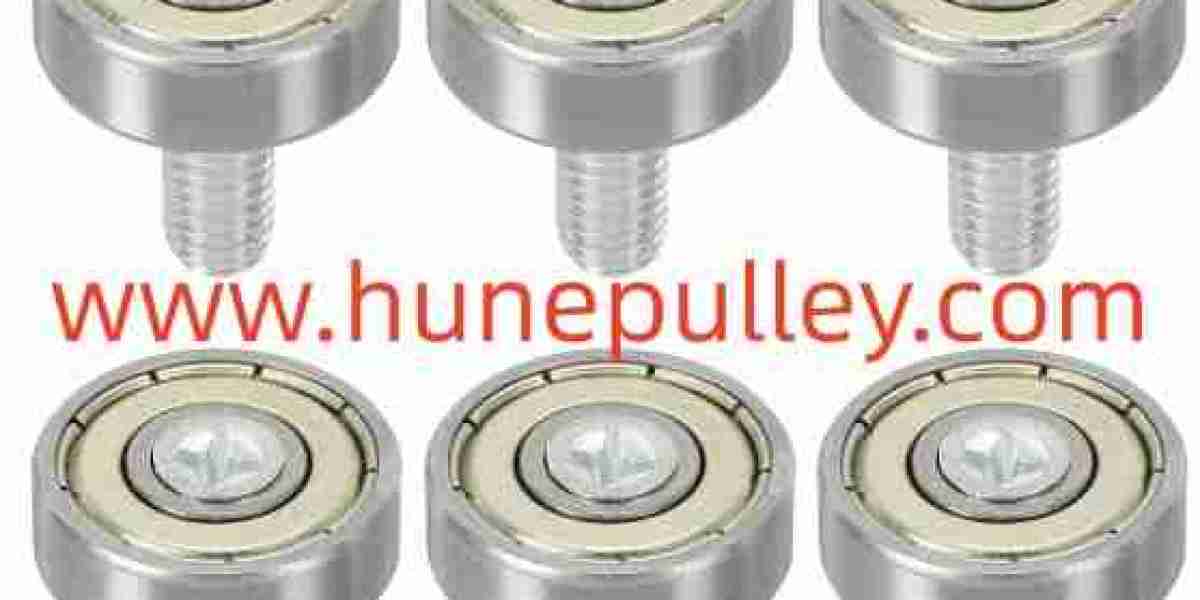

Reliable guided movement begins with the relationship between a roller and its track. A U-Groove Track Roller from Hunepulley provides an opportunity to examine how groove geometry, bearing construction, and mounting compatibility influence the movement of mechanical assemblies. For equipment manufacturers, maintenance teams, and hardware distributors, understanding these details can help with component selection and the development of track systems suited to specific operating requirements.
The U-shaped channel around a roller's circumference is designed to engage with a compatible guiding surface. Depending on the track profile and installation arrangement, this shape can help keep the roller aligned along its intended route. The interaction between the groove and the track affects how the assembly moves, making dimensional compatibility an important part of the selection process.
Different projects place different demands on guided rollers. Sliding gates, material-handling equipment, workshop fixtures, and specialized machinery may operate under different loads and environmental conditions. A component intended for an indoor mechanism may not be appropriate for an outdoor installation exposed to moisture, dust, or changing temperatures. Buyers should consider the intended application before choosing a roller design.
Material selection also influences how the component interacts with its surroundings. Metal rollers may be suitable for applications requiring particular structural properties, while polymer or rubber-covered designs may serve different contact requirements. The appropriate material depends on the expected load, track composition, operating conditions, and maintenance plan. Reviewing the manufacturer's specifications can help determine whether a particular construction fits the project.
Bearing design is another factor worth examining. Bearings support rotational movement and must be compatible with the roller's mounting arrangement. The bore size, shaft fit, lubrication requirements, and protective features can affect installation and ongoing maintenance. In applications where movement occurs frequently, checking the bearing specifications and service guidance can help buyers understand the component's operating requirements.
Accurate dimensions are essential when selecting or replacing a track roller. Groove width, groove depth, outer diameter, overall width, and bearing dimensions should match the intended assembly. A roller that looks similar to an existing component may still differ in ways that affect alignment or contact with the track. Technical drawings and careful measurements provide a practical basis for confirming compatibility before purchasing.
Installation should follow the equipment manufacturer's instructions. The track needs suitable alignment, mounting hardware must be secured correctly, and the roller should follow its intended path without unwanted interference. Once the mechanism is in service, routine inspection can help identify debris, unusual sounds, visible wear, or changes in movement. Addressing these observations according to the relevant maintenance guidance can help prevent avoidable operating problems.
For purchasing teams, communication with suppliers can clarify requirements before an order is placed. Useful details include the track profile, mounting arrangement, intended operating environment, material preferences, and relevant load conditions. Requesting technical drawings and product specifications can also help design teams assess whether a component fits the overall assembly.
A roller is only one part of a guided movement system, but its geometry and construction influence how it works with the other components. Evaluating the track, bearing, mounting arrangement, and operating environment as a connected system helps buyers make more informed decisions. This approach supports equipment planning, replacement part selection, and the development of mechanisms with clearly defined requirements.
Every track system has its own design story, and the right questions can reveal useful options that may otherwise go unnoticed. Visit https://www.hunepulley.com/product/ to browse available hardware solutions and review components for your next engineering or maintenance project. Take a closer look at the parts behind guided movement and find a direction that fits your design.