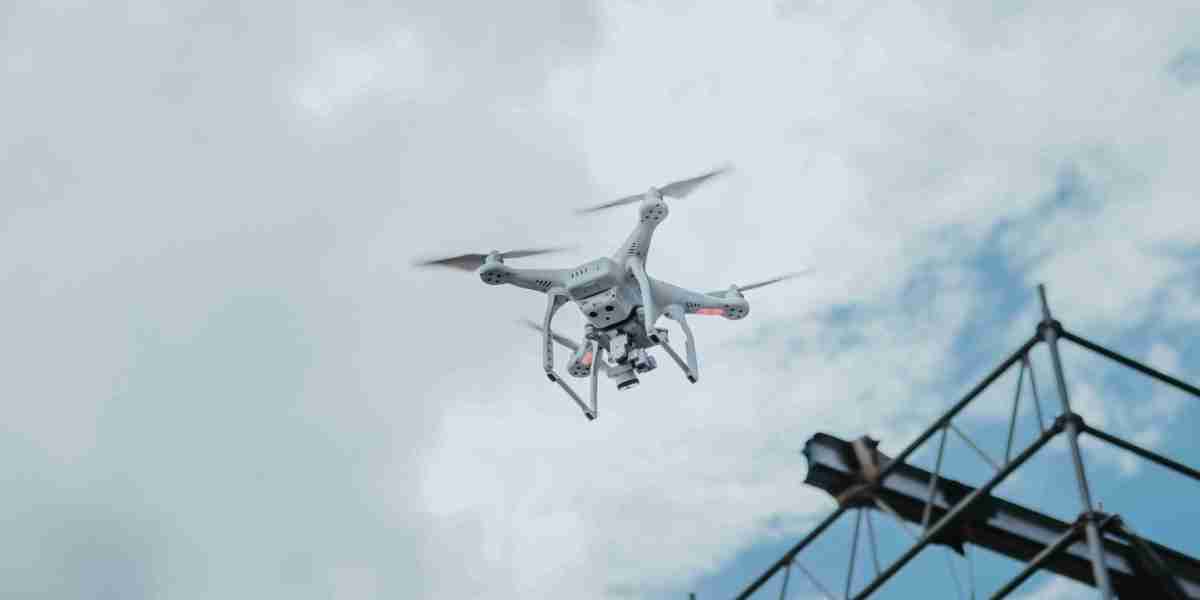

Unmanned aircraft are changing the way businesses, public organizations, and defense agencies approach aerial operations. Drones can support inspections, mapping, emergency assessments, photography, and many other activities. However, the increasing presence of these aircraft creates additional challenges for organizations responsible for protecting sensitive locations. The Counter UAS Market is responding to these challenges through innovations designed to improve aerial detection, tracking, identification, and incident management.
An important development is the growing use of drone detection and tracking technology, which helps security personnel monitor aerial objects and evaluate potentially unauthorized activity. Modern approaches may combine radar, radio-frequency monitoring, optical sensors, thermal imaging, and software-based analysis. By connecting information from different sources, these systems can help operators develop a clearer understanding of what is happening in the airspace around a protected location.
Innovations in Drone Detection
Drone detection is the foundation of an effective counter UAS strategy. Before an organization can determine whether an aerial object presents a concern, it needs a reliable method of recognizing its presence. Detection technologies differ in their operating principles, and each offers particular advantages depending on the environment and the type of aircraft involved.
Radar can monitor moving objects and support the identification of aerial movement within a designated area. Radio-frequency sensors can help detect communication activity associated with certain drones, although their usefulness depends on the aircraft's communication characteristics and operating mode. Optical systems provide visual information, while thermal imaging can assist observation in suitable lighting and environmental conditions.
Acoustic detection offers another approach by identifying sound patterns associated with nearby aircraft. Its practical usefulness depends on distance, background noise, and the surrounding environment. Because individual technologies have limitations, organizations may benefit from evaluating combinations of sensors rather than selecting a solution based on a single capability.
Intelligent Tracking and Identification
Detecting an aerial object is only the beginning of the security process. Operators also need to understand its movement, determine whether it is authorized, and assess whether its behavior requires further investigation. Tracking systems can help maintain awareness of an object's location and movement over time.
Identification may involve evaluating sensor information, flight characteristics, available authorization records, and the operational context. This process is particularly important in locations where legitimate drone activities take place alongside restricted airspace. Without adequate identification procedures, security teams may struggle to distinguish an approved operation from suspicious activity.
Software integration can support this process by bringing relevant information together in a shared interface. Rather than requiring operators to interpret multiple disconnected alerts, a unified platform can help organize observations and provide a clearer operational picture. The quality of the resulting assessment depends on sensor reliability, system configuration, and the information available to the operator.
Artificial Intelligence and Automated Analysis
Artificial intelligence and machine-assisted analysis are increasingly relevant to discussions about modern aerial security. These tools may help classify sensor observations, recognize patterns, prioritize alerts, and identify activity that differs from expected behavior. Such capabilities can be valuable when security teams need to monitor complicated environments with numerous potential sources of movement.
Automation can also support the organization of historical observations and the review of recurring incidents. This information may help security planners understand where additional monitoring or procedural improvements could be useful.
Nevertheless, automated systems can make classification errors. Birds, environmental interference, unusual flight paths, and incomplete sensor information may produce uncertain results. Human oversight remains important, particularly when a decision could affect public safety, aviation operations, or the rights of legitimate drone operators.
The most practical approach is to use intelligent analysis as a support mechanism rather than treating an automated alert as conclusive evidence of a threat.
Airspace Security in Different Environments
Airports require careful coordination because unauthorized drone activity may affect aviation safety and operational continuity. Detection and tracking systems can support awareness, but any response must align with aviation procedures and the responsibilities of relevant authorities.
Military and government facilities may require monitoring arrangements designed around restricted access, operational confidentiality, and the protection of sensitive assets. Counter UAS solutions can form part of a wider security framework that includes physical protection, surveillance, communications, and incident management.
Industrial locations may need to monitor areas containing valuable equipment, hazardous processes, or confidential operations. Meanwhile, event organizers may use suitable aerial monitoring arrangements to identify unauthorized drone activity around crowded venues. Each environment requires a different combination of sensors, operating procedures, and response capabilities.
Challenges to Continued Innovation
Technological innovation does not automatically eliminate operational difficulties. Detection performance may vary with weather, terrain, obstacles, and electromagnetic interference. Systems must also accommodate changes in drone design and operating behavior.
Another consideration is interoperability. Security organizations may already use established surveillance and communication platforms, making compatibility an important factor in purchasing decisions. Training, cybersecurity, software maintenance, and legal compliance also influence the practical value of a deployment.
Countermeasures require particular care because not every organization has the legal authority to disrupt, seize, or otherwise interfere with an unmanned aircraft. Clear responsibilities and lawful procedures are necessary to prevent a security response from creating additional risks.
The Road Ahead for Airspace Protection
Future innovation is likely to concentrate on combining complementary detection methods, improving the interpretation of sensor information, and making security platforms easier to operate. Flexible solutions may help organizations adapt their protection strategies as drone applications and local requirements evolve.
The continuing development of counter UAS technology demonstrates the importance of treating aerial security as part of a comprehensive protection strategy. Reliable sensors, useful software, trained personnel, and responsible procedures must work together to create effective airspace awareness.
FAQs
Q1. How does drone tracking support airspace security?
Drone tracking helps operators follow detected aerial objects, review their movement, and determine whether their activity requires further assessment.
Q2. What role can artificial intelligence play in counter UAS technology?
It can support the classification of sensor information, alert prioritization, and pattern recognition, while human oversight remains important for consequential decisions.