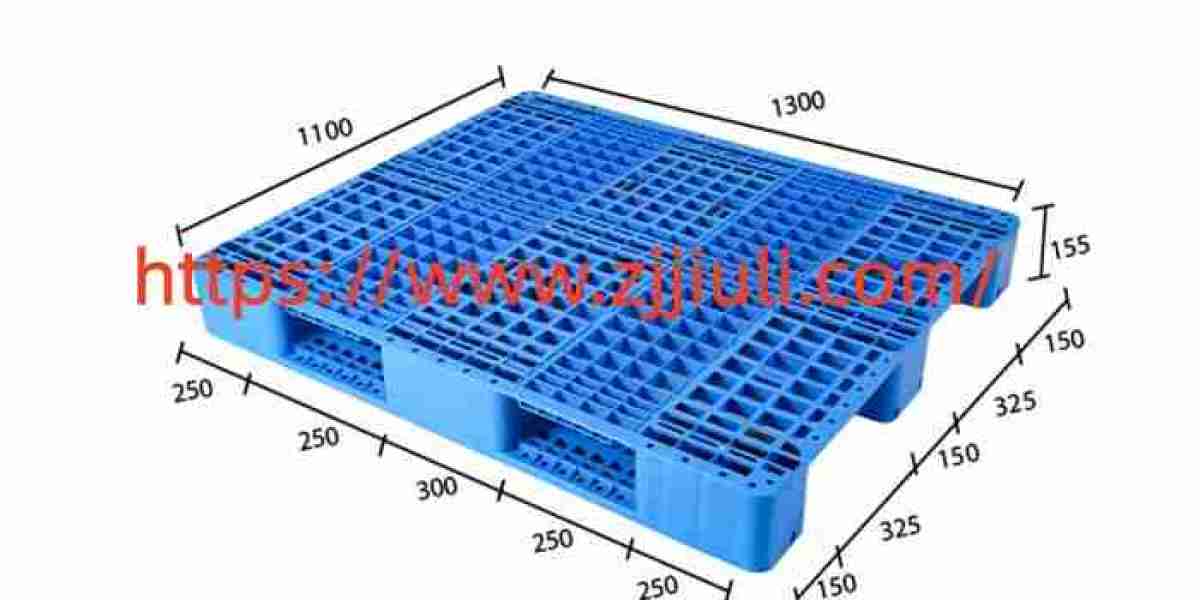

Industrial Plastic Pallets are widely used in warehousing, manufacturing, retail distribution, and transportation because they provide a reusable platform for moving and storing goods. However, not every design serves the same purpose. Some models focus on compact storage when empty, while others are designed for loaded stacking or compatibility with approved racking systems. Understanding these differences helps purchasing teams select products that match their working environments and handling procedures.
A useful starting point is to examine how goods travel through a facility. Products may arrive from suppliers, move through inspection areas, remain in temporary storage, and eventually leave for customers. Each stage can involve different equipment and space limitations. Choosing a suitable platform requires considering the entire process rather than focusing on the purchase price alone.
Nestable models are designed to fit into one another when empty. Their shaped bases allow multiple units to occupy less space during storage and return transportation. This configuration can be useful for distributors, retailers, and businesses that regularly transfer empty units between facilities. By reducing the volume occupied by unused equipment, companies may be able to organize loading areas more effectively.
These designs are particularly relevant when return freight represents a considerable part of logistics planning. Nevertheless, buyers should check the dimensions, nesting ratio, rated capacities, and handling requirements of each model. Nestable construction does not automatically indicate suitability for elevated storage. Before placing any unit on rack beams, confirm that the manufacturer approves the specific model for that application.
Stackable models address a different requirement. Their structures allow loaded units to be placed vertically on an appropriate floor surface when the goods, packaging, and load limits support the arrangement. They may suit manufacturing plants, stockrooms, and distribution facilities where products need to remain grouped between handling stages.
When comparing these products, consider how the load sits on the platform. Goods should be distributed evenly, and the dimensions of the packaging should suit the available deck area. Unstable loads, excessive stacking height, or poorly aligned units can increase operational risks. Clear procedures for stacking, inspection, and movement help warehouse teams maintain consistent handling practices.
Rack compatible models are intended for approved storage systems where the platform rests on supporting beams. Depending on the design, structural ribs, reinforced runners, and other features help distribute the load across the supported span. These products may be appropriate for facilities that depend on vertical storage to manage inventory.
Buyers should pay particular attention to the stated racking capacity. Static capacity refers to a stationary load on a supporting surface, while dynamic capacity relates to movement under specified handling conditions. Racking capacity concerns a different support arrangement and must be assessed separately. Beam spacing, load distribution, temperature, and operating frequency may also affect product suitability. Always consult the manufacturer's specifications for the intended application.
Deck construction offers another point of comparison. Open deck designs may allow drainage and airflow, depending on their structure and intended use. Closed deck models provide a more continuous surface that can simplify routine wiping and the removal of loose debris. The appropriate choice depends on the goods being transported, the cleaning process, and any relevant industry requirements.
Material composition should also be considered. High density polyethylene and polypropylene are common materials used in reusable logistics products. Their practical performance depends on the formulation, construction, and conditions of use. Purchasing teams should check temperature tolerance, impact resistance, chemical compatibility, and maintenance recommendations rather than assuming all products made from the same material perform identically.
Handling access can influence productivity throughout a working day. Some models accommodate forklifts or pallet trucks from two sides, while others provide access from four sides. Compatibility should be checked against the actual equipment used in the facility. Accurate dimensions are also important when goods pass through conveyors, automated handling systems, narrow aisles, or designated storage positions.
Procurement decisions should account for operating costs as well as initial expenditure. Buyers can consider the expected number of trips, return transportation volume, cleaning requirements, inspection schedules, and replacement needs. A nestable design may suit operations with frequent empty returns, whereas a reinforced model may be appropriate for an approved rack storage application. Different departments within the same company may require different configurations.
Before requesting quotations, prepare a specification sheet covering dimensions, intended loads, support conditions, handling equipment, operating temperatures, deck style, and estimated order quantities. Ask suppliers to provide relevant capacity ratings and clarify available options for colors, identification labels, packaging, and customization. Comparing offers against consistent requirements makes technical differences easier to evaluate.
Zhiguang offers product options for businesses seeking reusable handling solutions for warehouse and logistics applications. By matching structural design to actual working conditions, buyers can make informed decisions about storage, movement, and transportation requirements. Businesses can review available products and discuss specifications through https://www.zjjiuli.com/product/ when evaluating options for manufacturing, distribution, and export operations.