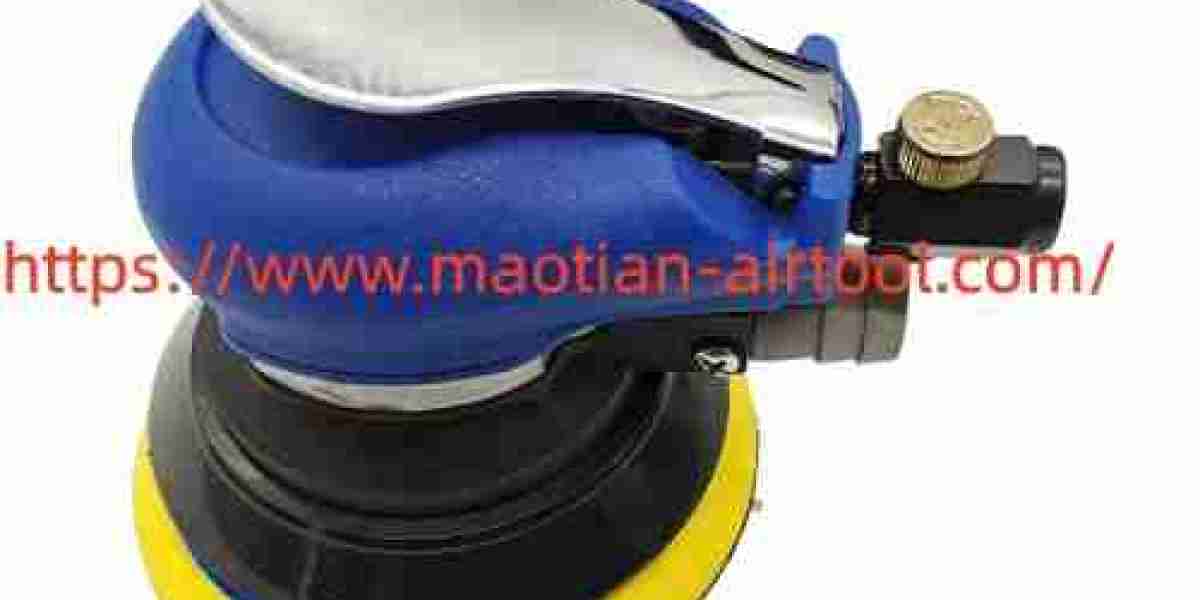

6" Air Random Orbital Sander equipment is widely used in automotive refinishing, furniture production, and industrial surface preparation, where dust control can influence the working environment and finishing process. During sanding, abrasive particles remove material from a surface, producing fine dust that may settle on nearby components, workbenches, and freshly prepared areas. For professional workshops, selecting suitable extraction equipment and establishing appropriate operating procedures can help manage airborne particles while supporting a more organized production process.
Dust collection matters because sanding residue can interfere with several stages of surface finishing. In automotive refinishing, particles left on a panel may affect subsequent cleaning, priming, or coating operations. In furniture manufacturing, accumulated dust can settle on prepared wood surfaces and complicate finishing work. Metal fabrication workshops also need to manage residue generated during preparation, particularly when several processes take place in the same area. Although extraction cannot eliminate every particle, a suitable system can help reduce the amount of dust released into the surrounding workspace.
Buyers should begin by checking how the tool connects to a collection system. Some pneumatic models are designed for central vacuum systems, while others may support compatible portable extraction units or different collection arrangements. The connection diameter, hose routing, adapter availability, and required airflow should be reviewed before purchasing. A poorly matched connection can restrict movement or reduce collection effectiveness. Manufacturers and suppliers should be able to provide product specifications that explain the supported configuration and help buyers assess compatibility with existing workshop equipment.
The sanding pad and abrasive material also influence dust generation. Pad perforations must align with the abrasive holes and the extraction arrangement when a perforated sanding system is used. If the holes are blocked or mismatched, airflow through the working surface may be restricted. Buyers should confirm the pad diameter, hole pattern, attachment method, and availability of compatible abrasives. Different materials may require different grit sizes and preparation methods, so the selection should reflect whether the task involves removing old coatings, smoothing wood, preparing metal, or refining automotive body filler.
Air supply is another consideration when evaluating pneumatic finishing tools. Working pressure and airflow requirements should match the workshop compressor and distribution system. Hose length, internal diameter, fittings, and regulators can affect the air available during operation. When extraction equipment is powered separately, its capacity should also be appropriate for the intended workload. Buyers can review the manufacturer's operating specifications and assess the complete setup rather than considering the sanding unit in isolation. This helps workshops plan equipment purchases around their available utilities and production requirements.
Operator comfort and workplace organization deserve attention as well. Sanding may involve repeated movements across large panels or extended periods of surface preparation. Tool weight, grip design, vibration characteristics, hose flexibility, and exhaust direction can affect handling. Extraction hoses should be arranged to avoid unnecessary pulling or interference with the workpiece. Regularly clearing accumulated residue from work areas and maintaining collection equipment can also support orderly operations. Workers should follow the relevant safety procedures and use suitable respiratory, eye, and hearing protection based on the materials being processed and the workplace risk assessment.
Maintenance planning can help preserve the intended operation of both the tool and its dust collection arrangement. Operators should inspect hoses and couplings for damage, check collection filters according to the equipment instructions, and replace worn abrasives when necessary. Pneumatic tools should receive the specified lubrication and servicing. Before performing maintenance, the air supply should be disconnected and the manufacturer's guidance followed. Workshops should also consider the material being sanded, since some dust may require specific handling and disposal procedures. General collection equipment should not be assumed suitable for every type of dust, particularly where combustible or hazardous materials are involved.
For distributors and production managers, purchasing decisions also involve product documentation, accessory availability, order quantities, and communication with the manufacturer. Maotian provides pneumatic tool options for professional workshop applications, allowing buyers to review equipment requirements in relation to their finishing processes. Before placing an order, businesses can prepare a checklist covering extraction connections, pad specifications, working pressure, air consumption, compatible abrasives, and maintenance arrangements. Sharing these details with a supplier can help clarify whether a proposed configuration matches the intended application.
Dust management is part of a complete surface preparation plan rather than a feature of the tool alone. Matching the equipment with compatible extraction, suitable abrasives, adequate air supply, and consistent work practices can help workshops manage residue throughout daily operations. Businesses looking for pneumatic equipment for automotive refinishing, furniture production, or industrial preparation can visit https://www.maotian-airtool.com/ to review Maotian product information and discuss specifications that suit their working environment and purchasing needs.