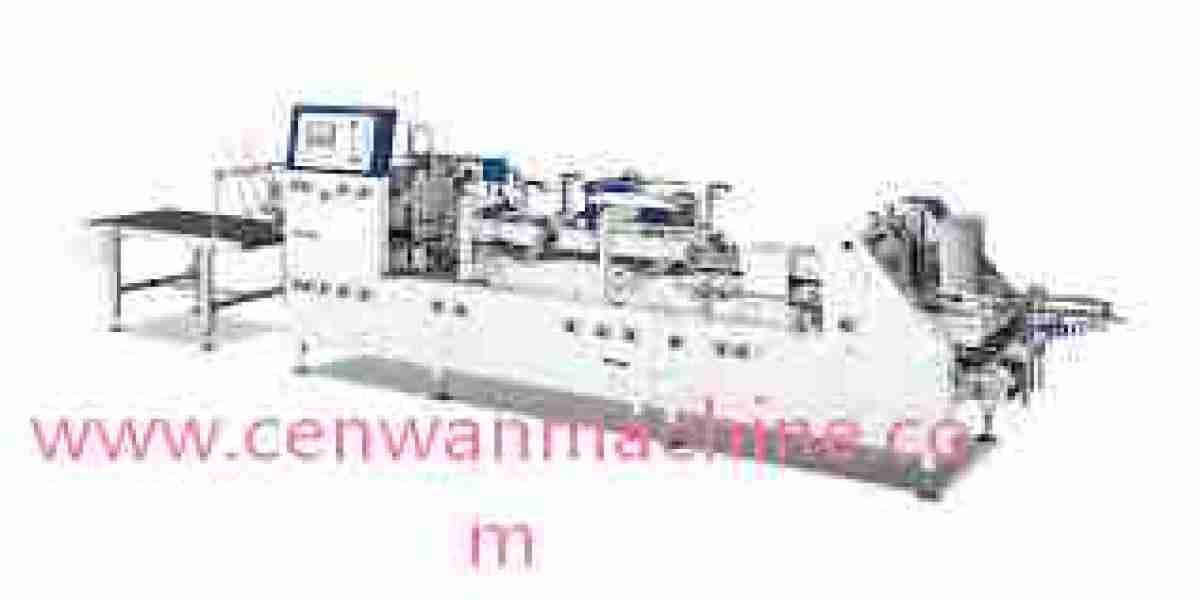

Packaging plants that process multiple board grades often examine whether the folding and gluing equipment in use can accept different adhesive formulations without extensive modification. Questions arise around viscosity ranges, open time, and substrate affinity when the same machine must handle solid bleached board, corrugated flute structures, or coated surfaces within successive jobs. Folder Gluer Machine configurations from cenwanmachine incorporate adjustable application heads and temperature-controlled glue circuits that respond to these material differences. Production supervisors customarily begin by listing the board types scheduled for the coming period and the performance expectations for each finished carton.
Adhesive behavior changes with the surface energy and absorbency of the board. Porous corrugated medium may draw water-based formulations inward, requiring adjusted solids content or modified application volume to achieve secure fiber tear. Dense coated boards present lower absorbency, so adhesives with controlled penetration and faster set characteristics receive preference to avoid prolonged compression times. Hot-melt options appear when rapid bonding under high-speed conditions becomes necessary, provided the machine's melt unit and nozzle array can maintain consistent temperature and flow.
During setup the operator selects the appropriate adhesive reservoir and verifies that pump pressure, nozzle orifice size, and bead pattern match the board caliper and intended glue line width. Trial cartons travel through the folding section so that bond strength can be checked after the compression belt or rollers complete their cycle. Observations of fiber tear, residual tack, or edge lift prompt minor changes to application weight or open time before the full run proceeds. Documentation records the adhesive grade, temperature settings, and board identification for each validated combination.
Machine design includes quick-change fittings and cleanable circuits that allow transition from one adhesive chemistry to another with limited downtime. Residual material is flushed according to the supplier's recommendations so that cross-contamination does not affect subsequent bonds. Temperature zones remain independently controllable, enabling the same unit to process both cold emulsions and heated melts when production schedules demand such flexibility.
After the line stabilizes, monitoring focuses on consistent bead placement and the absence of adhesive squeeze-out that could transfer to belts or fold plates. Retained parameter sets for each board-adhesive pairing permit rapid recall when the same combination reappears. Supporting notes outline the sequence for switching reservoirs and verifying bond quality after each changeover.
Technical dialogue continues so that any observed interaction between a new board lot and the chosen adhesive can be examined and the settings refined. Quantity or mix variations do not alter the core application principles; the same matching logic applies across different order sizes. Guidance supplied with the equipment describes the recommended evaluation steps when an unfamiliar board grade enters the schedule.
Those reviewing folding and gluing equipment intended for mixed board processing can examine available modules and submit material details through the main site at https://www.cenwanmachine.com/product where Folder Gluer Machine information from cenwanmachine is presented together with channels for discussing adhesive compatibility and prior application examples.