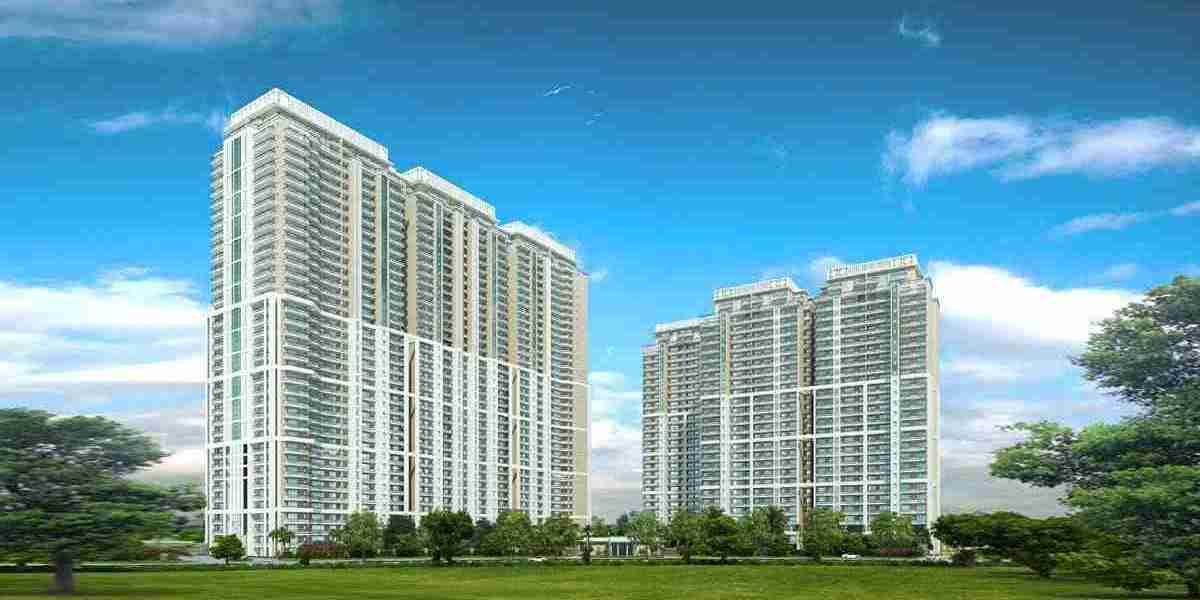

In the realm of high-net-worth portfolio management, ultra-luxury residential real estate serves a dual purpose: capital preservation against inflationary pressures and structured long-term wealth growth. Within Gurugram’s high-value residential market, DLF The Arbour in Sector 63 along Golf Course Extension Road represents a compelling asset class.
Beyond lifestyle considerations, evaluating DLF The Arbour through a strict financial lens reveals how supply-side scarcity, capital appreciation mechanics, rental yield fundamentals, and developer liquidity combine to create an institutional-grade investment vehicle.
1. Supply-Side Scarcity and Uniform Product Standardization
In luxury real estate markets, value dilution often occurs when developments offer mixed unit sizing, leading to fragmented pricing power during secondary market resale phases.
DLF The Arbour protects unit value through strict product standardization:
Single Configuration Defense: By offering exclusively 3,950 sq. ft. 4 BHK residences across all five towers, the project eliminates internal price competition between smaller and larger floor plans.
Constrained Micro-Market Inventory: Limiting the entire 25-acre land parcel to 1,137 homes creates a low density-to-land ratio that protects the asset against regional oversupply.
High Undivided Land Share (UDLS): Unlike high-density housing where land ownership per apartment is minimal, every homeowner at DLF The Arbour holds a significantly higher proportion of underlying real estate equity, protecting long-term intrinsic value.
2. Capital Appreciation Drivers along Golf Course Extension Road
Real estate capital appreciation is driven primarily by surrounding infrastructure investments and corporate demand. Sector 63 sits at the center of several key growth catalysts in the National Capital Region (NCR).
Infrastructure Premium: Proximity to the Southern Peripheral Road (SPR), Sohna Elevated Corridor, and the Delhi-Mumbai Expressway drives demand from senior corporate executives and business owners seeking efficient transit across interstate commerce hubs.
Commercial Absorption Correlation: Golf Course Extension Road continues to attract grade-A multinational corporate headquarters. As high-paying executive jobs expand in nearby commercial towers, demand for adjacent primary housing increases, creating upward pressure on secondary market values.
Historical Velocity: The historic pre-launch and launch absorption rates recorded at DLF The Arbour demonstrated strong early liquidity, establishing an elevated pricing floor for subsequent resale transactions.
3. Executive Rental Yield Dynamics and Expat Housing Demand
While traditional residential assets in India often yield modest rental returns, ultra-luxury residences managed by established developers yield stronger results by targeting multinational C-suite executives and expatriate directors.
C-Suite Tenant Base: Corporate housing allowances for regional directors and expatriate executives prioritize high-grade security, full-service clubhouse facilities, and low-density open spaces. DLF The Arbour’s 1.25 lakh sq. ft. clubhouse and triple-level security infrastructure match these international corporate leasing standards.
VRV and EV Readiness: Pre-engineered infrastructure—such as VRV air conditioning, 100% power backup, and pre-wired EV charging bays—reduces tenant onboarding friction, allowing property owners to command premium corporate rental rates.
4. The DLF Brand Premium and Risk Mitigation
Real estate investments carry execution, legal, and maintenance risks. The identity of the master developer acts as a primary risk mitigation mechanism.
Execution and Balance Sheet Strength: Backed by DLF’s market capitalization and low debt profile, construction schedules and institutional quality delivery carry significantly lower execution risk compared to smaller unlisted regional developers.
Post-Handover Estate Management: Long-term asset value depends directly on maintenance standards. DLF’s dedicated estate management teams preserve common areas, MEP systems, and landscaping to corporate standards, protecting the property against physical and financial depreciation over time.
Summary
DLF The Arbour offers institutional investors and high-net-worth buyers a well-structured real estate asset. Combining product standardization, low-density land ownership, and strong corporate rental demand along Golf Course Extension Road, this Sector 63 development provides a solid foundation for capital preservation and long-term asset growth in Gurugram’s luxury sector.