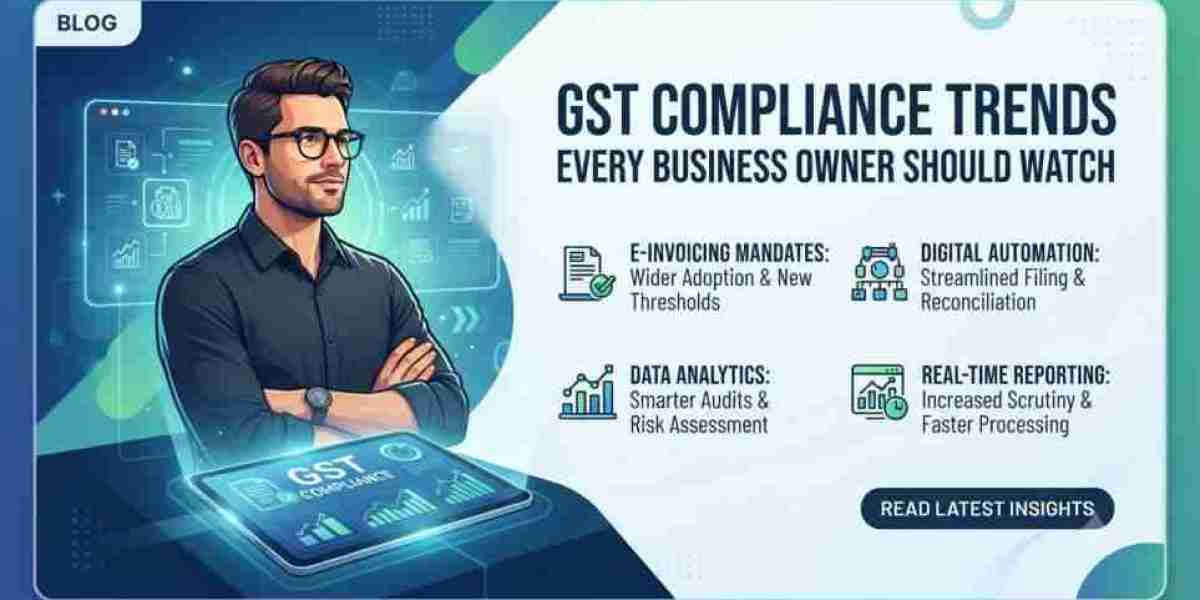

GST compliance is no longer limited to filing returns on time. Businesses today need to maintain accurate invoices, reconcile transactions, track input tax credit, respond to notices, and keep their GST records updated. With technology playing a bigger role in taxation, GST compliance is becoming more digital, data-driven, and closely monitored.
For business owners, staying updated with GST compliance trends can help avoid penalties, reduce errors, and maintain smooth business operations.
This guide explains the major GST compliance trends that every business owner should watch.
What Is GST Compliance?
GST compliance means following the rules and requirements prescribed under the Goods and Services Tax system. It includes GST registration, issuing correct invoices, maintaining records, claiming eligible Input Tax Credit (ITC), filing GST returns, and paying the correct amount of tax.
Businesses may also need to respond to GST notices and keep supporting documents ready for verification.
Key GST Compliance Trends Businesses Should Watch
1. GST Compliance Is Becoming More Digital
GST compliance is increasingly handled through online systems. Businesses can register, file returns, download documents, make tax payments, and track compliance activities digitally.
This has made services such as Online GST Registration useful for businesses that want to complete registration and related processes efficiently.
Business owners should ensure that their GST portal details, email address, mobile number, bank details, and business information remain updated.
2. More Focus on Accurate Data
GST systems depend heavily on transaction data. Even a small mistake in an invoice, GSTIN, taxable value, or tax amount can create reconciliation problems.
Businesses should therefore check:
GSTIN of customers and suppliers
Invoice numbers and dates
Taxable values
CGST, SGST, and IGST amounts
Credit and debit notes
Input Tax Credit details
Sales and purchase records
Maintaining clean records can make GST compliance much easier.
3. GST Return Filing Requires More Attention
Regular and accurate return filing remains one of the most important GST compliance requirements.
Businesses should not wait until the last date to prepare their returns. Sales invoices, purchase records, credit notes, debit notes, and tax payments should be reviewed before filing.
Using GST Return Filing Online services can help businesses manage return filing in a structured manner and reduce the chances of missing important compliance dates.
4. Input Tax Credit Reconciliation Is Becoming More Important
Input Tax Credit can reduce a business's GST liability, but businesses must ensure that the credit claimed is eligible and properly supported by records.
Businesses should regularly compare their purchase records with the relevant GST data and identify differences at an early stage.
Common issues include:
Missing invoices
Incorrect GSTIN
Differences in invoice values
Duplicate invoices
Credit notes not properly recorded
Supplier-side reporting issues
Regular reconciliation can help prevent ITC-related problems.
5. GST Notices Need Quick Attention
GST authorities may issue notices when they identify differences or require additional information.
A business should not ignore a GST notice. The notice should be read carefully, the underlying records should be checked, and a proper response should be submitted within the applicable time.
Maintaining organised GST records makes it easier to respond to such notices.
6. E-Invoicing and Digital Records Need Better Coordination
Businesses covered by e-invoicing requirements need to ensure that invoices are generated and reported correctly.
The information in accounting software, invoices, e-invoices, e-way bills, and GST returns should remain consistent.
Businesses should therefore review their accounting and invoicing processes regularly, especially when their transaction volume increases.
7. E-Way Bill Compliance Remains Important
Businesses involved in the movement of goods need to pay attention to e-way bill requirements.
Incorrect information, expired e-way bills, or differences between invoices and transportation documents can create compliance issues.
Businesses should establish an internal process for checking e-way bills and related documents.
8. GST and Income Tax Compliance Are Becoming More Connected
GST data provides important information about a business's sales and purchases. Businesses should therefore ensure that information reported under GST is consistent with their accounting records and income tax filings.
For this reason, businesses may also use professional Income Tax Return Filing Services to review their income tax compliance along with their broader financial records.
The objective is simple: sales, revenue, expenses, and other financial information should be properly recorded and reported under the applicable tax laws.
9. TDS and GST Compliance Should Be Managed Together
Businesses that deduct tax at source must also meet their TDS compliance requirements.
This includes maintaining accurate records, depositing TDS on time, issuing relevant certificates, and filing applicable returns.
Using TDS Return Filing Online services can help businesses manage their TDS filing process and reduce the risk of missing important deadlines.
GST, income tax, and TDS should not be treated as completely separate activities. A coordinated compliance process can help businesses maintain more accurate financial records.
10. Automated Compliance Tools Are Becoming More Useful
Many businesses are adopting accounting and tax technology to automate repetitive compliance tasks.
Depending on the business, technology can help with:
Invoice management
GST reconciliation
Return preparation
Tax calculations
Payment tracking
Compliance reminders
Document management
Automation does not remove the need for professional review, but it can reduce manual errors and save time.
How Can Businesses Prepare for GST Compliance Trends?
Business owners can follow a simple compliance approach:
Keep Records Updated
Do not wait until the return filing deadline to organise invoices and accounting records. Update records regularly.
Reconcile Regularly
Compare sales, purchases, invoices, and GST-related data at regular intervals instead of checking everything at the end of the financial year.
Track Compliance Dates
Maintain a calendar for GST returns, tax payments, TDS returns, income tax returns, and other applicable filings.
Review ITC Carefully
Claim only eligible Input Tax Credit and keep the necessary documents to support the claim.
Check GST Notices
Monitor the GST portal and registered email address regularly so that important notices are not missed.
Use Professional Support
Businesses with complex transactions, multiple registrations, high turnover, or frequent compliance requirements may benefit from professional tax and compliance support.
Why GST Compliance Matters for Business Owners
Good GST compliance is not just about avoiding penalties. It can also help businesses maintain reliable financial records and improve their overall tax management.
Proper compliance can help with:
Reducing filing errors
Avoiding unnecessary penalties and interest
Maintaining proper ITC records
Responding to tax notices
Improving financial reporting
Managing cash flow more effectively
Building better business credibility
GST Compliance Checklist for Businesses
Compliance Area | What Businesses Should Check |
GST Registration | Keep registration details updated |
Invoicing | Verify GSTIN, tax rate, value and invoice details |
GST Returns | File applicable returns within the prescribed time |
ITC | Reconcile and claim eligible credit |
E-Invoicing | Follow applicable e-invoicing requirements |
E-Way Bill | Check details and validity |
GST Notices | Monitor portal and respond on time |
Income Tax | Keep GST and income tax records consistent |
TDS | Deduct, deposit and report TDS correctly |
Records | Maintain invoices and supporting documents |
Conclusion
GST compliance is becoming increasingly digital and data-driven. Businesses that rely on last-minute filing and manual record keeping may face more reconciliation issues and compliance risks.
Business owners should focus on maintaining accurate records, regularly reconciling transactions, monitoring GST notices, reviewing Input Tax Credit, and keeping GST, income tax, and TDS information consistent.
Whether you are completing Online GST Registration, managing GST Return Filing Online, using Income Tax Return Filing Services, or handling TDS Return Filing Online, a planned compliance process can make tax management easier.
Corpbiz helps businesses manage their tax and regulatory compliance requirements with professional support and a structured approach.
Frequently Asked Questions (FAQs)
1. What is the most important GST compliance requirement for a business?
Regular and accurate GST return filing is one of the most important requirements. Businesses should also maintain proper invoices, reconcile transactions, claim eligible ITC, and pay the applicable tax on time.
2. Is Online GST Registration mandatory for every business?
GST registration requirements depend on factors such as turnover, type of business, nature of supplies, and other conditions under GST law. Businesses should check whether registration is applicable to them.
3. Why is GST Return Filing Online important?
GST Return Filing Online allows registered taxpayers to submit their applicable GST returns electronically. Timely filing helps businesses maintain compliance and avoid applicable late fees, interest, or other consequences.
4. What is Input Tax Credit reconciliation?
Input Tax Credit reconciliation involves comparing a business's purchase and invoice records with relevant GST data to identify differences and ensure that eligible credit is properly claimed.
5. How can businesses manage GST notices?
Businesses should regularly check the GST portal and registered communication channels. If a notice is received, they should understand the issue, review supporting records, and submit a suitable response within the applicable time.
6. Is GST compliance connected with income tax compliance?
GST and income tax are separate tax systems, but a business's financial records are relevant to both. Therefore, businesses should maintain consistency between their GST filings, books of accounts, and income tax records.
7. When should a business use Income Tax Return Filing Services?
Businesses may consider professional Income Tax Return Filing Services when their tax matters are complex, they have multiple sources of income, or they need professional assistance with tax calculations and filing.
8. What is TDS Return Filing Online?
TDS Return Filing Online is the electronic process of submitting applicable TDS statements to the tax authorities. Businesses responsible for deducting TDS need to follow the applicable rules and filing timelines.
9. Can GST compliance be automated?
Several GST compliance activities can be supported through accounting and tax software, including invoice management, reconciliation, calculations, reminders, and return preparation. However, businesses should still review data for accuracy.
10. How can Corpbiz help with GST compliance?
Corpbiz provides professional support for business registration and tax-related compliance services. Businesses can seek assistance with GST registration, GST return filing, income tax return filing, TDS compliance, and other applicable regulatory requirements.
About the Author
Author: Corpbiz Editorial Team
The Corpbiz Editorial Team creates easy-to-understand content on taxation, business registration, regulatory compliance, and legal requirements in India. The team focuses on simplifying complex compliance topics so that entrepreneurs, startups, and business owners can make informed decisions.