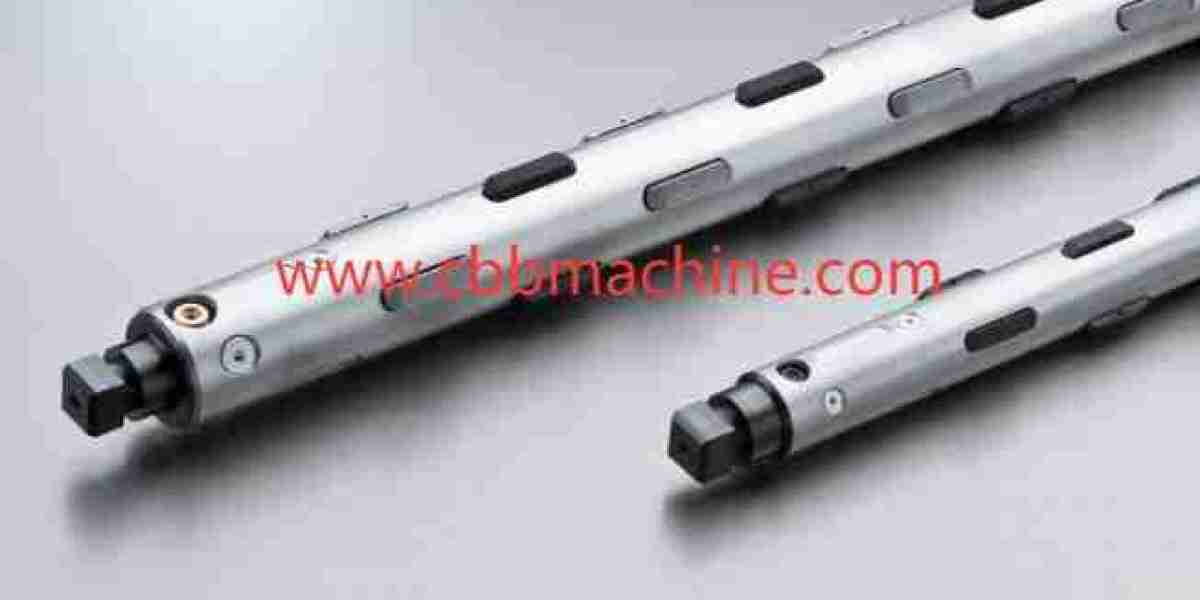

The evolving landscape of industrial handling continues to reshape how factories build consistent, stable, and adaptable processes, and this is where the Air Shaft from Cbbmachine enters the conversation with clarity and purpose. By examining how controlled expansion, surface stability, and repeatable engagement influence production rhythm, manufacturers gain both direction and confidence as they adjust to new material demands and workflow expectations.
Across countless production environments, handling variation remains one of the most persistent challenges. Film, foil, paper, and composite materials all require smooth transitions, predictable grip, and even tension during winding or unwinding. When a shaft responds uniformly to inflation, the material receives a secure seat that avoids wobble and offsets, supporting a continuous path through the line. This seemingly simple motion holds high value because it reduces micro-interruptions, lowers adjustment frequency, and allows operators to focus on the broader workflow instead of minor corrections.
The construction of modern gripping components also influences long-term stability. When internal chambers, outer sleeves, and locking elements interact without friction spikes, the operator experiences consistent responsiveness with each cycle. Such consistency helps stabilize calibration routines, allowing teams to maintain a steady operating rhythm even when material changes are frequent. Smooth transitions between rolls also support downstream operations, ensuring tension control, alignment, and speed all follow a predictable pattern.
Another essential factor is the balance between durability and service practicality. Industrial environments demand equipment that withstands temperature shifts, long operating hours, and repeated inflation cycles. At the same time, maintenance must remain straightforward. When core components can be inspected or replaced without dismantling entire assemblies, the line benefits from shorter stops and a more predictable maintenance calendar. A well-structured shaft design does not aim for extremes; instead, it focuses on reliability that matches the real pace of factory use.
Material diversity further broadens the value of adaptable gripping systems. As product designers introduce new laminates, coatings, and lightweight substrates, handling technology must adjust without forcing factory-wide redesigns. Components that accommodate different roll cores or widths allow teams to shift between production runs smoothly. This adaptability supports both small batches and continuous processing, a flexibility essential in markets that evolve quickly.
Operator experience also plays a role in overall workflow. When adjustment steps are intuitive, inflation points are accessible, and engagement feedback feels natural, training becomes faster and daily tasks proceed with fewer disruptions. A well-considered shaft transforms repetitive motions into a predictable routine, reducing fatigue and improving overall line coordination. This sense of control contributes to a more stable production environment.
As industries expand their expectations for precision, efficiency, and stability, gripping components continue to earn a central place in factory planning. Their influence reaches far beyond the simple act of holding a roll. They guide and support the rhythm of the entire line, reinforcing quality from the start of each run to the final stage.
If you want to see how thoughtful engineering quietly strengthens factory flow, follow the subtle signal at https://www.cbbmachine.com/ and step into the details waiting there.