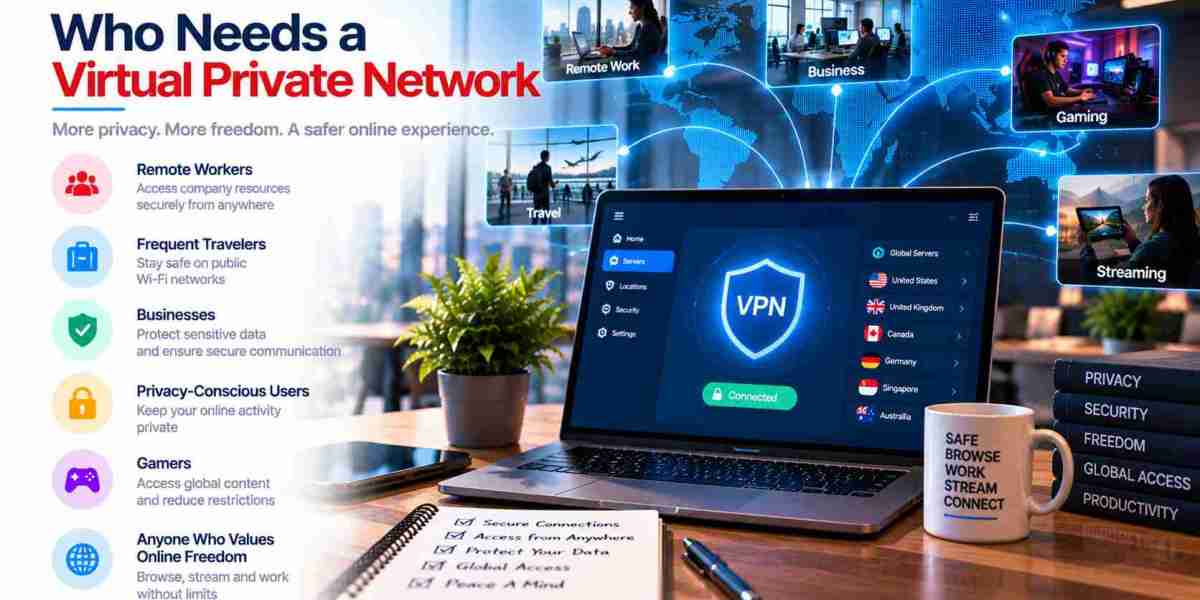

Imagine working from a coffee shop in Lahore, checking company emails, or accessing important business documents through public Wi-Fi. Everything seems normal. But is your connection actually secure?
This is where a virtual private network in Pakistan becomes useful. A VPN creates an encrypted connection between your device and a remote server, helping protect internet traffic from certain forms of monitoring and interception.
For some people, it is about privacy. For businesses, it is about protecting sensitive information. And for remote workers, it can make accessing company resources more secure.
But does everyone need a VPN? Not necessarily. Understanding your internet habits and security requirements can help you decide.
What Is a Virtual Private Network and How Does It Work?
A Virtual Private Network, commonly called a VPN, establishes an encrypted tunnel between your device and a VPN server. Your internet traffic passes through this connection before reaching its destination.
This can help prevent people on the same public Wi-Fi network from easily viewing your traffic. It can also hide your original IP address from websites you visit, although websites may still identify you through cookies, account logins, and other tracking methods.
A virtual personal network in Pakistan can be used on laptops, smartphones, tablets, and other compatible devices. Most modern VPN applications are straightforward. Install the software, sign in, select a server, and connect.
However, a VPN is not complete cybersecurity protection. It does not automatically prevent phishing, malware, weak passwords, or unsafe downloads.
Who Needs a Virtual Private Network in Pakistan?
Remote Workers and Freelancers
Pakistan has a growing remote-work environment, with professionals working for companies and clients across different countries. Freelancers often access project management platforms, cloud storage, client dashboards, and business communication tools.
A VPN can provide an encrypted connection when accessing these resources through public networks. It may also allow employees to connect securely to company systems when the organization has configured remote VPN access.
For example, a freelancer working from a café in Lahore can use a trusted VPN to add protection to their internet connection.
Still, the company’s security policies should always come first.
Businesses and IT Companies
Businesses handling customer information, financial records, employee details, and internal documents need to consider network security seriously.
A business VPN can help employees securely access internal applications without exposing those resources directly to the public internet.
Companies providing cloud computing, software development, and DevOps services in Lahore may also use VPN connections to manage restricted infrastructure or access development environments.
For organizations with multiple offices, VPN technology can support secure communication between locations.
The important part is proper configuration, access control, and regular security reviews.
Students and Researchers
Students frequently use online libraries, educational platforms, learning management systems, and research databases.
A VPN can provide additional privacy when accessing these resources through shared networks, such as university Wi-Fi or public hotspots.
However, students should remember that a VPN does not automatically provide access to paid academic databases or bypass institutional restrictions.
Its primary purpose is to protect the connection, not replace legitimate access permissions.
Travelers and Public Wi-Fi Users
Public Wi-Fi is convenient. Airports, hotels, restaurants, and shopping centres frequently provide internet access to visitors.
But public networks can introduce security risks, especially when users connect to unfamiliar or poorly secured hotspots.
A VPN adds encryption to internet traffic between the device and VPN server, making certain forms of network snooping more difficult.
People travelling between Pakistani cities or internationally may find this useful when handling emails, booking information, or personal accounts.
Even with a VPN, avoid entering sensitive information into suspicious websites.
Understanding Virtual Private Network Security in Lahore
Online security requirements differ between individuals and organizations. Someone browsing social media has different needs from a company managing customer databases.
Virtual private network security in Lahore is particularly relevant for businesses with remote employees, distributed teams, and cloud-based operations.
A properly configured VPN can help organizations establish controlled access to internal resources. It can also support secure connections for employees working outside the office.
However, VPN selection should involve more than comparing subscription prices. Businesses should review encryption standards, authentication options, logging policies, server infrastructure, and technical support.
For sensitive business environments, a VPN should be part of a broader cybersecurity strategy that includes multi-factor authentication, endpoint protection, regular updates, and employee awareness training.
What Should You Check Before Choosing a VPN?
Choosing a VPN requires some attention. Not every provider offers the same level of privacy or technical protection.
Look for a provider that clearly explains its encryption practices, privacy policy, logging procedures, and security features. Independent security audits can also provide useful information.
Connection speed matters too, especially for video meetings, cloud applications, and large file transfers.
For businesses, dedicated support and centralized user management may be important. A company should also confirm that its VPN solution is compatible with existing systems.
Free VPN services may appear attractive, but users should carefully review their data collection practices and business models before trusting them with sensitive information.
Is a VPN Legal and Safe to Use in Pakistan?
VPN use involves both technical and regulatory considerations. Individuals and businesses should follow applicable Pakistani laws, relevant regulatory requirements, and the terms of services they access.
Organizations handling confidential information should consult their IT or compliance teams before deploying a VPN.
It is also important to understand that VPN technology does not make illegal activity lawful or guarantee complete anonymity.
Responsible usage, trusted software, and proper security settings remain essential.
Conclusion
A best vps hosting in pakistan can be useful for remote workers, freelancers, students, travellers, and businesses that need additional online privacy and secure access to digital resources.
The right solution depends on how you use the internet, what information you handle, and whether you need personal protection or business-level network management.
For companies, VPN implementation should work alongside broader cybersecurity practices rather than operate as a standalone solution.
Chromeis supports businesses with technology-focused services, including DevOps services in Lahore and digital infrastructure solutions. Understanding your security requirements is the first step toward building a safer and more reliable online working environment.
Frequently Asked Questions (FAQs)
1. Who should use a virtual private network in Pakistan?
Remote workers, freelancers, business owners, students, and people using public Wi-Fi may benefit from VPN protection. It is particularly useful when accessing sensitive information through networks that are not fully trusted.
2. Does a VPN protect my personal information completely?
No. A VPN encrypts traffic between your device and the VPN server, but it cannot prevent every online threat. Phishing, malware, account compromise, and tracking through cookies may still occur.
3. Is a VPN useful for businesses in Lahore?
Yes. Businesses can use VPN technology to provide secure remote access to internal systems, support distributed teams, and protect connections to company resources. Proper configuration and access controls are important.
4. Can I use a VPN on my mobile phone in Pakistan?
Yes. Most reputable VPN providers offer applications for Android and iOS devices. Users should download applications from trusted sources and review the provider's privacy policy before connecting.
5. What is the difference between a personal VPN and a business VPN?
A personal VPN generally focuses on individual privacy and secure browsing. A business VPN is designed to provide controlled access to organizational resources, often with centralized administration, user permissions, and additional security features.