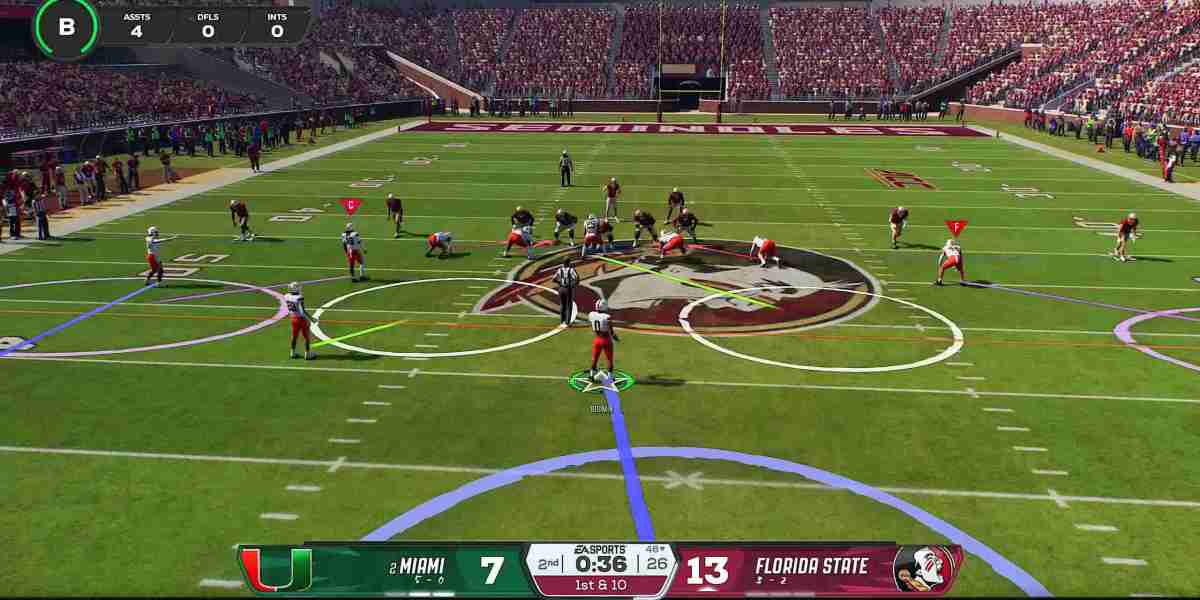

The most memorable college football stories often begin with a team nobody expects to win. An unranked program walks into a massive stadium, faces a heavily favored opponent, and somehow finds a way to compete. College Football 27 Coins builds much of its identity around that emotional experience, emphasizing the pressure, uncertainty, and satisfaction that come with earning success.
Its "More Like Saturday" philosophy puts stadium atmosphere at the center of the experience. A road game against a major program is not supposed to feel comfortable. The crowd can become overwhelming, with screen-shaking effects, blurred pre-play information, and deafening noise making communication difficult.
That changes the psychology of the game.
A player controlling a quarterback may have a carefully designed play in mind, but an extremely loud crowd can make an audible difficult to communicate. Suddenly, the challenge is not simply reading the defense. It is executing under pressure.
The broadcast presentation reinforces the human side of these moments. Holly Rowe follows developments from the sideline, including fatigue and momentum, while Joel Klatt provides tactical analysis.
The result is a stronger sense of narrative. A game can begin as a straightforward matchup and gradually develop into a story about survival.
Dynamic Weather adds another source of uncertainty. Rain or snow can disrupt an offense and force coaches to change their approach. A team built around passing may have to lean on its running game, while defensive players may suddenly become even more important as the contest becomes more physical.
For an underdog, these changes can create opportunities. A difficult environment can make a talent gap less decisive, especially if the less-favored team adapts better.
Dynasty Mode expands that underdog narrative beyond individual games. The Dynasty Blueprint system asks players to take struggling programs and build them into contenders.
NIL funding becomes part of the strategy. Coaches need to determine how to allocate resources to attract players while protecting the program's future.
Athletic director expectations create another source of pressure. Rebuilding takes time, but administrators still expect progress. Poor results can affect job security even when the coach believes the team is moving in the right direction.
Then there is the transfer portal. Players who feel overlooked can leave, meaning roster management never completely settles. Developing a promising player is important, but so is making sure that player sees a future with the program.
Road to Glory provides an even more personal version of the same story. A two-star recruit begins with limited recognition and must compete for playing time. Edge Rusher, Free Safety, and Tight End positions provide different ways to experience the climb.
The weekly calendar forces the player to balance academics, training, recovery, and personal branding. Maintaining eligibility can be just as important as improving physical attributes.
The player's Legacy Score tracks progress throughout the career, creating a long-term record of performance.
Players interested in the broader game economy may encounter terms such as College Football Coins for sale and College Football 27 Coins while exploring community resources surrounding the title.
Then, when the pressure becomes too much, Mascot Mashup offers a completely different experience. With all mascots rated 99 overall, the mode turns football into a celebration of school spirit rather than a serious simulation.
The Reward of Earning It
College Football 27's strongest theme is that success should feel earned. A championship is more meaningful when it comes after difficult road games, recruiting struggles, roster turnover, player development, and strategic adjustments.
The underdog story works because the player experiences the obstacles instead of simply being told that they exist. That gives each breakthrough a greater sense of significance.
From a two-star recruit fighting for a starting role to a one-star program chasing national relevance, College Football 27 makes the climb itself a central part of the football experience.