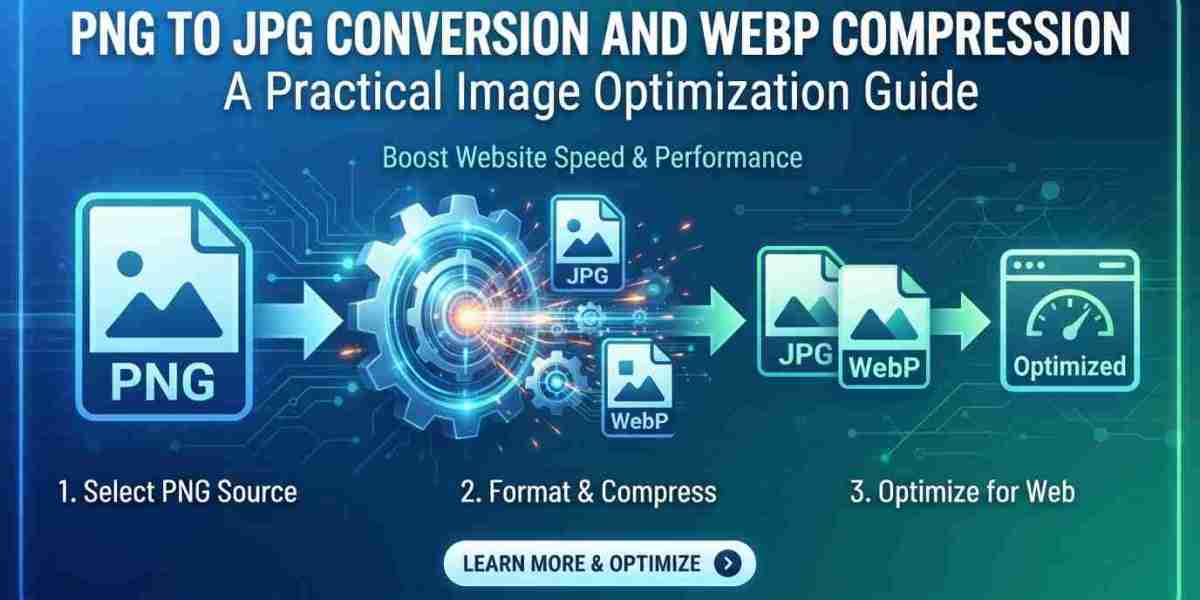

Image optimization is an important part of managing digital content, whether you are preparing images for websites, documents, social media, or everyday sharing. Different formats offer different advantages, so choosing the right one can affect file size, compatibility, and visual quality. An LovelyImgs workflow can make format changes easier when you need to prepare images for a particular purpose.
PNG and JPG are two of the most familiar image formats, but they serve different needs. PNG uses lossless compression and can preserve transparency, while JPG is commonly used for photographs and can produce considerably smaller files through lossy compression. Understanding these differences helps you decide when converting PNG to JPG makes sense.
Why Convert PNG to JPG?
PNG is excellent for graphics, screenshots, logos, illustrations, and images that require transparency. However, PNG files can become relatively large when they contain detailed imagery or high-resolution photographs. JPG can sometimes provide a more practical file size for photographs and general-purpose visual content.
If you frequently work with PNG images, a PNG to JPG converter can simplify the process. Instead of manually opening every image in an editor, you can use a dedicated conversion workflow to create JPG versions when smaller files or broader compatibility are needed.
PNG to JPG for Smaller Image Files
One of the main reasons people convert PNG images is to reduce file size. A photograph saved as PNG may contain considerably more data than is necessary for online viewing or everyday sharing. JPG compression can reduce that data while maintaining an acceptable appearance when an appropriate quality level is selected.
A free PNG to JPG solution can be particularly convenient for occasional tasks. Before converting, however, consider whether the image contains transparency. JPG does not support transparent backgrounds, so transparent areas need to be represented by a background color in the resulting image.
Using an Online PNG to JPG Converter
When you need to convert PNG image to JPG, an online tool can provide a straightforward workflow without requiring desktop image-editing software. This can be useful when you are working from different devices or only need to convert a few images.
For a simple browser-based workflow, you can use this PNG to JPG conversion tool. Upload your PNG file, select the desired output, and download the resulting JPG. For larger collections, a batch workflow can help reduce repetitive manual steps.
It is important to remember that changing .png to .jpg in a filename does not actually convert the image. The image must be re-encoded into the JPG format.
PNG to JPG: What Does “I Love” Mean?
Searches such as png to jpg i love or i love png to jpg can sometimes appear when people are looking for simple online conversion solutions. Regardless of the wording used in a search, the underlying task is usually the same: transform a PNG image into a JPG file while maintaining a useful balance between quality and size.
The conversion process should be selected according to the image's purpose. A detailed photograph may benefit from JPG compression, while a logo or graphic containing transparency may be better kept as PNG.
Batch PNG to JPG Conversion
Converting a single image is easy, but processing a large collection can take more time. A batch PNG to JPG workflow lets you handle multiple images using consistent settings.
Batch conversion can be useful for photographers, designers, website owners, content creators, and businesses managing image libraries. Before starting, keep your original PNG files in a separate location. This ensures that you can return to the original versions if the converted JPG files do not meet your requirements.
Consistent file naming is also useful. Keeping recognizable names while changing the format makes it easier to identify converted files later.
Understanding WebP Compression
PNG and JPG are not the only formats worth considering. WebP is another modern image format designed to provide efficient compression for web content. It can support both lossy and lossless compression, depending on how the image is encoded.
If you are working with WebP files, this WebP compression guide provides additional information about reducing file size while aiming to preserve visual quality.
The important point is that compression should be matched to the purpose of the image. A smaller file is useful, but excessive compression can introduce artifacts, reduce sharpness, or affect fine details.
WebP Lossless vs. Lossy Compression
WebP lossless compression preserves the image information while reducing the amount of storage required through more efficient encoding. Lossy WebP compression, on the other hand, discards some image information to achieve greater file-size reductions.
Neither approach is universally appropriate. Lossless compression can be useful when preserving exact visual information is important. Lossy compression can be more practical when minimizing file size is a priority and small visual differences are acceptable.
When evaluating compression, compare both the original and optimized files. A percentage reduction in file size is useful, but visual quality should also be considered.
WebP Image Optimization
Effective WebP image optimization involves more than simply selecting the WebP format. Image dimensions, compression settings, image content, and intended display size all influence the final result.
For websites, oversized images can unnecessarily increase page weight. Creating images close to the dimensions at which they will actually be displayed can help avoid storing and transferring pixels that are never visible to the user.
For photographs, moderate lossy compression may provide a good balance between appearance and file size. Graphics with text, sharp lines, or transparency may require different settings.
Choosing PNG, JPG, or WebP
Each format has its own practical applications:
PNG: Useful for graphics, screenshots, logos, and transparency.
JPG: Often suitable for photographs and situations where smaller file sizes are important.
WebP: Useful for modern web workflows where efficient image delivery is a priority.
The best choice depends on the image rather than a universal rule. A logo with transparent areas may benefit from PNG, while a photograph may be better suited to JPG or WebP.
How to Optimize Images Without Losing Too Much Quality
Start with the original image whenever possible. Create an optimized copy instead of repeatedly editing and compressing the same file.
Next, consider the required dimensions. If an image will only be displayed at a relatively small size, there may be little benefit in keeping extremely large dimensions.
Finally, select a compression level appropriate for the content. Review the resulting image at normal viewing size and pay particular attention to text, faces, edges, and fine details.
This process can be applied to both PNG-to-JPG conversion and WebP optimization. The objective is not simply to create the smallest possible file, but to achieve a useful balance between quality and efficiency.
Final Thoughts
PNG-to-JPG conversion can be useful when you need smaller photographic files or a format better suited to a particular workflow. However, PNG remains valuable for graphics and transparency, so conversion should be based on the intended use of the image.
WebP provides another option for efficient image delivery, with both lossy and lossless compression approaches. By considering dimensions, format, compression level, and visual requirements together, you can create image files that are easier to store, share, and use online.
Frequently Asked Questions
1. What is the easiest way to convert PNG to JPG?
You can use an online PNG-to-JPG converter. Upload the PNG image, process it, and download the resulting JPG file.
2. Does converting PNG to JPG reduce the file size?
It can, particularly when the PNG is a detailed photograph. JPG uses lossy compression, which can produce smaller files, although the final size depends on the image and selected quality settings.
3. Can I convert multiple PNG files to JPG at once?
Yes. A batch PNG-to-JPG workflow can process multiple files together and is useful when managing a large image collection.
4. Is WebP lossless compression better than JPG?
They use different approaches and are designed for different purposes. WebP can use lossless or lossy compression, while JPG traditionally uses lossy compression. The appropriate choice depends on the image and how it will be used.
5. How can I optimize a WebP image?
You can optimize WebP by selecting suitable dimensions and compression settings based on the intended use. Compare the optimized image with the original to ensure the reduction in file size does not introduce unacceptable visual changes.