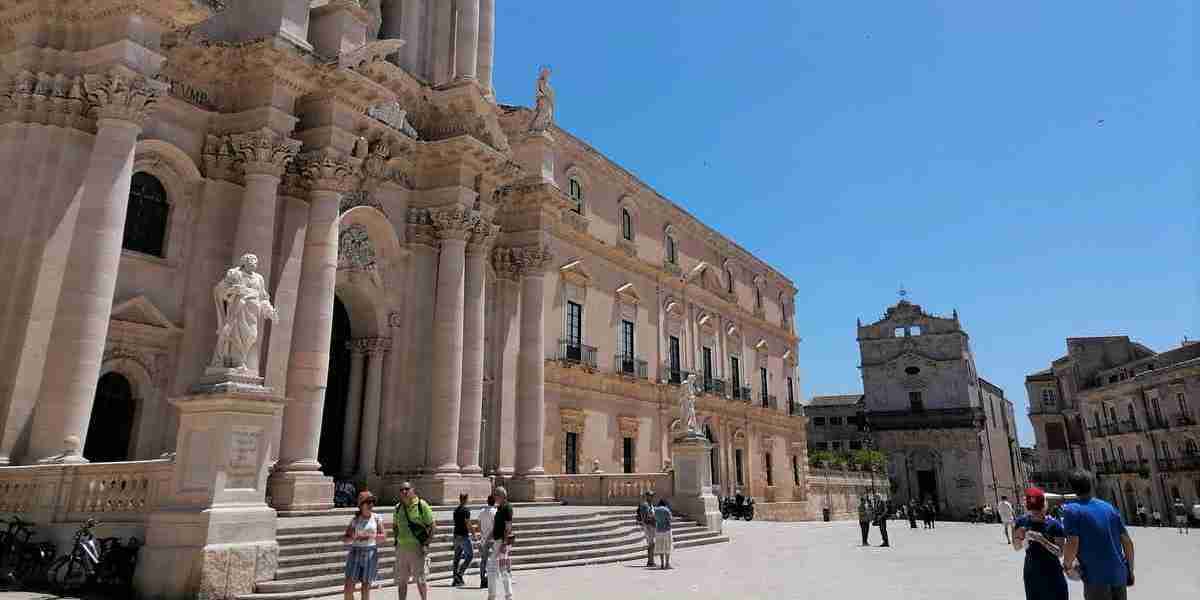

Few places in Sicily demonstrate the island's layers of history as clearly as southeastern Sicily. Ancient Greek monuments, waterfront streets, medieval influences, and elegant Baroque buildings can all be experienced within the same journey. A Private tour of Syracuse, Ortigia and Noto brings these contrasting destinations together, creating an itinerary that moves from the archaeological heritage of Syracuse to the character of Ortigia before ending among the ornate streets of Noto. For travelers with limited time, it is an especially appealing way to experience several different sides of Sicily in one day.
Why Do These Three Destinations Work So Well Together?
Syracuse, Ortigia, and Noto each represent a different chapter in the history of southeastern Sicily. Syracuse is associated with the ancient Greek world and its impressive archaeological remains. Ortigia, the historic island at the heart of Syracuse, combines ancient structures with later architectural influences and a lively waterfront atmosphere.
Noto presents yet another transformation, with its distinctive late-Baroque architecture dominating the historic centre. The contrast makes the itinerary feel varied rather than repetitive. Travelers can spend part of the day among ancient ruins, another portion walking beside the sea, and later admire elaborate stone façades and historic palaces in Noto.
Starting With Ancient Syracuse
For many visitors, the archaeological heritage is the natural starting point. The Archaeological Park of Neapolis contains some of Syracuse's most important ancient monuments, including the Greek Theatre and the Ear of Dionysius. The scale of the site helps explain why ancient Syracuse became such an influential Mediterranean city.
The archaeological section can be particularly rewarding for travelers interested in history because the remains are not isolated monuments. They form part of a larger landscape that demonstrates the importance of Syracuse during the Greek and Roman periods.
Walking Through Ortigia
After the archaeological sights, the atmosphere changes when the itinerary moves toward Ortigia. The historic island is compact enough to explore on foot, making it ideal for discovering its streets, squares, churches, and waterfront.
Among the highlights are the Fountain of Arethusa and the Temple of Apollo, while the Cathedral of Syracuse demonstrates how different periods of architecture can exist within the same historic setting. The cathedral incorporates elements of an ancient Greek temple, providing a particularly striking example of how Syracuse's past has remained part of its present.
Why Private Transportation Makes a Difference
Trying to connect these destinations independently can add unnecessary complications to a day that already contains several sightseeing stops. Private transportation allows travelers to move between locations without having to coordinate multiple connections or work around a public transport timetable.
A Catania private tour can also be a useful starting point for travelers staying in eastern Sicily, as Syracuse and Noto can be incorporated into a longer day from the Catania area. Current tour itineraries commonly offer pickup from hotels or agreed meeting points and use private, air-conditioned transportation.
Experiencing Noto's Baroque Character
The final stage of the journey introduces a completely different visual identity. Noto is renowned for its Baroque architecture, with warm-toned stone façades, monumental churches, elegant balconies, and carefully planned streets creating an unusually cohesive historic centre. The Cathedral of Noto is one of the major landmarks, but the experience is not limited to one building.
Walking through the surrounding streets reveals palaces, churches, public buildings, and decorative details that make the town particularly rewarding for architecture enthusiasts and photographers.
How Much Time Should You Allow?
A combined itinerary needs sensible pacing. Current private tour offerings commonly allocate several hours to Syracuse and Ortigia before continuing to Noto, with overall durations generally ranging from around six to nine hours depending on the itinerary and starting point.
That means travelers should decide beforehand whether their priority is archaeological sightseeing, exploring Ortigia's streets, or taking a slower walk through Noto. Trying to add too many optional attractions can make the day feel rushed, so a focused itinerary is usually more enjoyable.
Who Is This Day Trip Best For?
The route works particularly well for travelers who want cultural variety rather than a single-theme excursion. History enthusiasts can concentrate on the archaeological sites, architecture lovers can spend more time in Noto, while couples and photographers may prefer the combination of Ortigia's waterfront atmosphere and Noto's elegant streets.
Families and small groups can also benefit from a private format because the pace can be adapted more easily around the needs of the people traveling together.
What Should You Keep in Mind?
Comfortable walking shoes are essential because both Ortigia and Noto are best appreciated on foot. The archaeological park also involves outdoor walking, so water and sun protection are sensible additions during warmer months. It is equally important to distinguish between a private driver experience and a fully guided archaeological tour.
Some itineraries are primarily focused on private transportation and sightseeing, while others include a specialised guide. Travelers who want detailed historical interpretation should check the exact inclusions before choosing an itinerary.
Final Thoughts
A Private tour of Syracuse, Ortigia and Noto offers an unusually rich introduction to southeastern Sicily because it connects three distinct experiences within one journey. Ancient Greek heritage, the atmospheric streets of Ortigia, and Noto's extraordinary Baroque architecture create a natural progression through different periods of Sicilian history. With private transportation and a thoughtfully paced itinerary, travelers can experience this contrast comfortably while gaining a deeper appreciation of the cultural diversity that makes southeastern Sicily so compelling.