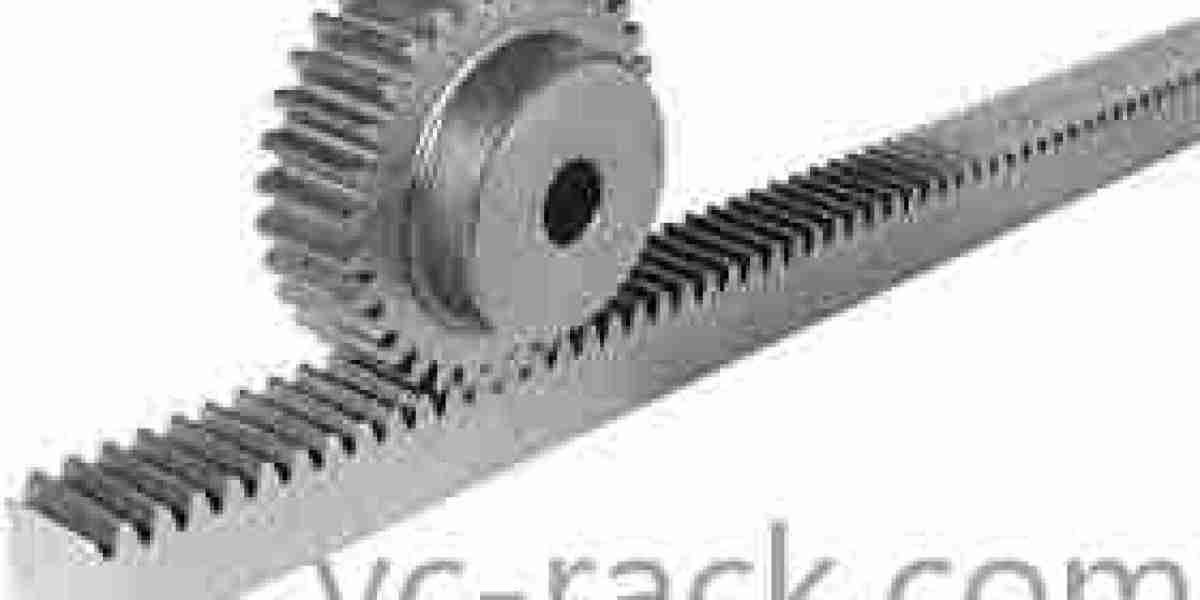

In modern mechanical transmission, Ground Gear Rack solutions are valued for their ability to support accurate and repeatable linear movement in automated equipment. Their performance is influenced not only by tooth geometry but also by material selection, machining methods, heat treatment, surface finishing, and inspection procedures. For industrial manufacturers, understanding these factors is essential when developing transmission components for machinery that requires stable movement and dependable positioning.
The manufacturing process begins with an appropriate material strategy. Gear racks experience repeated contact forces during operation, so the base material must provide a suitable balance between strength, toughness, machinability, and dimensional stability. Different industrial applications may require different material characteristics depending on load conditions, operating environments, motion frequency, and system architecture. Zhejiang Yuchen Transmission Technology Co., Ltd. approaches transmission manufacturing from a process-oriented perspective, considering material behavior as part of the complete production chain rather than treating material selection as an isolated decision.
Tooth geometry is another important factor. The tooth profile determines how the rack interacts with its mating gear and directly influences motion transfer. Small deviations in tooth form, pitch, alignment, or spacing can accumulate during continuous movement. Precision machining therefore plays an important role in maintaining consistent engagement. Computer-controlled production equipment can help manufacturers manage complex cutting operations while maintaining repeatability between production batches.
Surface quality also deserves careful attention. During operation, contacting surfaces are exposed to friction and mechanical interaction. A properly controlled finishing process can improve the consistency of the working surface and help reduce unwanted variations in engagement. Grinding and related finishing technologies are particularly useful when a transmission system requires refined tooth geometry and stable contact characteristics.
Heat treatment can further influence mechanical behavior. Depending on the selected material and production route, controlled thermal processing may be used to improve hardness, wear resistance, or structural stability. However, heat treatment must be carefully integrated with machining because thermal processes can introduce dimensional changes. Manufacturers need to consider the sequence of rough machining, thermal treatment, precision finishing, and final inspection to achieve the intended geometry.
Dimensional inspection is therefore an essential part of production quality management. Manufacturers may evaluate tooth dimensions, pitch consistency, straightness, surface condition, and other relevant characteristics according to the requirements of the application. Consistent inspection helps identify deviations before components enter the final assembly process. For industrial buyers, this manufacturing discipline can be as important as the nominal design itself because transmission reliability depends on the consistency of actual production.
Another consideration is system integration. A rack is rarely used as an independent component. It normally works together with a gear, motor, guide mechanism, bearing arrangement, and control system. The quality of each interface affects overall motion behavior. If the rack and mating gear are not properly matched, even a precisely manufactured component may not deliver the expected operating result. Engineering teams should therefore evaluate the complete transmission structure instead of selecting individual components without considering their interaction.
Noise and vibration can also provide useful indicators of transmission quality. Irregular tooth contact may create changes in mechanical force during movement, potentially increasing vibration or audible operating noise. Accurate machining, proper alignment, suitable lubrication, and appropriate assembly practices can help create smoother engagement. These considerations become increasingly important in automated equipment where repeated movement occurs over extended operating cycles.
Digital manufacturing technologies are changing how transmission components are developed. Three-dimensional modeling, computer-aided manufacturing, simulation, and digital inspection can connect design information with production processes more effectively. Engineers can evaluate potential interference, alignment, and motion behavior before physical production, while digital inspection tools can support more systematic quality verification. This integration can shorten development cycles while improving manufacturing consistency.
For automation equipment, repeatability is particularly important. Linear positioning mechanisms are often connected with robotic systems, handling equipment, packaging machinery, machining centers, and other production platforms. In these environments, inconsistent motion can influence the performance of the entire machine. A carefully engineered Ground Gear Rack can contribute to predictable linear transmission when its material, geometry, surface condition, and installation are properly matched to the application.
Maintenance should also be considered during system design. Clean working conditions, appropriate lubrication practices, alignment checks, and regular inspection can help preserve transmission performance. Excessive contamination or improper installation may accelerate wear regardless of manufacturing quality. A complete engineering approach therefore combines component precision with correct system integration and maintenance procedures.
For manufacturers and international buyers, evaluating production capability is often more useful than focusing on a single technical feature. Material control, machining experience, finishing technology, inspection procedures, engineering support, and production consistency all influence the final result. Zhejiang Yuchen Transmission Technology Co., Ltd. integrates these considerations into its manufacturing approach to support different industrial transmission requirements. Companies seeking further information about suitable solutions can explore the product resources available at https://www.yc-rack.com/product/spur-gear-rack/ when evaluating Ground Gear Rack applications for precision linear motion.