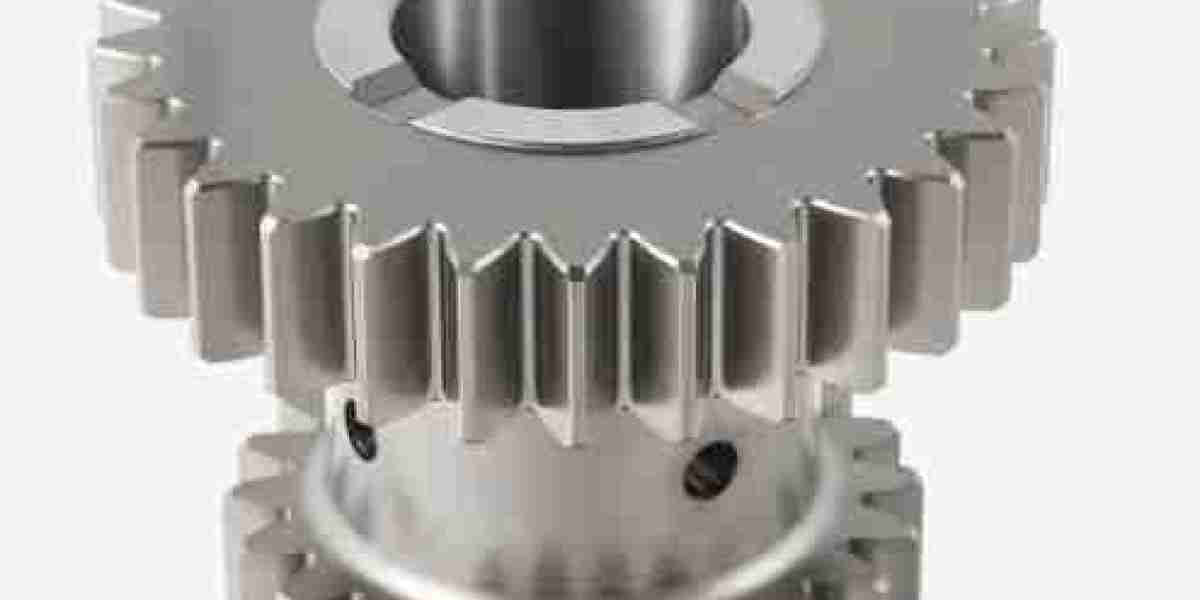

A Chinese gear manufacturer can produce a dimensionally accurate sample without necessarily having the process controls needed for consistent volume production. For buyers, the more useful question is what happens behind that sample. Material identification, machining records, heat treatment data, and inspection results all contribute to a traceability system that can follow a gear from raw material through finished production.
Process integration can make this system easier to manage. When forging, machining, heat treatment, and final inspection are handled within the same manufacturing organization, fewer production handoffs need to be documented and coordinated. This does not automatically guarantee better quality, but it can make process responsibility clearer. Buyers evaluating a Chinese gear manufacturer should therefore ask which stages are completed internally and which are handled by outside suppliers.
Certification is another part of the evaluation. An automotive-oriented supplier may work under systems such as IATF 16949 or ISO 9001, but the certificate itself is only one part of the picture. Buyers can also review how inspection records, corrective actions, equipment calibration, and process changes are managed in daily production. A documented quality system becomes more meaningful when it is visible in actual manufacturing procedures.
Material traceability is particularly useful for gears used in demanding applications. Steel certificates such as EN 10204 3.1 documentation can connect a production batch with its original material information. If a problem appears later, the manufacturer and buyer can investigate whether the issue relates to material, machining, heat treatment, or another production stage instead of examining the finished gear in isolation.
Heat treatment records deserve similar attention. Gear performance can depend heavily on hardness, case depth, and the consistency of the treatment cycle. Furnace temperature records and batch identification allow buyers to understand whether these parameters were controlled throughout production. For a Chinese gear manufacturer supplying repeated orders, maintaining these records can also help identify process changes between different production batches.
Inspection should extend beyond basic dimensions. Depending on the application, buyers may need information about tooth accuracy, runout, concentricity, hardness, and surface condition. The appropriate inspection scope depends on the gear design and operating requirements, so it is useful to define these requirements before supplier qualification rather than relying on a factory's standard inspection list.
Long-term supply also changes the evaluation. A supplier may produce an acceptable prototype while struggling to maintain the same process parameters when order quantities increase. Buyers should therefore examine production capacity, inspection frequency, equipment maintenance, and documentation retention alongside sample quality. A Chinese gear manufacturer being considered for ongoing OEM supply needs to demonstrate not only that it can make one accurate gear, but that it can reproduce the same specification consistently across future batches.