
Prepreg Mould Manufacturer selection should begin with the actual requirements of the composite project rather than price or general product descriptions. Custom programs may involve complicated shapes, defined tolerances, controlled curing conditions, specific surface requirements, limited installation space, and different production quantities. A suitable manufacturing partner should be able to communicate across design, tooling, material, testing, and production stages. Compositemould provides composite tooling solutions for customized projects and supports communication from initial drawings through sample development and production preparation.
Start With The Finished Component
The finished component should provide the foundation for tooling development.
Buyers can prepare three dimensional models, drawings, dimensions, tolerances, wall structures, openings, mounting features, curved sections, and surface requirements.
These details help engineers understand how the part needs to be formed and removed.
A clear product definition can also reduce unnecessary modifications after tooling development has started.
For new projects, it is useful to involve the tooling partner while the part design is still being reviewed so manufacturing considerations can be addressed early.
Check Engineering Communication
Custom composite development requires regular communication between several teams.
Design engineers may focus on geometry, while manufacturing personnel consider forming, curing, release, and production conditions.
A suitable supplier should be able to discuss these areas clearly and explain how the proposed tool arrangement relates to the finished part.
Buyers can ask how technical drawings are reviewed, how revisions are recorded, and who provides final approval.
This creates a clearer path from concept development to manufacturing and helps prevent different teams from working with outdated information.
Review Material Compatibility
Pre impregnated composite materials can vary in resin composition, reinforcement structure, curing behavior, and processing requirements.
The tooling must correspond with the selected material system and the intended manufacturing conditions.
Buyers should therefore provide material information before the tooling design is finalized.
Relevant details can include curing conditions, processing cycle, expected production volume, surface requirements, and equipment environment.
When material and tooling are considered together, the engineering team has a more complete basis for determining the required cavity structure and thermal arrangements.
Examine Tool Design
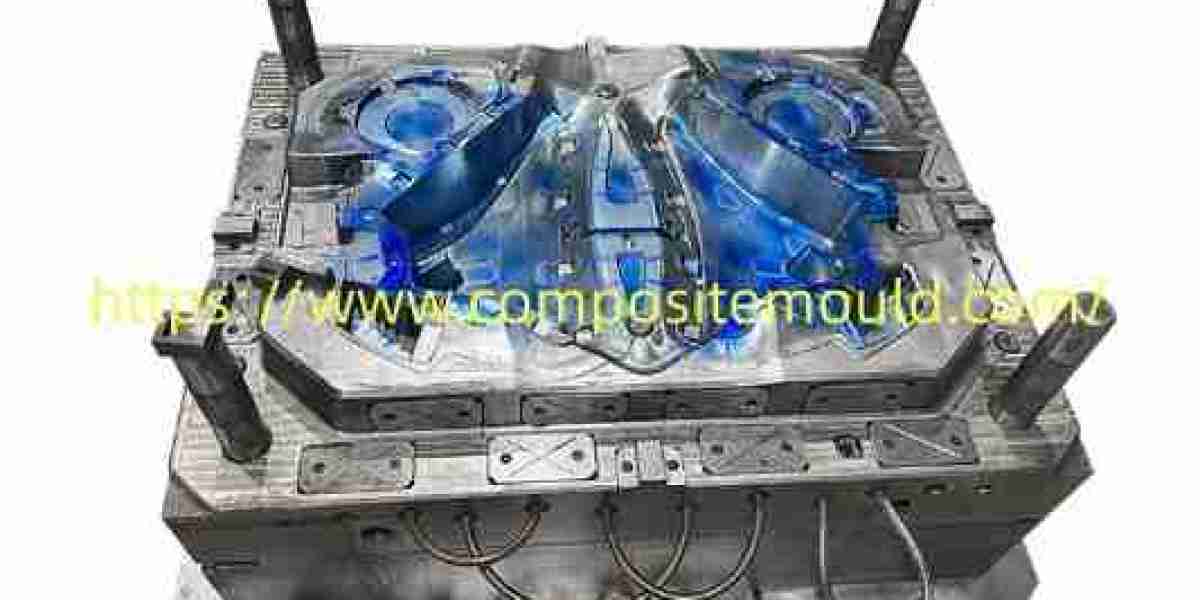
A customized tool may contain cavities, cores, parting areas, inserts, mounting structures, and release features.
The correct arrangement depends on the shape of the finished component.
Deep sections, narrow openings, curved surfaces, and integrated mounting points can influence the design.
Buyers should ask how complex areas will be formed and how the finished part will be removed.
The ability to review these issues before fabrication can help reduce later changes.
Surface Requirements Matter
Composite products may have both functional and visual surface requirements.
Some components require smooth visible areas, while others need textures, markings, or particular decorative effects.
The tool surface can influence the appearance of the finished component, so the required surface condition should be defined before fabrication.
Samples provide a useful opportunity to compare the intended result with the approved design.
Buyers can review texture, gloss, edges, dimensions, and other visible details before proceeding to regular production.
Sample Development Is Important
A sample can provide practical feedback that drawings cannot always provide.
Buyers can inspect dimensions, mounting points, openings, surface details, thickness distribution, and assembly compatibility.
If adjustments are needed, they can be discussed before larger quantities are produced.
Once the sample is approved, it can become a reference for manufacturing and inspection.
For customized projects, keeping an approved sample together with technical drawings can also help support later repeat orders.
Consider Production Volume
A prototype project may have different tooling priorities from a long production program.
Early development may focus on flexibility and design verification. Repeated production can place more attention on cycle consistency, maintenance, dimensional control, and ongoing service.
Buyers should communicate expected quantities before finalizing the tooling approach.
The supplier can then consider the anticipated production schedule and maintenance needs.
This makes the tooling decision more closely connected with the business plan rather than only the first prototype.
Evaluate Trial Production
Trial production can help confirm that the tooling and material process work together.
The manufacturer may review forming behavior, curing conditions, surface quality, dimensions, and removal procedures during this stage.
Buyers can use the trial result to identify changes before the project moves into regular production.
For specialized composite components, this step can be useful because actual production conditions may reveal details that were not obvious during the initial design phase.
Review Quality Procedures
Quality control should extend from tooling development into finished component inspection.
Possible checks can cover dimensional accuracy, surface condition, mounting locations, openings, edge details, and other agreed requirements.
Buyers should ask how inspection criteria are established and how results are documented.
For repeated production, approved samples and written specifications can provide a shared reference.
A consistent inspection process can make it easier to compare different production batches and identify deviations before shipment.
Maintenance Planning Should Start Early
Repeated use requires ongoing tooling care.
Cleaning, surface checks, component inspection, and scheduled maintenance can help keep the tool in suitable condition.
Buyers should ask about maintenance intervals, service procedures, replacement components, and recommended storage conditions.
For larger production programs, maintenance should also be included in scheduling discussions.
Keeping maintenance records with the tooling documentation can help production teams understand the history of the tool and prepare for future manufacturing cycles.
Custom Features Require Clear Documentation
Custom composite projects may include unusual mounting structures, inserts, surface details, dimensional requirements, or other specific features.
These details should be documented before manufacturing starts.
Compositemould supports customized composite tooling projects and can discuss drawings, material information, surface requirements, quantities, samples, and production schedules.
For buyers, complete technical communication at the beginning can make it easier to manage special features throughout development.
Why Consider Compositemould
Compositemould provides composite tooling solutions for different industrial applications.
Buyers can discuss component geometry, material systems, tooling structures, surface requirements, production quantities, sample development, inspection procedures, and maintenance planning.
For automotive, electrical, industrial equipment, transportation, and other composite projects, a project based discussion can connect tooling decisions with actual manufacturing conditions.
Supplier evaluation can also include engineering communication, trial production, quality management, and delivery coordination.
Build A Practical Selection Process
A useful selection process can begin with the finished component and continue through design review, material confirmation, tool engineering, trial production, technical adjustment, sample approval, regular manufacturing, inspection, and maintenance.
Buyers should keep approved drawings, samples, and specifications as project references.
When design changes occur, both sides should confirm whether the tooling needs modification.
This creates a clearer relationship between product revisions and manufacturing instructions.
Choosing a suitable tooling partner involves more than reviewing a single quotation.
Buyers should evaluate engineering communication, material knowledge, tool design, sample development, trial production, quality inspection, maintenance planning, customization, and project coordination.
A structured process can help connect the component concept with the conditions required for repeat composite manufacturing.
Compositemould provides composite tooling solutions for customized applications, and related company and project information can be reviewed at https://www.compositemould.com/