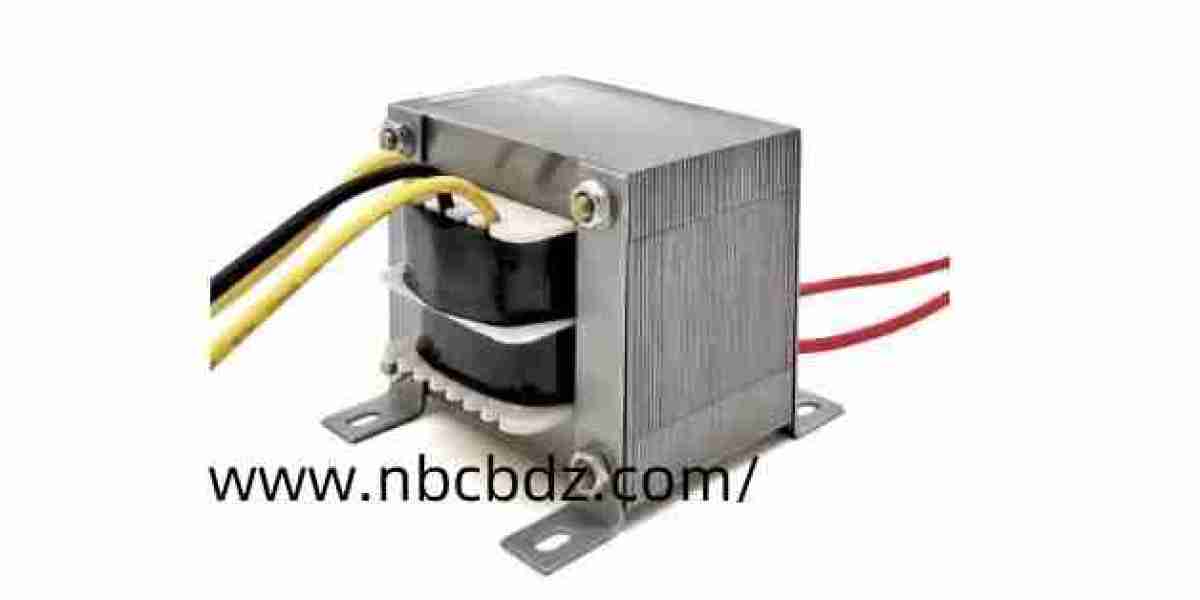

EI Transformer Factory products can serve many industrial and power related applications where alternating current needs voltage conversion, circuit isolation, or controlled power delivery. Their basic construction uses laminated magnetic material together with primary and secondary windings, allowing electrical energy to transfer between circuits through electromagnetic induction. This design can be adapted for control systems, industrial machinery, electrical panels, lighting equipment, and other applications where suitable voltage management is required.
Voltage Conversion in Industrial Systems
Industrial facilities often contain devices that operate at different voltage levels. A single incoming electrical supply may need to support motors, control circuits, sensors, relays, lighting, and other loads. Rather than connecting every circuit directly to the same supply, engineers can use suitable magnetic components to provide the voltage required by individual sections.
The winding ratio determines the relationship between input and output voltage. A higher number of turns on one side compared with the other can create a corresponding change in voltage. This principle allows designers to select an appropriate configuration according to the electrical requirements of the intended application.
Supporting Control Panels
Control panels are another common area of use. Industrial automation systems can contain contactors, indicators, relays, controllers, switches, and other electrical components. Some of these circuits require a different supply from the main incoming line.
A suitable unit can provide an isolated supply for control functions while helping separate sensitive circuitry from the main power path. This arrangement can make panel design more organized and give engineers greater flexibility when planning individual circuit sections.
Applications in Industrial Machinery
Manufacturing machinery often combines power circuits with lower voltage control sections. A production machine may contain motors and actuators alongside sensors, switches, indicators, and control devices. These different sections can have different electrical requirements.
A properly selected unit can provide the voltage needed by control components without requiring the entire machine to operate at the same level. This approach can simplify electrical design and support easier integration of control functions into machinery.
When selecting a product for machinery, engineers generally consider rated voltage, frequency, power capacity, insulation requirements, mounting arrangement, operating environment, and available enclosure space.
Electrical Isolation
Isolation is another important function. Primary and secondary windings can be electrically separated while remaining magnetically coupled through the core. This arrangement can help create a separate circuit for specific applications.
In industrial environments, isolation may be useful for control equipment, instrumentation, maintenance circuits, and other sections where separation between electrical systems is part of the design.
The exact isolation requirements depend on the application and applicable electrical standards. Designers should therefore evaluate insulation, clearance, creepage, temperature conditions, and other relevant requirements before selecting a component.
Use in Power Distribution
Power distribution systems frequently involve different voltage levels between incoming supplies and downstream loads. Voltage conversion makes it possible to adapt electrical power for specific sections of a facility.
In smaller industrial installations, compact magnetic components may be integrated into control cabinets and distribution assemblies. Larger power systems use different transformer technologies according to voltage, capacity, cooling, installation environment, and grid requirements.
For equipment operating at relatively modest power levels, an EI construction can remain a practical choice where its physical arrangement and electrical characteristics match the application.
Lighting and Auxiliary Systems
Industrial buildings can also contain lighting and auxiliary circuits requiring specific voltage levels. Lighting control systems, service panels, monitoring devices, and other auxiliary functions may need electrical supplies that differ from the primary facility input.
A suitable voltage conversion component can help designers create dedicated circuits for these functions. This can make electrical distribution easier to organize, especially when a facility contains several types of loads.
What Buyers Should Consider
Choosing a suitable product requires more than checking the input and output voltage. Buyers should consider the intended load, operating frequency, power capacity, insulation arrangement, installation method, ambient temperature, ventilation, and expected operating conditions.
Mechanical dimensions are also important. A component that fits electrically may not suit the available enclosure or mounting structure. Terminal arrangement and connection method should also match the surrounding electrical design.
For industrial projects, communication between the manufacturer and buyer can help clarify application requirements before production begins. Nbcbdz can support buyers who need component options aligned with specific electrical applications and project conditions.
Industrial Application Planning
Every project has different electrical requirements. A control cabinet may prioritize compact installation and circuit separation, while machinery may require a configuration designed around a particular control system. Power distribution projects can involve different considerations related to voltage conversion and load conditions.
For this reason, product selection should begin with the actual application rather than simply choosing a general category. Reviewing electrical requirements, installation conditions, and operating expectations can help create a more suitable specification.
EI based designs continue to have practical applications in industrial control, machinery, auxiliary circuits, lighting systems, and selected power applications. Their electromagnetic induction principle provides a straightforward method for changing alternating voltage while maintaining electrical separation between windings.
For businesses planning industrial electrical projects, Nbcbdz offers product options intended for different application requirements. Project information and available solutions can be reviewed naturally at https://www.nbcbdz.com/product/ when considering suitable voltage conversion components.