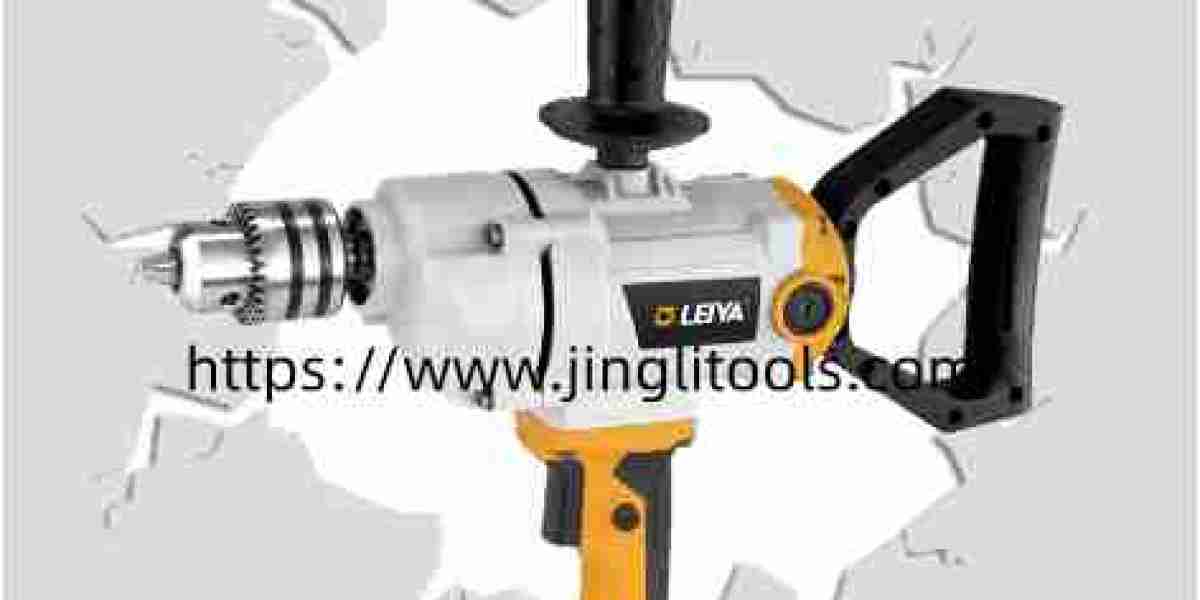

Drilling Machine selection should begin with the actual application rather than a product label or a single specification. Buyers working with wood, steel, plastic, brick, or other materials need to consider hole diameter, chuck capacity, speed, torque, motor structure, working frequency, and available electricity. These factors can influence whether a tool is suitable for a specific workshop, construction site, maintenance task, or production environment.
1. Start With the Material You Need to Process
The material being processed should influence the equipment specification. Wood, plastic, steel, brick, and masonry can require different operating speeds, accessories, and tool configurations.
Softer materials may allow faster rotation, while metal applications often require more controlled speeds and suitable cutting accessories. Harder surfaces may require an impact function or another specialized configuration rather than a standard rotating model.
Before contacting a supplier, buyers should prepare a list of the materials they normally process. It is also useful to include the required hole diameter and approximate operating frequency. These details give manufacturers a clearer understanding of the intended application.
2. Check Chuck Type and Capacity
The chuck is an important component because it holds the cutting accessory during operation. Common configurations include keyed and keyless designs, with different sizes available for different bit requirements.
Buyers should confirm the maximum accessory diameter supported by the equipment and make sure it corresponds with the accessories already used in the workshop.
For frequent bit changes, a keyless configuration may provide practical convenience. For applications where firm accessory retention is important, a keyed design may be worth considering. The choice should depend on the working process rather than simply selecting one configuration for every situation.
3. Compare Speed and Torque Together
RPM indicates how quickly the spindle rotates, while torque represents rotational force. These two specifications should be considered together because different materials and accessory sizes require different combinations.
Variable speed can be useful when moving between materials or hole sizes. Lower speeds can provide greater control for certain harder-material applications, while higher speeds may be suitable for faster work in softer materials.
Instead of asking only for the maximum RPM, buyers should check the available speed range and whether the equipment provides enough adjustment for their intended work.
This approach can also help distributors create clearer product specifications because equipment can be matched with actual application scenarios rather than a single numerical figure.
4. Consider Motor Design and Working Frequency
Motor construction is another factor worth reviewing. Brushed and brushless designs have different characteristics, maintenance requirements, and price structures. Brushless systems remove carbon brushes from the motor structure, while brushed systems use replaceable brushes as part of their operating design.
For occasional applications, a conventional motor configuration may meet the required working conditions. For frequent workshop use, buyers may want to compare motor efficiency, service requirements, replacement components, and expected working cycles.
The important point is to match the motor configuration with the intended duty instead of selecting equipment based solely on motor terminology.
5. Think About Handling and Workspace
The physical design of a tool can influence how easily an operator works in different positions. Weight, handle placement, grip design, balance, trigger location, and auxiliary handles are all worth reviewing.
A compact model may be more convenient in restricted spaces, while a larger configuration with an additional handle may provide better control for certain applications.
For production environments, buyers should also consider how frequently operators move between workstations. Equipment that is easy to position and control can fit more naturally into repetitive work processes.
6. Check Accessories and Replacement Parts
A tool is only part of the complete working system. Cutting bits, chucks, side handles, carbon brushes, depth stops, and other accessories can influence how useful the equipment remains after purchase.
Before placing a bulk order, distributors should ask which standard accessories are included and which replacement components are available separately. Clear information about spare parts can also make after-sales communication easier.
The jinglitools product range includes different electric configurations, including models with keyed chucks, keyless chucks, variable speed functions, different motor outputs, and different handle arrangements.
7. Review the Manufacturer Before Ordering
For distributors and industrial buyers, the supplier matters as much as the product specification. A manufacturer should be able to provide clear technical information, discuss application requirements, and communicate about customization or production needs.
jinglitools provides different electric tool configurations for wood, metal, plastic, masonry, and other applications. Buyers can compare specifications according to their intended market, working conditions, and customer requirements.
It is also useful to ask about inspection procedures, packaging, production capacity, spare parts, technical documents, and delivery arrangements. These details can become important when purchasing equipment in batches rather than as a single unit.
8. Build a Practical Purchasing Checklist
Before making a final decision, buyers can prepare a checklist covering material type, hole diameter, chuck capacity, speed range, torque requirements, motor configuration, working frequency, tool weight, accessories, replacement parts, and supplier services.
This makes it easier to compare several models using the same criteria. It can also give manufacturers clearer information when recommending configurations or preparing quotations.
For distributors, importers, and professional users, jinglitools offers a range of corded and cordless tool options that can be reviewed according to different application requirements. Buyers can check the available products and manufacturer information through the company product section at https://www.jinglitools.com/product/