
Improving at golf rarely comes from one dramatic change. Progress usually develops through repeated practice, useful feedback, thoughtful adjustments, and enough consistency to turn better movements into familiar habits.
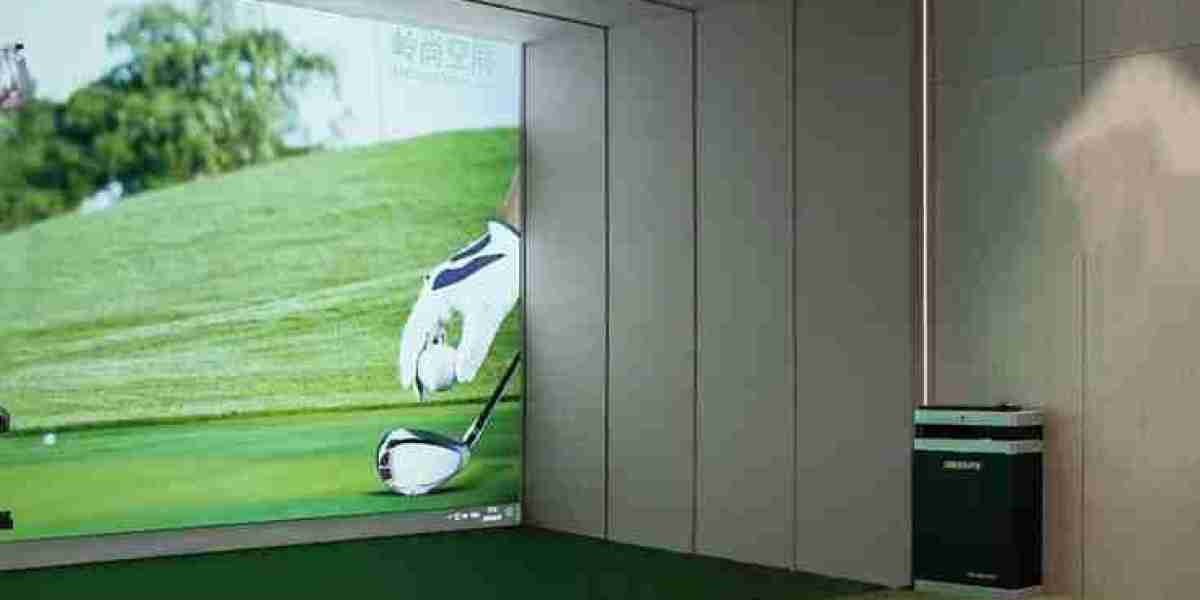
That is where indoor technology can become particularly useful. A dedicated simulator provides an environment in which golfers can repeat shots, study results, experiment with technique, and practise specific situations without waiting for the right weather or a convenient tee time.
Practice Becomes More Deliberate
Many golfers spend practice sessions hitting one ball after another without a clear objective.
An indoor setup makes it easier to introduce structure.
Instead of simply hitting balls, players can establish a target, choose a club, record results, identify a pattern, and adjust their technique.
Set One Goal Per Session
A focused session might involve improving driver direction, controlling iron distances, practising wedge shots, or reducing a particular miss.
Limiting the objective helps prevent practice from becoming random.
The Technology Should Match the Learning Goal
Not every golfer needs the same level of measurement.
An Indoor Golf Simulator Dubai installation may be configured around casual practice, serious training, entertainment, or a combination of these purposes.
The important consideration is whether the selected technology provides information that can actually be used.
Avoid Chasing Numbers
More data does not automatically produce better golf.
Players can become distracted by statistics without understanding how they relate to performance. The most productive approach is to connect each measurement with a practical question.
What changed? Why did the shot behave differently? What should be repeated?
Immediate Feedback Encourages Better Decisions
One of the biggest benefits of technology-assisted practice is immediate information.
Players can see how different swings affect the resulting shot. This makes cause and effect easier to understand.
Numbers Are Useful When They Answer Questions
Statistics should support learning rather than overwhelm it.
A golfer does not need to monitor every available measurement during every swing. Selecting a few meaningful metrics can make the information easier to interpret.
For example, a player working on distance control may focus primarily on carry distance and consistency.
Repetition Is Easier to Achieve
Outdoor practice depends on availability.
A golfer may need to travel to a range, wait for suitable weather, or work around opening hours. At home, practice can happen whenever the room is available.
This convenience can encourage more frequent sessions.
Frequency Can Support Skill Retention
Regular repetition helps keep movements familiar.
A short session several times a week may be easier to maintain than a long practice session every few weeks. Consistency gives golfers more opportunities to evaluate changes.
Virtual Courses Can Improve Decision-Making
Skill development is not limited to swing mechanics.
Virtual rounds can encourage golfers to think about target selection, club choice, hazards, distance management, and strategy.
A simulated hole can be replayed repeatedly, allowing the player to compare different decisions.
Practice Difficult Shots Without Waiting for Them
Certain situations may not appear frequently during ordinary practice.
An indoor environment can recreate different targets, distances, and course conditions depending on the available software.
Turn Weaknesses Into Practice Drills
Suppose a golfer regularly struggles with a particular distance.
Instead of waiting for that situation to occur naturally, the player can create repeated opportunities to practise it.
This makes practice more targeted.
Track Progress Over Time
One practice session offers limited information.
Trends become more meaningful when results are reviewed over a longer period.
Players can compare sessions, identify improvements, and notice areas that remain inconsistent.
A simple practice record can be surprisingly useful. Recording the club, target, result, and one observation after each session creates a history that can guide future practice.
Build a Repeatable Routine
A consistent practice structure can improve the value of each session.
Begin with a short warm-up, move into focused drills, test the skill under changing conditions, and finish by reviewing the results.
This creates a clear beginning and end.
Include Some Random Practice
Repetition is useful, but golf on the course is unpredictable.
After practising a specific movement, introduce different targets or clubs. This encourages the golfer to adapt rather than rely entirely on a rehearsed sequence.
Businesses Can Also Support Player Development
The same technology can be used in training environments.
A Commercial Golf Simulator can provide a structured setting where players practise, review measurements, participate in challenges, or work on specific skills.
For facilities serving multiple users, the ability to provide both practice and entertainment can make indoor golf more versatile.
Confidence Grows Through Familiarity
Technical improvement is only part of development.
Players often perform better when they feel familiar with their equipment, routine, and decision-making process.
Regular indoor practice can provide that familiarity without the pressure of a formal round.
Conclusion
A home simulator can support golf development by making practice more accessible, measurable, repeatable, and purposeful. Players can work on individual weaknesses, review useful feedback, repeat difficult situations, and monitor progress over time.
The technology itself does not guarantee improvement. The real advantage comes from how it is used. When practice has a clear purpose and results are reviewed intelligently, an indoor environment can become a valuable part of a golfer's long-term development.