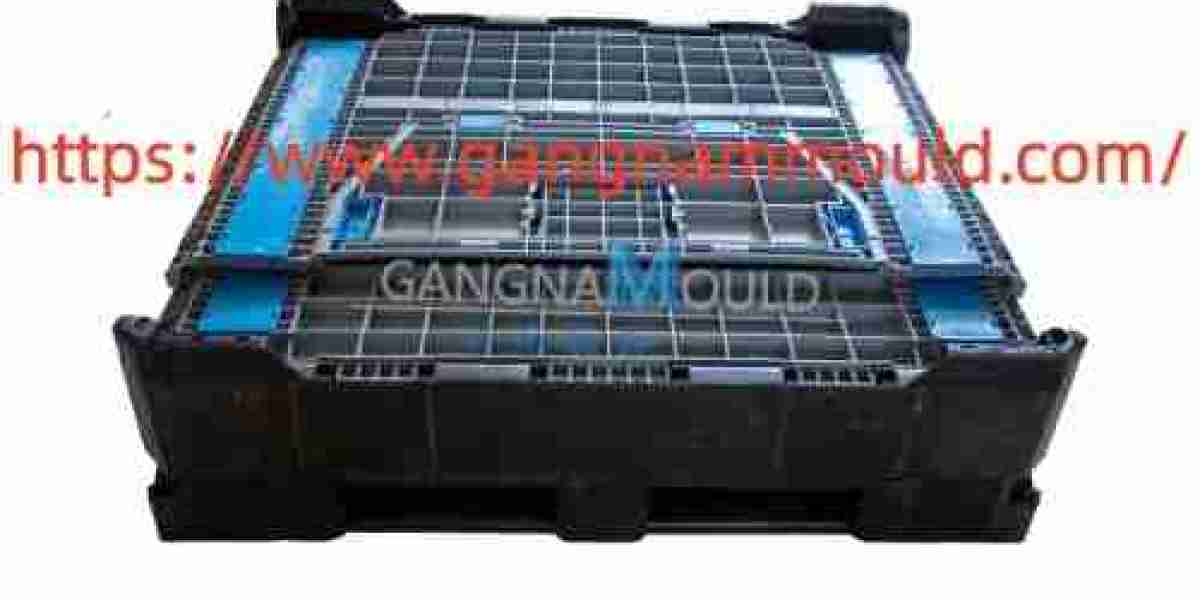

Logistic Pallet Mould longevity depends on a combination of material properties design choices and daily practices that together shape how many cycles the equipment can complete before noticeable wear appears. Selecting steel with the right balance of hardness and toughness creates a solid base that resists cracking under repeated pressure. Heat treatment methods that achieve uniform structure throughout the block further reduce the chance of internal stress points forming during temperature swings.
Cooling channel layout plays a quiet but important role. Channels placed to deliver even temperature distribution across the cavity surfaces help avoid hot spots that soften localized areas and invite early deformation. When coolant flow remains steady and free of blockages the entire unit experiences less thermal fatigue over thousands of repetitions. Surface coatings applied after machining add another layer of protection by lowering friction and resisting chemical attack from release agents or residual polymers.
Operational settings matter just as much as the physical construction. Maintaining stable melt temperatures within recommended ranges prevents excessive force on the cavity walls. Pressure profiles that rise and fall smoothly rather than in sharp spikes also limit mechanical shock. Cycle times adjusted to allow adequate cooling before ejection reduce the risk of dragging or scuffing on the formed part which in turn protects the tool face.
Routine care extends usable time in practical ways. Removing residue after each shift keeps fine details from filling with hardened material that can score the steel. Light lubrication on moving components such as ejector systems cuts down on metal to metal abrasion. Periodic measurement of critical dimensions lets technicians spot gradual changes before they affect part quality. Storing the unit in a dry environment away from temperature extremes when idle prevents moisture related corrosion that often starts in cooling lines or vent areas.
Operator awareness supports all of the above measures. Staff who understand the link between sudden temperature changes and surface stress tend to follow gradual warm up and cool down sequences. Clear checklists for start of shift and end of shift routines create consistent habits across different teams. Documentation of any unusual marks or resistance during operation gives maintenance staff early warning signs that can be addressed with minor adjustments rather than major repairs.
Gangnammould incorporates these considerations into the engineering of its forming equipment by focusing on steel selection heat treatment consistency and channel design that promote even thermal behavior. The company also supplies practical guidance on inspection intervals and cleaning methods so users can align workshop practices with the tool characteristics.
When production volumes increase the same principles scale effectively. Higher output places greater demand on cooling efficiency and surface durability so verifying channel cleanliness and coating condition becomes more frequent. Matching the tool to the specific polymer type and part geometry from the outset avoids unnecessary stress that shortens life. Facilities that treat the equipment as a precision asset rather than a simple consumable typically record longer intervals between major interventions.
Environmental factors outside the machine itself deserve attention too. Workshop humidity levels that stay moderate reduce the chance of condensation inside idle units. Clean air supply around the press limits dust that can settle into vents and cause uneven filling patterns over time. Even the quality of water used in cooling circuits influences internal corrosion rates so filtration systems that remove minerals and particles protect the channels from gradual restriction.
Taken together these elements form a practical framework for managing equipment life. Material quality sets the upper limit design details determine how close that limit can be reached under real conditions and daily habits decide whether the equipment stays near peak capability or declines early. Small consistent actions in temperature control cleaning and inspection compound into significant differences in total cycles completed.
Production teams looking for forming solutions that reflect these durability focused principles can review current options at https://www.gangnammould.com/product/ where specifications and configuration details are available for matching to individual line requirements.