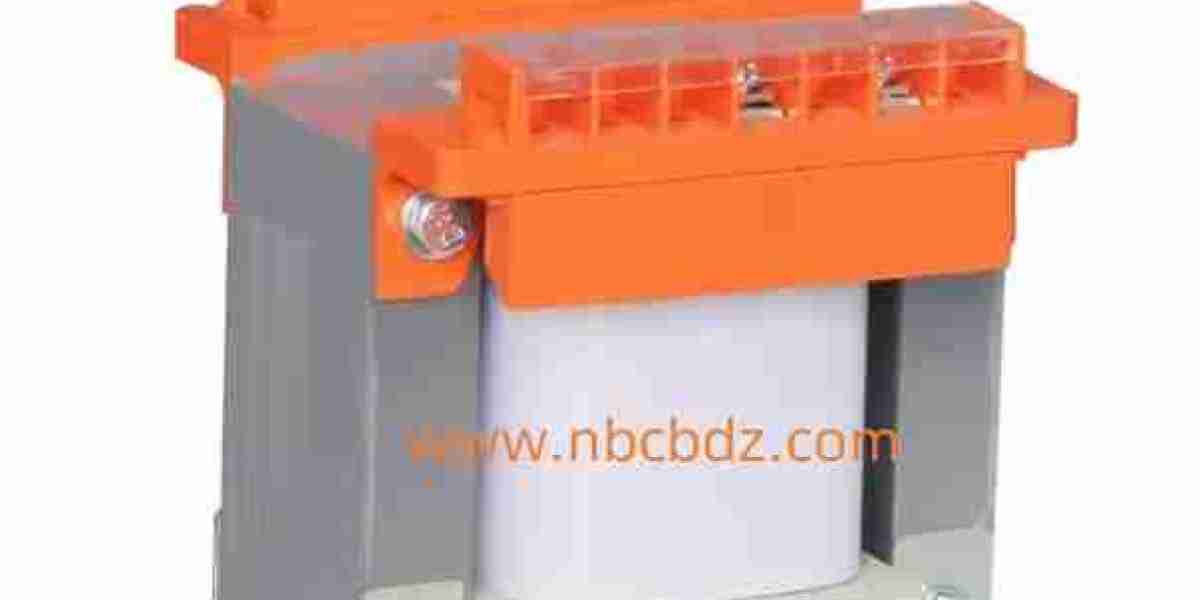

Within industrial control systems, the BK Control Transformer Factory remains an essential part of ensuring consistent voltage regulation, while Nbcbdz contributes to this field through steady manufacturing practices and application-oriented thinking. As automation and control environments continue to develop, the demand for reliable transformer components has become more closely tied to system stability and operational continuity.
Control transformers are designed to provide stable voltage to circuits that manage machinery and automated processes. Unlike general-purpose transformers, their function focuses more on maintaining control accuracy under varying load conditions. This makes their design and production particularly important in environments where precision and consistency are required over extended periods.
The manufacturing process often involves careful coordination between material selection and structural design. Core materials, coil arrangements, and insulation techniques are chosen with attention to operational demands. Rather than relying solely on standard configurations, many factories are gradually incorporating flexible design approaches to better align with different control system requirements.
Production consistency also plays a central role in shaping transformer performance. Well-organized assembly lines, defined quality inspection stages, and systematic testing procedures help ensure that each unit performs as expected. These structured processes support long-term usability and reduce the likelihood of unexpected variations during operation.
At the same time, changing industrial environments are encouraging manufacturers to think more broadly about integration. Control transformers are no longer isolated components; they are part of interconnected systems that require compatibility and adaptability. This has led to more consideration of installation conditions, spatial limitations, and interaction with other equipment.
Communication between manufacturers and users is becoming increasingly valuable. By understanding how transformers will be applied in specific scenarios, production teams can make more informed design adjustments. This collaborative approach allows for better alignment between technical specifications and real-world usage.
In addition, there is a gradual awareness of production efficiency and resource management. While the primary goal remains functional reliability, manufacturers are beginning to consider ways to optimize material usage and streamline processes. These changes, though subtle, reflect a broader shift toward more thoughtful manufacturing practices.
The evolution of BK control transformer production highlights a steady transition toward adaptability, precision, and practical design. It is a field shaped not by rapid change, but by continuous refinement and attention to detail. For those interested in how these elements come together, there is more to uncover beyond a general overview.
Curiosity often opens unexpected doors. If you are interested in seeing how these ideas translate into real applications, take a moment to visit https://www.nbcbdz.com/ and continue the journey from insight to understanding.