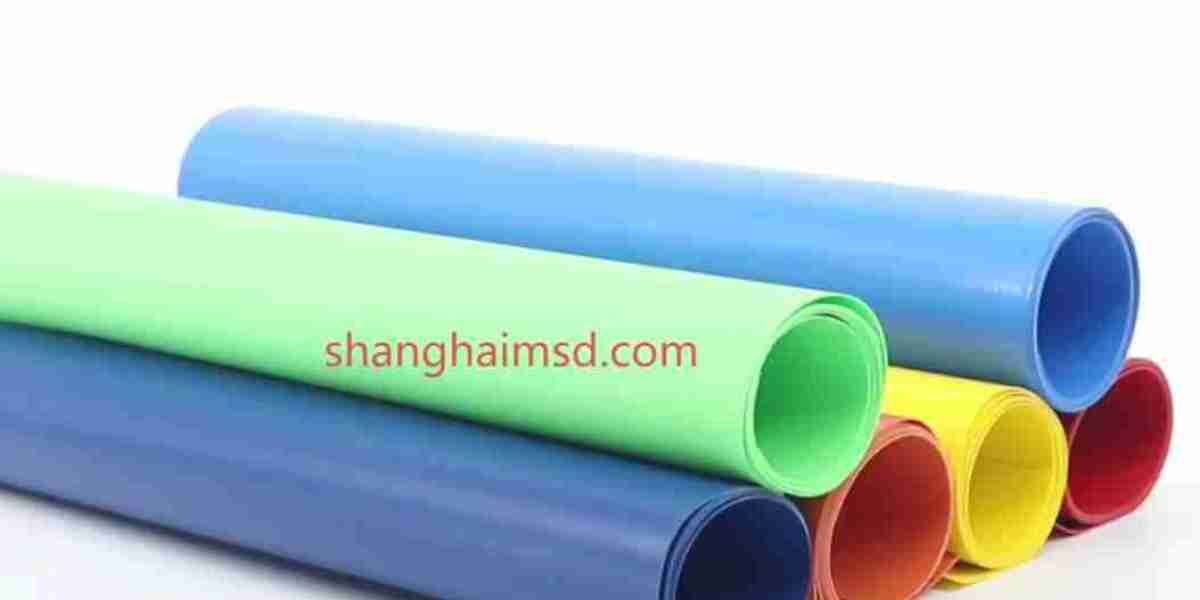

Inflatable composite materials have become increasingly important in industries that require lightweight yet durable structures capable of maintaining internal air pressure. From marine products to recreational equipment and temporary architectural installations, inflatable technologies rely on coated textile materials that provide both flexibility and mechanical strength. Among the materials commonly used for such applications is PVC Inflatable Fabric, a reinforced polymer composite designed to deliver reliable airtight performance and structural stability. Through international distribution channels, suppliers such as Shanghai MSD International Trade Co., Ltd. help manufacturers obtain advanced coated fabrics that support the production of modern inflatable products.
The structure of inflatable PVC materials is typically based on a reinforced textile core combined with flexible polymer coatings. At the center of the composite lies a woven polyester scrim, which acts as the primary load-bearing component. Polyester fibers are widely used in technical textiles because they offer high tensile strength, low elongation, and good dimensional stability. These characteristics help inflatable structures maintain their shape when subjected to internal air pressure. On both sides of the polyester reinforcement layer, a polyvinyl chloride coating is applied to create an airtight barrier and protect the internal fibers from environmental damage.
The manufacturing process for inflatable PVC fabrics involves several specialized coating and lamination techniques. One widely used method is the knife coating process, where a PVC plastisol mixture is applied evenly onto the polyester base fabric using a precisely controlled blade. The coated material then moves through a curing oven where heat causes the plastisol to gel and fuse into a continuous flexible layer. Another approach is calender lamination, which involves pressing pre-formed PVC films onto the reinforcement fabric under high temperature and pressure. This technique can produce a smoother surface finish and consistent coating thickness, which is particularly beneficial for high-quality inflatable products.
The formulation of the PVC compound used in inflatable fabrics plays a major role in determining the material’s performance characteristics. Plasticizers are incorporated into the polymer mixture to increase flexibility and improve resistance to cracking during repeated folding and inflation cycles. Stabilizers are also added to protect the PVC from degradation caused by heat and ultraviolet radiation. In outdoor applications, additional UV-resistant pigments may be included to enhance color stability and extend the product’s lifespan when exposed to sunlight.
Another important consideration in inflatable material production is seam technology. Inflatable structures require airtight joints that can withstand internal pressure without leaking. Instead of traditional stitching, manufacturers typically use high-frequency welding or hot-air welding techniques to join panels of coated fabric. During welding, heat softens the PVC coating on the material surfaces, allowing them to fuse together when pressure is applied. The resulting seam forms a continuous airtight bond that maintains structural integrity even under significant stress.
Quality control and performance testing are essential parts of inflatable fabric production. Tensile strength testing measures the maximum load the material can withstand before breaking, helping manufacturers ensure that the fabric can tolerate the stresses created by internal air pressure. Tear resistance tests are also performed to determine how well the material resists the propagation of small cuts or punctures. These tests are particularly important for inflatable equipment that may encounter rough surfaces or mechanical abrasion during use.
Air retention is another critical performance parameter for inflatable materials. Specialized permeability tests are used to measure how much air passes through the fabric over a given period. High-quality inflatable fabrics exhibit extremely low air permeability, which allows inflatable structures to maintain pressure for extended periods without continuous air pumping. Shanghai MSD collaborates with production partners that apply strict testing standards to confirm the airtight performance of their materials before supplying them to international manufacturers.
Environmental durability is also a key factor for inflatable fabrics used in outdoor environments. Exposure to sunlight, moisture, and temperature fluctuations can gradually degrade many polymer materials. To address this challenge, PVC coatings are often formulated with UV stabilizers and weather-resistant additives. Accelerated aging tests simulate years of outdoor exposure by subjecting the material to cycles of ultraviolet radiation, humidity, and temperature variation. These tests help evaluate whether the material can maintain flexibility, adhesion, and color stability over long periods of use.
The versatility of inflatable PVC fabrics makes them suitable for a wide variety of applications. In the marine sector, the material is commonly used to produce inflatable boats, rescue rafts, and floating docks. These products require materials that can resist water exposure, mechanical stress, and repeated inflation cycles. Recreational applications include inflatable playground equipment, water slides, and camping mattresses, where lightweight portability and durability are equally important.
Large-scale inflatable architecture has also become increasingly popular in recent years. Air-supported domes, temporary exhibition halls, and emergency relief shelters often rely on reinforced PVC fabrics because they can create spacious structures with minimal structural weight. The ability to deflate and transport these structures easily makes them ideal for temporary installations and rapid deployment scenarios.
Inflatable fabrics are also widely used in advertising and event promotions. Giant inflatable displays, branded promotional figures, and decorative installations require materials that can hold air pressure while supporting vibrant printed graphics. The smooth surface of PVC-coated fabrics allows high-quality printing methods such as digital printing and screen printing, enabling businesses to create visually impactful promotional structures.
Advancements in polymer chemistry and textile engineering continue to improve the performance of inflatable fabrics. Modern production technologies allow manufacturers to optimize coating adhesion, increase durability, and enhance resistance to environmental stress. Shanghai MSD International Trade Co., Ltd. contributes to the global material supply chain by providing access to industrial polymer products and technical information for manufacturers exploring new material solutions. Professionals interested in additional polymer material insights can explore further information at https://www.shanghaimsd.com/news/petg-film-vs-pet-film-what-are-the-key-differences.html .