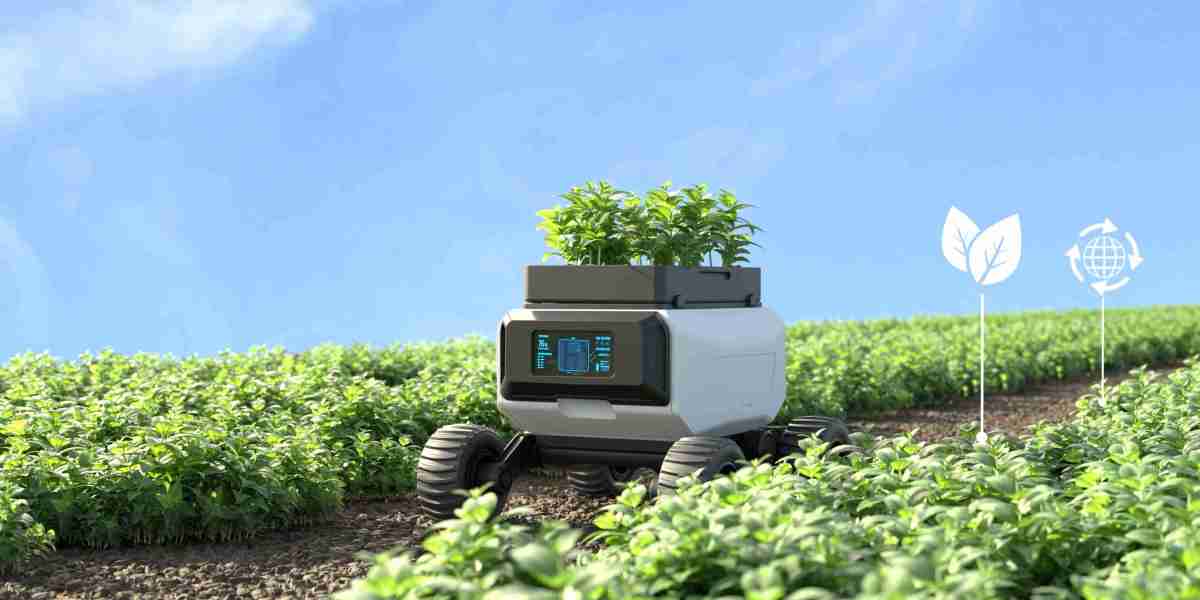

The seeding and planting robots market is experiencing rapid global expansion as agriculture increasingly adopts automation, precision farming technologies, and data-driven crop management practices. Seeding and planting robots are advanced agricultural machines designed to automate seed placement, planting depth control, spacing optimization, and field navigation to improve crop productivity and reduce dependence on manual labor.
Rising food demand, labor shortages in farming, and the need for efficient resource utilization are accelerating adoption of robotic planting solutions across commercial farms, greenhouse operations, and horticultural sectors. Technological advancements in artificial intelligence, machine learning, GPS guidance, and sensor integration are significantly enhancing planting accuracy and operational efficiency.
"The Global Seeding and Planting Robots Market Size is valued at USD 4.16 Billion in 2025. Worldwide sales of Seeding and Planting Robots Market are expected to grow at a significant CAGR of 11.8%, reaching USD 9.05 Billion by the end of the forecast period in 2032."
Between 2025 and 2034, market growth is expected to remain strong due to increased investments in agricultural mechanization, government support for smart farming initiatives, and expansion of precision agriculture technologies worldwide.
Industry Size and Market Structure
The seeding and planting robots industry comprises upstream suppliers of robotics components, sensors, navigation systems, batteries, and control software; midstream agricultural robotics manufacturers and system integrators; and downstream users including commercial farmers, agricultural cooperatives, greenhouse operators, and research institutions.
Upstream innovations in vision systems, LiDAR sensors, autonomous navigation modules, and machine learning platforms are improving the performance and adaptability of robotic planting systems. Hardware components such as robotic arms, seed dispensing mechanisms, and powertrain systems play a crucial role in determining operational reliability and productivity.
Midstream manufacturers design and deploy robotic solutions tailored for various farming environments including large-scale field farming, greenhouse cultivation, forestry applications, and specialty crop production. Many providers now offer integrated farm automation platforms combining robotics, analytics software, and farm management systems.
Downstream distribution occurs through direct equipment procurement, agricultural equipment dealers, leasing services, and automation solution providers offering installation, maintenance, and technical support.
Key Growth Trends Shaping 2025–2034
A major trend shaping the market is the increasing adoption of precision agriculture, where robotic systems use data analytics and sensor feedback to ensure optimal seed placement and resource utilization. These technologies can significantly improve crop yields while minimizing input costs.
Another important trend is the development of fully autonomous planting robots capable of operating continuously without human supervision, addressing persistent labor shortages in the agricultural sector. Robotics platforms equipped with advanced navigation algorithms and real-time monitoring capabilities are transforming traditional planting operations.
Indoor and greenhouse farming automation is also gaining traction, driven by the need to optimize space utilization and achieve consistent crop production in controlled environments. In addition, sustainability initiatives promoting reduced soil disturbance and efficient water and fertilizer use are encouraging adoption of robotic planting technologies.
Growing integration of agricultural robots into broader smart farming ecosystems—alongside drones, autonomous tractors, and robotic harvesters—is further enhancing overall farm productivity and operational efficiency.
Core Drivers of Demand
Increasing global food demand and pressure to improve agricultural productivity.
Labor shortages in farming sectors encouraging automation adoption.
Advancements in robotics, AI, and precision agriculture technologies.
Rising investments in smart farming and agricultural mechanization initiatives.
Growing demand for efficient resource utilization and sustainable farming practices.
Expansion of commercial greenhouse and indoor farming operations.
Challenges and Constraints
Despite strong growth potential, the market faces challenges such as high upfront investment costs associated with advanced robotic equipment, which may limit adoption among small and medium-scale farms.
Technical complexities related to system integration, maintenance requirements, and training needs can also influence adoption rates. Variability in farm sizes, crop types, and regional agricultural practices necessitates customization of robotic solutions, increasing development and deployment costs.
Limited awareness and infrastructure constraints in certain emerging markets may further slow adoption, although government incentives and agritech innovation programs are helping to address these barriers.
Browse more Information:
https://www.oganalysis.com/industry-reports/seeding-and-planting-robots-market
Segmentation Outlook
By robot type, the market includes seeding robots, planting robots, and hybrid multifunctional robotic systems.
By technology, segmentation comprises autonomous robots, teleoperated systems, sensor-based robotics platforms, and AI-integrated precision planting solutions.
By farming environment, the market serves outdoor large-scale farming, indoor vertical farming, greenhouse cultivation, and forestry or reforestation applications.
By end-user, the market includes commercial farms, smallholder farmers, agricultural cooperatives, and research or development institutions.
By application, robotic planting solutions are used in row crop cultivation, horticulture, orchard farming, lawn and landscaping operations, and specialty crop production.
Regional Dynamics
North America remains a leading regional market due to advanced agricultural infrastructure, high adoption of automation technologies, and strong investments in agritech innovation.
Asia-Pacific is expected to witness the fastest growth driven by rising farm mechanization, increasing population pressure on food production, and supportive government initiatives promoting smart agriculture in countries such as China, India, and Japan.
Europe demonstrates steady adoption supported by sustainability regulations and technological leadership in agricultural robotics development.
Latin America, Middle East, and Africa present emerging opportunities as commercial farming expands and awareness of precision agriculture benefits increases.
Key Market Players
- AGCO Corporation
- Deere & Company
- CNH Industrial
- FarmDroid
- Naïo Technologies
- Small Robot Company
- AgXeed B.V.
- Ducksize
- Precision Hawk
- Blue River Technology
Competitive Landscape and Forecast Perspective (2025–2034)
Competition in the seeding and planting robots market is driven by innovation in autonomous navigation systems, AI-powered analytics, and energy-efficient robotic platforms. Companies are focusing on developing scalable and cost-effective solutions capable of operating across diverse crop types and field conditions.
Strategic priorities through 2034 include expanding partnerships with agricultural cooperatives and farm equipment distributors, investing in cloud-based farm management platforms, enhancing modular robotic architectures, and improving affordability for small and medium-scale farmers.
Looking ahead, seeding and planting robots will play a critical role in the transformation of global agriculture by enabling precision farming, reducing labor dependency, and supporting sustainable food production. Providers delivering reliable, intelligent, and adaptable robotic solutions are expected to capture substantial growth opportunities across global agricultural markets throughout the forecast period.
Browse Related Reports:
https://www.oganalysis.com/industry-reports/process-safety-services-market
https://www.oganalysis.com/industry-reports/trailer-sprayer-market
https://www.oganalysis.com/industry-reports/immersion-wash-system-market
https://www.oganalysis.com/industry-reports/heavy-construction-equipment-market
https://www.oganalysis.com/industry-reports/elevators-and-escalators-market