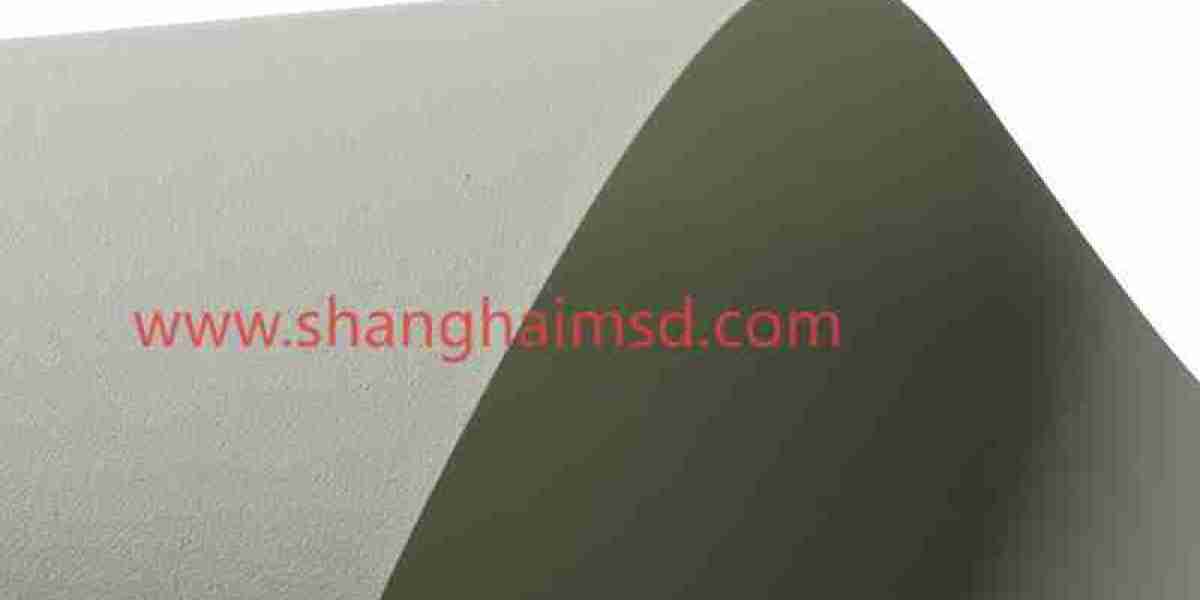

Dimensional stability is a critical performance factor for ceiling materials that must remain visually uniform over long periods of indoor use. In suspended and tensioned ceiling systems, PVC Ceiling Film is carefully evaluated for its ability to maintain shape, surface tension, and alignment under varying environmental conditions. Shanghai Ming Shida International Trading Company places particular emphasis on ceiling film materials that deliver predictable dimensional behavior throughout their service life.
The dimensional performance of PVC ceiling film begins with its polymer structure and formulation balance. The base PVC compound is engineered to provide controlled elasticity while retaining sufficient internal cohesion to resist permanent deformation. Plasticizers influence flexibility, but their proportion must be carefully managed to prevent excessive relaxation over time. Stabilizers and processing aids help the material maintain its original dimensions when exposed to normal indoor temperature and humidity variations.
Manufacturing precision plays a decisive role in dimensional stability. During calendering or extrusion, uniform thickness distribution ensures that the film responds evenly to tension during installation. Variations in thickness can lead to uneven stretching, localized stress, or gradual sagging. Shanghai Ming Shida International Trading Company emphasizes cooperation with production lines that maintain strict control over roller pressure, temperature gradients, and cooling rates to minimize internal stress within the film structure.
Environmental adaptability is another key aspect of ceiling film performance. Indoor spaces often experience fluctuations in temperature and humidity due to seasonal changes, HVAC operation, or lighting systems. PVC ceiling film must accommodate these changes without shrinking, loosening, or developing surface distortion. Controlled thermal expansion behavior allows the film to respond gradually rather than abruptly, preserving surface flatness and alignment with surrounding ceiling elements.
Testing for dimensional stability typically involves thermal cycling and humidity exposure evaluations. Samples are subjected to repeated changes in temperature to simulate daily and seasonal indoor conditions. Measurements taken before and after testing assess changes in length, width, and thickness. Humidity resistance tests examine how moisture absorption influences dimensional behavior, ensuring that the film remains stable even in environments such as swimming facilities, kitchens, or commercial washrooms.
Long-term performance assessment also includes creep testing, which evaluates how the film behaves under sustained tension over extended periods. This is particularly relevant for tensioned ceiling systems where the material remains under constant load. Results from creep testing help determine optimal installation tension levels and confirm that the material can maintain a smooth surface without gradual relaxation.
Application scenarios further highlight the importance of dimensional reliability. Large-span ceilings in commercial spaces require materials that remain uniformly tensioned to avoid visible sagging. Complex ceiling geometries, including curved or multi-level designs, depend on predictable stretching behavior during installation and stable retention afterward. Residential applications also benefit from dimensional stability, especially in renovation projects where ceiling films must integrate seamlessly with existing structures.
Installation practices directly influence long-term dimensional outcomes. Proper pre-conditioning of the material, accurate temperature control during stretching, and evenly distributed tension help ensure stable performance. Skilled installation reduces internal stress concentrations, allowing the film to adapt naturally to environmental conditions without compromising appearance or function.
Shanghai MSD International Trade Co., Ltd continues to support ceiling film solutions by emphasizing material consistency, processing reliability, and application-focused testing. Through careful evaluation of dimensional stability and environmental adaptability, the company contributes to ceiling systems that meet both aesthetic and functional expectations across diverse interior environments. More information on ceiling film products and related materials can be found at https://www.shanghaimsd.com/product/ .