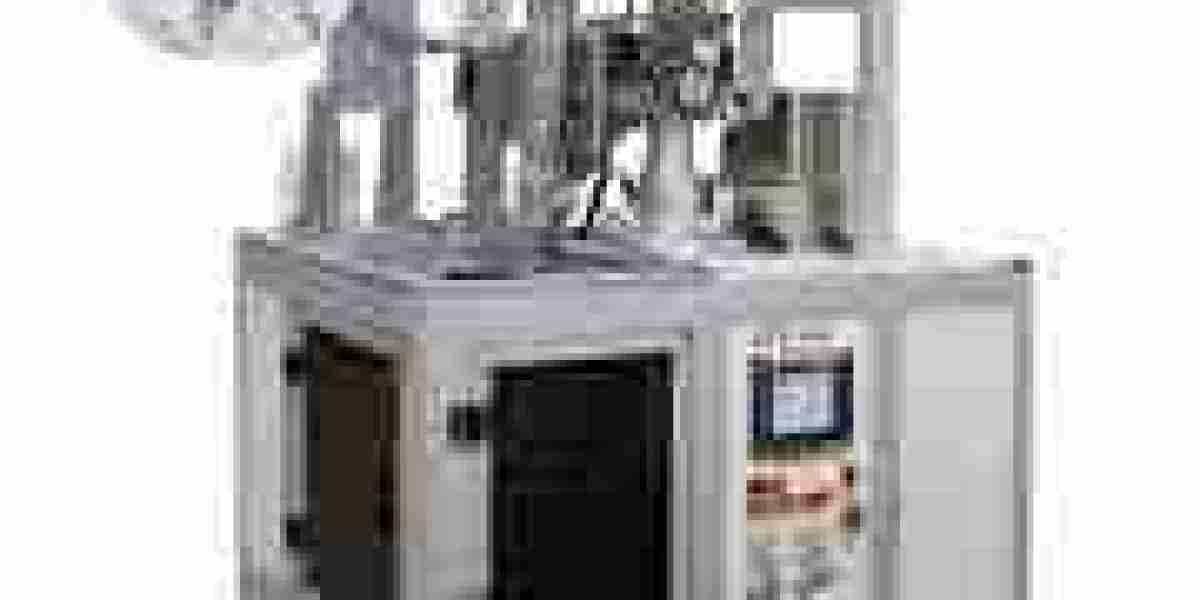

The triangle tea bag packaging machinery market is a specialized segment of food and beverage packaging automation—serving premium tea and herbal infusion brands that use pyramid (triangle) sachets to enhance brew quality, ingredient visibility, and consumer perception. Triangle tea bags, often made from nylon, PLA-based compostable mesh, or other nonwoven filter materials, allow larger leaf grades and inclusions to expand during infusion, supporting higher-end product positioning. Packaging machinery for these formats integrates dosing, forming, sealing, tagging, stringing, nitrogen flushing where required, overwrapping, cartoning, and increasingly end-of-line case packing and traceability. From 2025 to 2034, market growth is expected to be driven by premiumization in tea, expansion of functional and herbal blends, growth of private labels and specialty brands, and rising demand for hygienic, high-speed, and flexible packaging lines that can handle multiple materials and SKU variability. At the same time, the sector must navigate capital expenditure sensitivity among smaller brands, evolving sustainability requirements for compostable materials, and rising expectations for machine efficiency, digital monitoring, and low downtime in high-mix production environments.
Market overview and industry structure
The Triangle Tea Bag Packaging Machinery Market was valued at $45.15 billion in 2025 and is projected to reach $75.64 billion by 2034, growing at a CAGR of 5.9%.
Triangle tea bag packaging machines are typically designed to form a 3D sachet from a roll of filter material, accurately dose tea leaves or blends, seal the sachet (often ultrasonic, heat, or hybrid sealing depending on material), attach string and tag, and then pack into secondary formats such as envelopes, pouches, cartons, tins, or bulk bags. Machines may be standalone units or integrated lines combining sachet making with overwrapping and cartoning. Key configurations include single-lane and multi-lane systems, intermittent or continuous motion designs, and modular architectures that allow upgrades such as nitrogen flushing, vision inspection, checkweighing, metal detection, and serialization/traceability.
The value chain includes machinery OEMs, filter material suppliers (mesh and nonwoven), dosing and weighing technology providers, automation and controls suppliers, and packaging line integrators. Competition is shaped by dosing accuracy for variable leaf sizes and inclusions, seal integrity and leak prevention, speed and uptime, material compatibility (including compostable PLA), changeover time between SKUs, and hygiene design for food-grade environments. Service capability—spares availability, remote support, installation, training, and preventive maintenance—often determines supplier preference, especially for brands with distributed production footprints.
Industry size, share, and market positioning
The market is best understood as a “premium packaging capacity” story rather than a mass tea volume story. Triangle sachets are used disproportionately in premium teas, specialty infusions, and gifting formats where packaging quality is part of brand value. Market share is segmented by machine speed and lane count, by level of integration (sachet-only vs sachet + envelope + cartoning), by end-user size (large tea manufacturers vs contract packers vs boutique brands), and by material compatibility (nylon vs PLA vs other nonwovens).
Premium positioning is strongest among OEMs that provide stable high-speed performance, robust sealing for delicate meshes, and validated handling of compostable materials without sacrificing throughput. Over 2025–2034, share gains are expected to favor suppliers that offer modular, upgradeable platforms; strong digital diagnostics; and application engineering to help customers optimize sachet shape consistency, seal strength, and dosing performance for complex blends.
Key growth trends shaping 2025–2034
One major trend is the premiumization of tea and the rise of functional blends. As consumers seek wellness-focused infusions and premium leaf quality, triangle sachets remain attractive for showcasing ingredients and delivering better infusion. This supports continued investment in triangle sachet capacity, especially for herbal, fruit, and botanicals that require larger particle sizes.
A second trend is the shift toward sustainable materials. Brands are moving from nylon toward PLA-based compostable meshes or paper-based hybrid structures where feasible. This drives demand for machinery that can seal and run these materials reliably, maintain seal integrity, and handle material variability without excessive scrap.
Third, high-mix, low-to-mid volume production is increasing. Specialty brands and private labels launch frequent SKUs, seasonal blends, and limited editions, requiring fast changeovers, recipe management, and flexible dosing systems capable of handling inclusions such as dried fruit pieces, spices, and mixed botanicals.
Fourth, digitalization and OEE improvement are becoming central purchasing criteria. Buyers increasingly expect recipe-driven setups, real-time monitoring of seal parameters, predictive maintenance, and remote troubleshooting to reduce downtime and support lean operations.
Fifth, contract packing and co-manufacturing are expanding capacity. Brands increasingly outsource packaging to co-packers that need versatile machines capable of running multiple customer specifications, tags, envelope formats, and carton styles with minimal downtime.
Core drivers of demand
The primary driver is the growth of premium tea consumption and the expansion of value-added formats. Triangle sachets support premium pricing by improving infusion performance and shelf appeal, encouraging brands to invest in dedicated packaging lines that protect brand quality.
Convenience and hygiene are additional drivers. Individually wrapped sachets and high-quality seals support freshness, portion control, and food safety, particularly in e-commerce and gifting channels where packaging integrity is critical.
Operational efficiency also drives investment. Automated dosing, forming, and sealing reduces labor, improves consistency, and supports higher throughput, which is increasingly important as labor costs rise and skilled operator availability tightens.
Finally, regulatory and retailer quality expectations influence demand. Consistent weights, low contamination risk, and traceability requirements encourage adoption of inspection systems and integrated line controls.
Browse more information
https://www.oganalysis.com/industry-reports/triangle-tea-bag-packaging-machinery-market
Challenges and constraints
Capital expenditure sensitivity is a key constraint, particularly for small and mid-sized brands. Triangle sachet lines can be costly, and ROI depends on premium product volumes and stable demand. Leasing models, modular upgrades, and co-packer capacity can moderate this barrier but do not eliminate it.
Material variability creates technical challenges. Compostable meshes can behave differently under heat and humidity, affecting seal quality and line stability. Achieving robust seals without damaging delicate materials requires precise control of sealing parameters and careful machine design.
Product variability is another constraint. Tea blends with mixed particle sizes and inclusions can affect dosing accuracy and cause dusting, bridging, or inconsistent fill weights. Machines must incorporate appropriate feeding, vibration, and dosing systems, and customers often require application testing.
Service and spare parts availability can be a limiting factor in emerging markets. Downtime risk can influence OEM selection, favoring suppliers with local service networks and strong remote support.
Segmentation outlook
By machine type, modular systems that can be configured for sachet-only or extended to envelope and cartoning are expected to gain share, as they allow phased investment and flexibility for changing brand requirements. Multi-lane and higher-speed lines will be adopted by large manufacturers and major co-packers, while compact, lower-speed systems will serve boutique brands and regional producers.
By end user, contract packers are expected to be high-growth buyers due to outsourcing trends and the need to serve multiple brands. Large tea and beverage companies will continue investing to expand premium product portfolios, while private label and retail brands drive incremental demand through differentiated offerings.
Key Market Players
· IMA Group
· Omori Machinery
· PTI Packaging System
· Selo Group
· ACMA S.p.A.
· HRC Machinery
· Shanghai Joygoal Food Machinery
· Xiamen Sengong
· FARLE Packaging
· Ruian Honetop Machinery
· Synda Pack
· Qualipak Machinery
· Hawo Maschinenbau
· Guangzhou Mingyue Packaging Machinery
Competitive landscape and strategy themes
Competition increasingly centers on material compatibility, uptime, and flexibility. Leading OEMs differentiate through precise sealing technology (including ultrasonic options for certain meshes), strong dosing systems for diverse blends, hygienic machine design, and robust controls with recipe management and diagnostics. Through 2034, key strategies are likely to include expanding capability for compostable meshes, offering modular line architectures, strengthening global service networks, and integrating inspection and traceability features as standard options.
Partnerships with filter material suppliers and co-packers are important because successful line performance depends on the interaction between material properties, sealing technology, and blend characteristics. OEMs that co-develop validated settings and provide application testing support can win long-term customer relationships.
Regional dynamics (2025–2034)
Asia-Pacific is expected to be a major growth engine due to expanding tea consumption, increasing premiumization, and strong manufacturing ecosystems for packaging machinery and tea products. Europe is likely to see steady growth driven by premium and functional tea demand and strong sustainability-driven shifts toward compostable materials. North America is expected to expand through specialty tea growth, private label activity, and continued outsourcing to co-packers, with strong demand for flexible, mid-speed systems. Latin America offers selective upside tied to growing specialty beverage markets and retail modernization, though investment cycles can affect machinery purchases. Middle East & Africa growth is expected to be selective but improving, supported by premium tea imports, hospitality demand, and gradual local packaging capacity development.
Forecast perspective (2025–2034)
From 2025 to 2034, the triangle tea bag packaging machinery market is positioned for steady growth as premium tea formats expand and brands demand more flexible, sustainable, and efficient packaging lines. The market’s center of gravity shifts toward modular, digitally enabled machines that run compostable materials reliably, support fast changeovers, and maintain high OEE in high-mix production. Value growth is expected to be strongest among co-packers and premium brands scaling triangle sachet portfolios across regions. By 2034, triangle tea bag machinery is likely to be viewed less as a niche packaging asset and more as a strategic capability—enabling premium product differentiation, sustainability compliance, and consistent quality at scale in an increasingly competitive beverage landscape.
Browse Related Reports
https://www.oganalysis.com/industry-reports/trailer-sprayer-market
https://www.oganalysis.com/industry-reports/immersion-wash-system-market
https://www.oganalysis.com/industry-reports/heavy-construction-equipment-market
https://www.oganalysis.com/industry-reports/elevators-and-escalators-market
https://www.oganalysis.com/industry-reports/construction-lasers-market