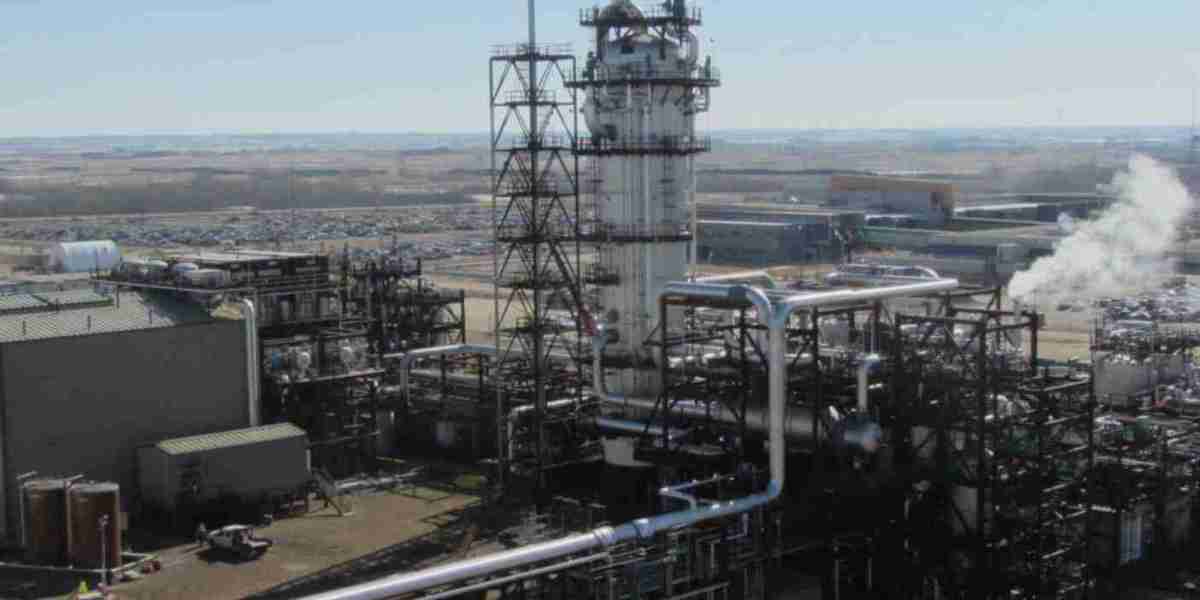

Carbon Capture and Storage Market Overview:
The global Carbon Capture and Storage (CCS) Market was valued at USD 2.97 Billion in 2024 and is forecast to reach USD 6.17 Billion by 2033, growing at a CAGR of 8.05% during 2025-2033. This growth is driven by stringent government regulations and carbon pricing mechanisms, rising focus on climate change mitigation and net-zero emission goals, significant technological advancements improving capture efficiency, and increasing integration with enhanced oil recovery (EOR) processes.
The carbon capture and storage market is expanding rapidly driven by rising demand for emission reduction technologies, industrial decarbonization solutions, and climate mitigation strategies across energy-intensive sectors. Growing adoption in power generation plants, cement manufacturing facilities, steel production operations, and chemical processing industries is accelerating commercial deployment. Advancements in post-combustion capture technologies, pre-combustion systems, oxy-fuel combustion methods, solvent-based capture processes, and membrane separation technologies are driving product innovation. The growth of carbon credit trading mechanisms, corporate sustainability commitments, international climate agreements, and favorable regulatory frameworks is boosting mass market adoption. Increasing investment in CCS infrastructure and expanding geological storage capacity further support future global market expansion.
Study Assumption Years
- Base Year: 2024
- Historical Years: 2019-2024
- Forecast Years: 2025-2033
Carbon Capture and Storage Market Key Takeaways
- Current Market Size (2024): USD 2.97 Billion
- CAGR (2025-2033): 8.05%
- Forecast Period: 2025-2033
- The market is propelled by stringent government regulations targeting emission reductions.
- Increasing focus on achieving net-zero emissions is driving technology adoption.
- Technological advancements improving capture efficiency and reducing costs are enhancing viability.
- Expansion into hard-to-abate sectors including cement, steel, and chemicals is broadening market horizons.
- High capital costs and infrastructure limitations present market challenges.
Access Detailed Sample Report: https://www.imarcgroup.com/carbon-capture-storage-market/requestsample
Market Growth Factors
The carbon capture and storage market is significantly driven by proactive role of governments implementing stringent policies aimed at reducing greenhouse gas emissions. These measures, including strict regulatory targets and financial incentives, encourage industries to adopt CCS technologies to meet compliance requirements. By aligning with these regulations, sectors mitigate environmental impact while ensuring adherence to evolving standards. These policies prove especially essential in carbon-emitting industries such as energy and manufacturing, where emissions need dramatic reductions. In 2025, California Resources Corporation and Carbon TerraVault received approvals for California's first CCS project capturing 100,000 tons annually at the Elk Hills gas plant in Kern County. The increasing global commitment to achieve net-zero emissions, backed by international agreements and national policies, further amplifies demand for CCS solutions, making it an essential component of climate change mitigation strategies ensuring environmental sustainability.
Rising focus on climate change mitigation represents another major growth factor enhancing the market. Climate change is widely acknowledged as a critical 21st century issue, posing significant risks to ecosystems and human communities through escalating temperatures, severe weather events, and rising sea levels. According to the European Environmental Agency, greenhouse gas emissions dropped 2% in 2022 across the European Union compared to 2021 levels. The EU achieved 31% decrease in net GHG emissions including international aviation compared to 1990 levels while maintaining economic growth. Amid escalating natural gas costs, GHG emissions declined 2% in 2022, largely due to significant reductions in buildings and industrial sectors. However, emissions from energy supply and transportation experienced upward trends during the same period, highlighting continued need for comprehensive emission reduction strategies including CCS deployment.
Significant technological advancements are transforming the carbon capture and storage landscape. Ongoing innovations in CCS systems enhance efficiency, affordability, and scalability, driving increased utilization across diverse industrial sectors. In December 2023, Air Liquide announced building a world-scale carbon capture unit in Rotterdam's industrial basin, Netherlands, leveraging proprietary Cryocap technology. The new facility will integrate with the Group's hydrogen production site at Rotterdam port, linking to Porthos, a leading European CCS network designed to substantially cut CO₂ emissions across this major industrial hub. Improvements in capture technologies including advanced solvents, membrane systems, and cryogenic processes, combined with enhanced storage methods and monitoring capabilities, lower operational costs while improving capture rates. These technological developments make CCS increasingly viable for industries seeking to reduce carbon footprints while maintaining operational efficiency.
Market Segmentation
Service:
- Capture: Largest service segment representing primary step of CCS process, responsible for capturing CO₂ emissions from industrial sources before atmospheric release. Various capture technologies implemented based on industrial source including power plants, cement factories, and refineries. Three main types include post-combustion, pre-combustion, and oxy-fuel combustion capture.
- Transportation: CO₂ transport infrastructure including pipelines, ships, and trucks moving captured carbon from source to storage sites.
- Storage: Permanent sequestration of captured CO₂ in geological formations including depleted oil and gas fields, saline aquifers, and unmineable coal seams.
Technology:
- Pre-combustion Capture: Leading technology with approximately 70.8% market share in 2024, targeting CO₂ emissions before fossil fuel combustion. Primarily employed in power plants and industrial facilities using natural gas or coal, offering advantages of generating cleaner fuel while capturing CO₂ before emission.
- Post-combustion Capture: Removes CO₂ from flue gases after fuel combustion, widely applicable to existing facilities with retrofitting capabilities.
- Oxy-fuel Combustion Capture: Burns fuel in pure oxygen environment producing concentrated CO₂ stream for easier capture and storage.
End Use Industry:
- Oil and Gas: Leading market in 2024 driven by critical role in addressing GHG emissions. Industry represents one of biggest CO₂ emitters through extraction, processing, and consumption of fossil fuels. CCS technologies play crucial role reducing environmental impact while enabling sustainable resource use. Integration with enhanced oil recovery provides additional economic incentives.
- Coal and Biomass Power Plant: Significant adopter of CCS for reducing emissions from electricity generation.
- Iron and Steel: Heavy industry seeking to decarbonize production processes through CCS implementation.
- Chemical: Process industries capturing CO₂ from manufacturing operations.
- Others: Including cement production, pulp and paper, and waste-to-energy facilities.
Application:
- Enhanced Oil Recovery (EOR): Integrating captured CO₂ into mature oilfield operations, boosting extraction rates while reducing environmental impact.
- Industrial Processes: Direct application in manufacturing and processing operations.
- Dedicated Storage: Permanent geological sequestration without additional utilization.
- Others: Including carbon utilization for chemicals, fuels, and building materials.
Region:
- North America
- Europe
- Asia Pacific
- Latin America
- Middle East and Africa
Regional Insights
North America is the leading regional market for carbon capture and storage, holding the largest market share of over 37.6% globally in 2024. The region's dominance stems from rising focus on addressing climate change, increasing technological advancements, and favorable regulatory frameworks supporting CCS adoption. Abundant suitable geological formations including depleted oil and gas fields and saline aquifers provide excellent storage capacity. The United States accounts for 82.2% of North American market share, driven by policies like the Inflation Reduction Act of 2022 enhancing tax credits for CCS projects. The 45Q tax credit provides substantial financial incentives for carbon capture initiatives. Economic incentives through enhanced oil recovery techniques, where captured CO₂ is injected into declining oilfields to boost production, provide revenue streams offsetting CCS implementation costs. In 2024, ExxonMobil won the largest US offshore CO₂ storage lease ever issued on a 271,000-acre site, strengthening Gulf Coast leadership in CCS.
Europe represents a significant regional market driven by ambitious climate policies targeting carbon neutrality. The EU aims to capture and store up to 450 million tonnes of CO₂ annually by 2050 according to draft European Commission plans. Economic incentives through substantial EU funding support CCS projects, with the Net-Zero Industry Act promising streamlined bureaucracy and quicker project approvals. The Intergovernmental Panel on Climate Change emphasizes CCS as critical decarbonization strategy in most mitigation pathways. In June 2025, Norway officially launched the Longship flagship CCS initiative, marking the first full-scale value chain capturing CO₂ from industrial sources and storing it beneath the North Sea. Funded at approximately NOK 34 billion (USD 3.36 billion), Longship initially sequesters 400,000 tonnes annually, designed as scalable European infrastructure under Northern Lights consortium.
Asia Pacific represents the fastest-growing regional market with substantial expansion potential driven by growing population and industrial activity. India's population reached 1,395.0 million in March 2024 according to CEIC data. Government policies in countries like Indonesia are streamlining regulations to attract CCS investment. Enhanced oil recovery techniques provide economic incentives particularly relevant in regions with mature oil and gas industries. The region's significant CO₂ emissions from rapid industrialization encourage CCS adoption to reduce greenhouse gases and meet international climate commitments. Technological advancements improving effectiveness while lowering costs make CCS more practical for industries reducing environmental impact.
Recent Developments & News
In June 2025, Norway officially launched the Longship flagship carbon capture and storage initiative, marking the first full-scale value chain capturing CO₂ from industrial sources and storing it beneath the North Sea. Initially sequestering 400,000 tonnes annually, expanding to 750,000 tonnes by 2029, Longship is designed as scalable European infrastructure aligning with IPCC-endorsed strategies to decarbonize hard-to-abate sectors.
In May 2025, Wärtsilä launched its commercial carbon capture product for ships following successful full-scale deployment on Solvang ASA's Clipper Eris, reducing CO₂ emissions from exhaust gases by up to 70%. The system can be adapted to multiple marine fuels for both retrofitting vessels and newbuilds, with estimated capture cost ranging from €50 to €70 per tonne.
In April 2025, Mitsubishi Shipbuilding received Approval in Principle from Nippon Kaiji Kyokai for its Onboard Carbon Capture and Storage system, marking major step in maritime CO₂ mitigation. Derived from MHI's onshore CO₂ capture technology, the OCCS captures, liquefies, and stores ship exhaust CO₂.
In 2024, Shell Canada approved the Polaris project at Scotford, Alberta, designed to capture 650,000 tonnes of CO₂ annually from its refinery and chemicals complex, advancing carbon capture efforts with substantial investment in large-scale CCS infrastructure.
In March 2024, SLB announced agreement to combine its carbon capture business with Aker Carbon Capture to support accelerated industrial decarbonization at scale, bringing together complementary technology portfolios and established project delivery platforms.
Key Players
- Air Liquide S.A.
- Aker Solutions ASA
- Baker Hughes Company
- Exxon Mobil Corporation
- Fluor Corporation
- General Electric Company
- Halliburton Company
- Honeywell International Inc.
- Linde plc
- Mitsubishi Heavy Industries Ltd.
- NRG Energy Inc.
- Occidental Petroleum Corporation
- Schlumberger Limited
- Shell plc
- Siemens AG
- TotalEnergies
- Equinor ASA
- Carbon Engineering Ltd.
If you require any specific information that is not covered currently within the scope of the report, we will provide the same as a part of the customization.
Expert Insights Available - Connect With Our Analysts: https://www.imarcgroup.com/request?type=report&id=5331&flag=C
About Us
IMARC Group is a global management consulting firm that helps the world's most ambitious changemakers to create a lasting impact. The company provide a comprehensive suite of market entry and expansion services. IMARC offerings include thorough market assessment, feasibility studies, company incorporation assistance, factory setup support, regulatory approvals and licensing navigation, branding, marketing and sales strategies, competitive landscape and benchmarking analyses, pricing and cost research, and procurement research.
Contact Us
IMARC Group,
134 N 4th St. Brooklyn, NY 11249, USA,
Email: sales@imarcgroup.com,
Tel No: (D) +91 120 433 0800,
United States: +1-201-971-6302