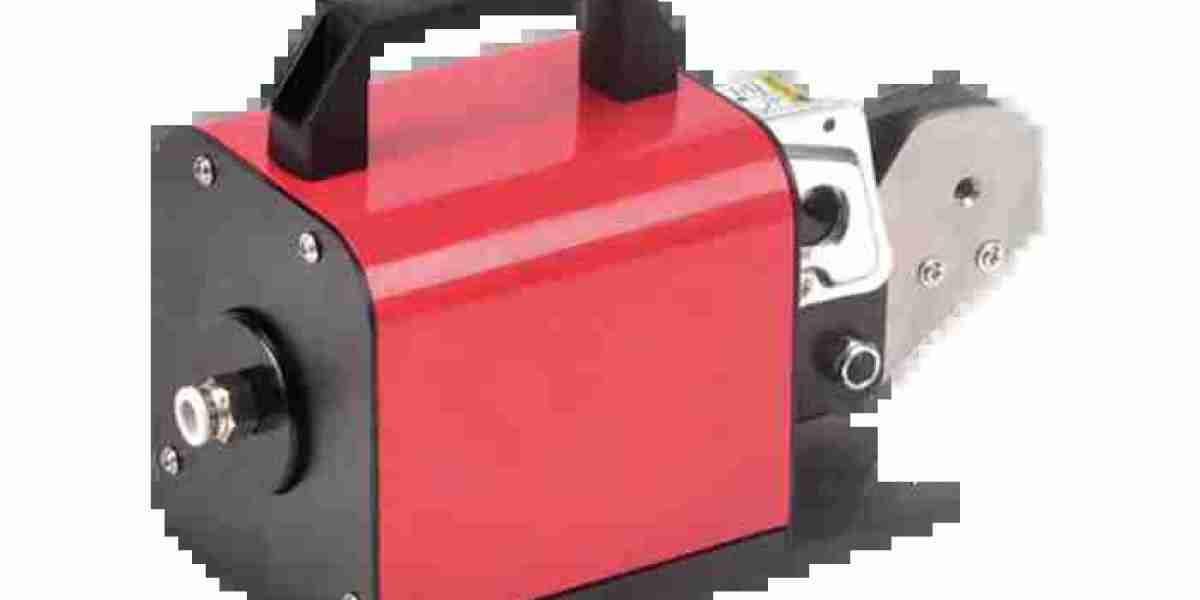

Stable crimping quality is not just about pressing a terminal onto a wire. In industries like electronics, automotive, aerospace, and telecommunications, the connection must stay consistent across thousands of cycles. A Pneumatic Terminal Crimp Machine is designed for that kind of workload.
1. How consistent is the crimping result?
Manual crimping depends heavily on operator strength and experience. A Pneumatic Terminal Crimp Machine uses compressed air as its driving force, creating stable and repeatable crimp pressure. The pneumatic system responds quickly, which helps maintain uniform crimp height and shape across batches.
For high-volume production, this consistency matters. Pneumatic Terminal Crimp Machine Manufacturers typically integrate precision components and controlled stroke systems so each crimp follows set parameters. That stability is one of the main reasons factories shift from manual or purely mechanical equipment.
2. Can it handle different terminal types?
Production rarely involves just one terminal specification. Wire harness workshops often process various terminal sizes and shapes depending on the project. A Pneumatic Terminal Crimp Machine is built with versatility in mind. It can accommodate multiple terminal types and can be adjusted to match different crimping requirements.
Many Pneumatic Terminal Crimp Machine Manufacturers also offer customization options. Dies, applicators, and working parameters can be configured to match specific production needs. For OEM factories or contract manufacturers, this flexibility helps them adapt to changing orders without replacing the entire machine.
3. Is it easy for operators to use?
Training time and operator errors directly influence output. A Pneumatic Terminal Crimp Machine usually comes with a straightforward control interface. Operators can set parameters, monitor the crimping process, and make adjustments without complex programming.
Because the driving force comes from compressed air, the crimping motion feels smooth and controlled. This reduces sudden mechanical impact compared to some traditional systems. Pneumatic Terminal Crimp Machine Manufacturers often focus on ergonomic layout and accessible controls, helping operators maintain stable performance during long shifts.
4. Will it fit into an existing production line?
Integration is a common concern. Factories do not want major changes to their current workflow. A Pneumatic Terminal Crimp Machine is generally designed for easy placement within semi-automatic or automatic lines. It can work as a standalone unit or be connected with wire stripping and feeding equipment.
Energy use is also a factor. Since it relies on compressed air, it can align with existing pneumatic systems in the workshop. When evaluating Pneumatic Terminal Crimp Machine Manufacturers, buyers often ask about compatibility with current air supply setups and available space on the line.
From a purchasing viewpoint, the real focus is long-term reliability and stable crimp quality. A Pneumatic Terminal Crimp Machine addresses both by combining pneumatic drive technology with adjustable tooling and operator-friendly controls.
Factories comparing Pneumatic Terminal Crimp Machine Manufacturers usually look beyond price. They examine crimp consistency, adaptability to different terminals, and how smoothly the machine integrates into daily production. Those practical concerns are exactly what decision makers are typing into Google when researching their next equipment upgrade.