
Multi-zone lighting control systems use networks of controllers, sensors, dimmers, and switches. These systems aim to reduce energy use, improve comfort, and support automation. In large buildings, lighting control often uses RS-485 wiring. RS-485 is reliable for long runs and supports many devices. However, modern management and monitoring systems use Ethernet networks.
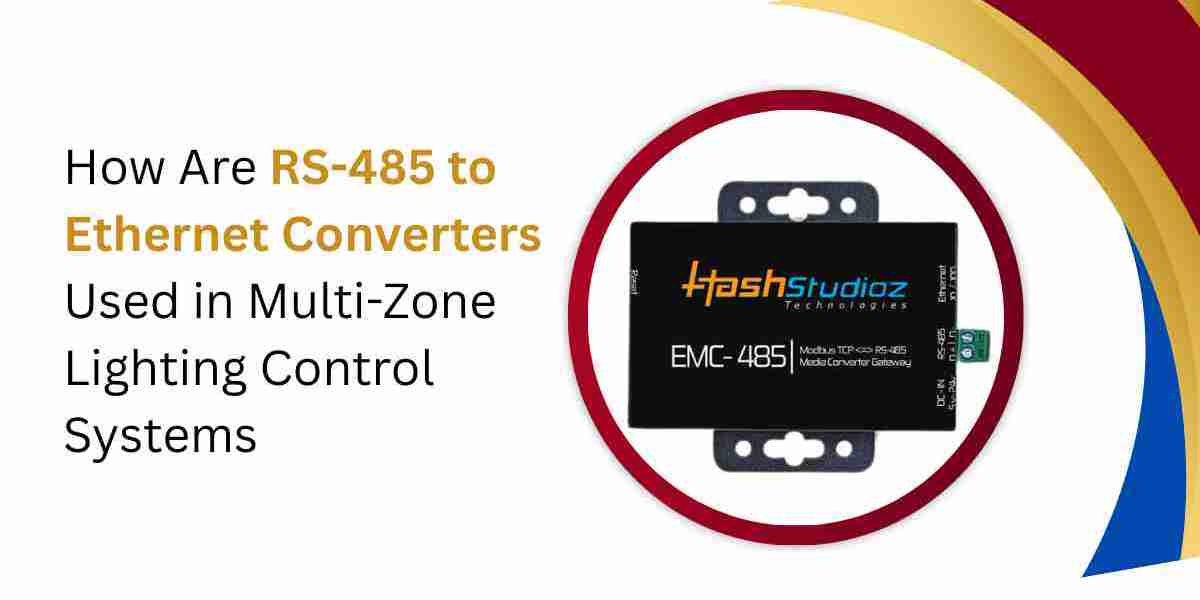
That gap creates a need for an RS-485 to Ethernet Converter. This device connects RS-485 lighting devices to Ethernet-based controllers and software. The same device is also called an RS-485 to Lan Converter. This article explains how these converters work, how they fit into lighting control systems, and why they matter for performance, cost, and flexibility.
Why RS-485 Remains Popular in Lighting Systems
1. Supports Long Cable Runs
RS-485 can transmit signals over distances up to 1,200 meters, making it ideal for large buildings and outdoor lighting installations. This reduces the need for repeaters or extra equipment, simplifying system design and lowering costs.
2. Connects Many Devices on One Bus
A single RS-485 bus can support up to 32 devices, allowing multiple controllers, sensors, and fixtures to communicate on the same network. This makes system expansion easy and keeps wiring organized and efficient in lighting projects.
3. Differential Signaling Provides Noise Resistance
RS-485 uses differential signaling, where two wires carry opposite signals. This method cancels out electromagnetic interference from motors, fluorescent lights, or power cables, ensuring stable communication even in noisy electrical environments.
4. Simple Wiring and Low Cost
RS-485 uses only two data wires plus a ground, which simplifies installation and reduces material costs. The technology is mature, widely available, and easy to maintain, making it a cost-effective choice for lighting control systems.
5. Widely Used in Lighting Protocols
Many lighting control standards are built on RS-485, including DMX512, Modbus RTU, and proprietary systems. This broad compatibility makes RS-485 a common choice for manufacturers and integrators, ensuring interoperability across devices and systems.
Why Ethernet Is Still Needed
1. Higher Bandwidth
Ethernet provides significantly higher data rates compared to RS-485, enabling faster transmission of large volumes of data. This is essential for modern lighting systems that require real-time monitoring, video integration, and complex control commands in large buildings.
2. Standardized Network Management
Ethernet uses widely accepted standards for network setup and administration, making it easy to manage devices, troubleshoot issues, and maintain performance. IT teams can use existing tools and practices, ensuring consistent reliability and simplified system maintenance.
3. Remote Monitoring and Control
With Ethernet, lighting systems can be accessed remotely over local or cloud networks. Facility managers can monitor energy use, adjust schedules, and troubleshoot from anywhere, improving efficiency and reducing the need for on-site service visits.
4. Easy Integration with IT Systems
Ethernet allows lighting control systems to connect seamlessly with existing IT infrastructure, including building management systems, databases, and enterprise networks. This supports centralized control, data analytics, and unified automation across multiple building functions.
5. Ideal for Large Buildings
Large buildings often rely on Ethernet for data, voice, and security networks. Integrating lighting control into this infrastructure improves reliability, reduces duplicate cabling, and supports unified system management, making Ethernet a practical choice for modern facilities.
What Is an RS-485 to Ethernet Converter?
An RS-485 to Ethernet Converter is a device that converts serial signals to IP packets. It lets RS-485 devices communicate over Ethernet networks. In lighting control, the converter connects RS-485 lighting controllers to Ethernet-based management systems.
It is also called an RS-485 to Lan Converter. Both terms describe the same function.
How the Converter Works
1. RS-485 Interface
The converter reads signals from the RS-485 bus, handling differential pairs and multiple device connections. It includes termination resistors and line biasing to prevent reflections and ensure stable communication over long cable runs and noisy environments.
2. Protocol Processor
The protocol processor interprets serial data frames from RS-485 devices. It supports protocols like Modbus RTU, DMX512, BACnet MS/TP, and custom serial protocols. The processor converts these serial frames into TCP/IP packets for Ethernet transmission.
3. Ethernet Interface
The converter sends the processed data as Ethernet packets. It can operate as a TCP client, TCP server, or in UDP mode. Many converters also offer web-based configuration and support DHCP or static IP addressing for flexible network integration.
How Multi-Zone Lighting Systems Work
Basic System Structure
1. Lighting Controllers: Lighting controllers manage each zone’s lighting behavior, applying schedules, scenes, and automated responses. They receive inputs from sensors and user interfaces, then send commands to dimmers and fixtures to maintain desired brightness and energy-saving settings.
2. Dimmers: Dimmers adjust the power supplied to lights, enabling smooth brightness control and scene creation. They can be wired to controllers via RS-485 or Ethernet, and support both traditional and LED fixtures, improving energy efficiency and enhancing comfort in each zone.
3. Motion Sensors: Motion sensors detect occupancy in a zone and trigger lighting changes, such as turning lights on or off. They help reduce energy waste in unoccupied areas, and can also work with time schedules to create responsive, automated lighting behavior.
4. Light Level Sensors: Light level sensors measure ambient daylight and adjust indoor lighting accordingly. They support daylight harvesting by dimming artificial lights when natural light is sufficient, improving comfort and energy savings, especially in spaces with large windows or skylights.
5. Central Management Software: Central management software oversees all zones, enabling configuration, monitoring, and scheduling from a single platform. It provides analytics, fault detection, and remote control, helping facility managers optimize energy usage and maintain consistent lighting standards across the building.
Where RS-485 to Ethernet Converters Fit In
1. Connecting Zone Controllers to a Central Server
In a multi-zone system, each zone may have an RS-485 controller. The converter connects the RS-485 bus to Ethernet. This lets a central server monitor and control all zones.
2. Remote Access and Management
Ethernet provides remote access. Facility managers can adjust schedules, change scenes, and review data from a remote location. A converter provides this link.
3. Integration With Building Automation Systems
Many buildings use centralized systems for HVAC, security, and lighting. Ethernet connects all these systems. A converter helps integrate RS-485 lighting devices into the building automation network.
Key Benefits of Using RS-485 to Ethernet Converters
1. Lower Wiring Costs
RS-485 wiring costs less than Ethernet for long runs. The converter lets you use RS-485 in the field and Ethernet in the backbone.
2. Higher Reliability Over Distance
RS-485 maintains signal quality over long distances. Ethernet does not perform as well without repeaters or fiber. Converters reduce the need for complex Ethernet cabling.
3. Better Monitoring and Control
Ethernet allows centralized monitoring. It also supports data logging, scheduling, and analytics. These features help reduce energy use.
4. Scalable System Design
A converter allows you to add more zones without redesigning the entire network. You can connect additional RS-485 controllers to the bus.
Technical Features to Look for in a Converter
1. RS-485 Specifications
Support for baud rates up to 115200
Multiple RS-485 ports or channels
Line isolation for noise protection
Termination and biasing support
2. Ethernet Specifications
10/100 Mbps speed
TCP/UDP support
Static IP or DHCP
Web-based configuration
3. Environmental and Safety
Operating temperature range
Surge protection
Power supply flexibility
DIN rail or wall mount
Example: Multi-Zone Lighting System in an Office Building
System Setup
An office building has:
6 floors
20 zones per floor
Motion sensors and dimmers in each zone
Central management software
Each floor has an RS-485 bus connecting zone controllers. A converter links each floor bus to the Ethernet backbone.
Data Flow
Sensors detect occupancy
Controllers adjust light levels
Controllers send status over RS-485
Converter sends data to central server
Server logs data and triggers schedules
This setup reduces energy use and improves comfort.
Performance and Statistics
1. Energy Savings
Lighting accounts for about 17% of global electricity use. In buildings, lighting can consume up to 40% of total electricity.
Multi-zone lighting control can cut lighting energy use by 30% to 60% in many cases. These savings come from occupancy control, daylight dimming, and scheduling.
2. Network Load
A single zone controller might send data every 10 seconds. Each message might be 80 to 120 bytes.
For 120 zones, the load is:
120 messages × 100 bytes = 12,000 bytes per cycle
Every 10 seconds → 1,200 bytes per second
About 9.6 kbps
Ethernet handles this easily. The converter ensures the serial data reaches the network without delays.
Common Issues and Solutions
Issue 1: Noise and Signal Loss
Lighting environments can cause electrical noise. Converters with isolation and surge protection reduce errors.
Issue 2: Protocol Compatibility
Many lighting devices use different protocols. Converters that support multiple protocols simplify integration.
Issue 3: Multiple Zones and Device Limits
RS-485 supports up to 32 devices per bus. Large systems may need multiple buses.
Converters with multiple channels or additional converters can handle this.
Security Considerations
Lighting systems connect to building networks. This creates potential risks. Best practices include:
Strong passwords
VLAN separation
Firewall rules
Regular firmware updates
Limited remote access
Security protects the building from unauthorized control or data access.
Comparison: RS-485 vs Ethernet in Lighting Systems
Feature | RS-485 | Ethernet |
Distance | Up to 1,200 m | Up to 100 m without fiber |
Device Count | Up to 32 devices | Many devices via switches |
Noise Resistance | High | Moderate |
Cost | Low | Higher |
Network Integration | Limited | Full IT integration |
Converters allow systems to use the best of both.
Future Trends in Lighting Control
Lighting control systems continue to evolve. Future systems may include:
More wireless devices
More cloud-based management
AI-based lighting optimization
Energy analytics
However, RS-485 remains common in many installations. Converters will stay important for bridging old and new systems.
Conclusion
An RS-485 to Ethernet converter, also called an RS-485 to LAN converter, connects RS-485 lighting controllers, sensors, and dimmers to Ethernet networks. It enables centralized monitoring, remote control, and integration with building automation systems. In multi-zone lighting applications, it improves scalability, reduces wiring costs, enhances reliability, and supports efficient energy management across buildings.