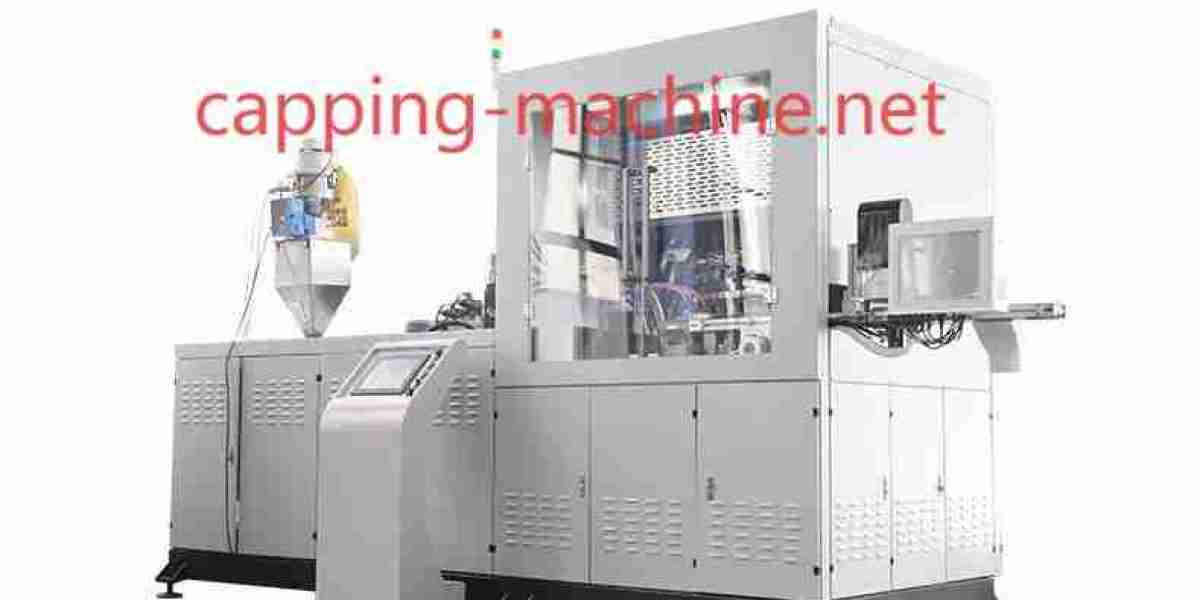

Packaging markets today are defined by diversity. From beverages and food products to personal care and industrial containers, each segment imposes distinct requirements on cap design, production speed, and operational flexibility. In this evolving environment, the Cap Compression Machine has emerged as a practical solution for manufacturers seeking adaptable production systems capable of supporting varied application scenarios without frequent equipment replacement.
Unlike single-purpose forming technologies, compression-based systems are designed to accommodate a wide range of cap geometries and material behaviors. This flexibility begins with tooling concepts that allow controlled material flow during forming. By shaping material under uniform pressure rather than forcing it into molds at high velocity, compression forming supports consistent results across different cap profiles, including flat, threaded, and tamper-evident designs.
Application-driven adaptability is particularly valuable in beverage packaging, where production lines must handle frequent changes in bottle formats and closure specifications. Compression forming supports stable cap dimensions that align with high-speed filling and sealing equipment. This reduces adjustment time on downstream machinery and helps maintain line efficiency during product transitions.
In food packaging, caps often serve both functional and protective roles. They must seal reliably while maintaining structural integrity under varying storage conditions. Compression-formed caps benefit from balanced material distribution, which enhances sealing performance and reduces deformation risks. This consistency supports longer shelf life and improved consumer confidence, especially for products distributed across multiple climate zones.
Personal care and household chemical packaging introduce additional challenges. Caps in these segments often require enhanced resistance to stress, repeated opening, and exposure to aggressive contents. Compression forming enables manufacturers to reinforce specific areas of the cap without increasing overall material consumption. This targeted strength contributes to improved durability while keeping production costs under control.
From a production planning perspective, versatile forming systems simplify capacity management. Instead of maintaining multiple dedicated machines for different cap types, manufacturers can rely on adjustable compression equipment to support varied orders. This reduces floor space requirements and streamlines maintenance scheduling, particularly in facilities serving multiple brands or contract manufacturing clients.
Automation further expands application flexibility. Modern control systems allow operators to store and recall production parameters for different cap designs. This digital consistency minimizes setup errors and ensures repeatable quality across production runs. For manufacturers operating under strict quality assurance protocols, such control supports traceability and process validation efforts.
Energy efficiency remains relevant across all application scenarios. Compression forming’s controlled pressure and temperature profiles help maintain stable energy consumption even as cap designs change. This predictability benefits operations that must balance output volume with sustainability goals, particularly in regions where energy usage is closely monitored or regulated.
Equipment durability also influences application suitability. Continuous production across diverse product lines places mechanical stress on forming systems. Compression equipment designed with reinforced structures and precision-aligned components maintains performance stability over extended operating cycles. This reliability supports consistent output regardless of cap complexity or production volume.
Taizhou Chuangzhen Machinery Manufacturing Co., Ltd. integrates application-focused thinking into its equipment development process. By prioritizing modular design, responsive control systems, and robust mechanical structures, the company supports manufacturers seeking adaptable solutions for evolving packaging demands. This approach aligns with industry trends that favor flexibility over rigid specialization.
As packaging applications continue to diversify, manufacturers increasingly value systems that evolve alongside market requirements. The Cap Compression Machine supports this evolution by enabling efficient transitions between cap types while maintaining quality and operational stability. More information on application-oriented equipment solutions is available at https://www.capping-machine.net/product .