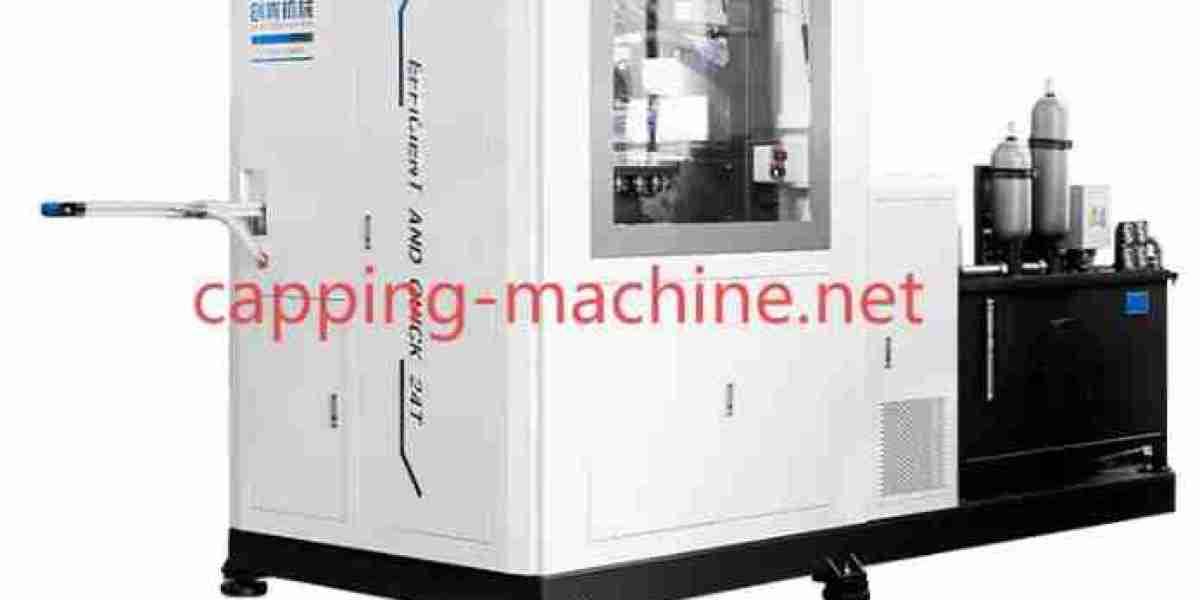

Across the packaging industry, energy efficiency is no longer treated as a secondary benefit but as a core operational requirement, especially as manufacturers scale production to meet rising global demand. Within this context, the Cap Compression Machine has gained attention for its ability to support energy-conscious manufacturing strategies while maintaining consistent cap quality and production reliability.
Traditional cap forming methods often rely on high-pressure injection cycles that generate excess heat and material stress. These conditions can increase power consumption while also placing greater wear on mechanical components. In contrast, compression-based forming focuses on controlled material distribution and gradual shaping, which allows manufacturers to reduce peak energy loads without compromising output stability.
One of the defining characteristics of compression forming systems is their optimized thermal management. Heating is applied more precisely to the material required for forming, reducing unnecessary energy loss during the molding process. When combined with advanced insulation and responsive temperature control systems, this approach helps stabilize energy usage across extended production runs. For facilities operating in regions with strict energy regulations or cost-sensitive electricity markets, this stability supports long-term planning and budgeting.
Automation also plays a significant role in enhancing energy efficiency. Modern control platforms allow operators to fine-tune process parameters based on cap design, material type, and production speed. By avoiding overcompensation in pressure or heat, manufacturers can achieve repeatable results with minimal waste. These systems also support rapid changeovers, enabling production lines to shift between cap designs without prolonged idle time or energy-intensive recalibration.
In high-volume production environments, small efficiency gains accumulate into substantial operational savings. Compression forming equipment is often designed to maintain consistent cycle times, reducing fluctuations that can lead to material defects or energy spikes. This predictability improves coordination between upstream material handling and downstream capping operations, contributing to smoother overall line performance.
Application scenarios further highlight the value of energy-efficient forming technology. Beverage producers benefit from stable cap dimensions that integrate seamlessly with high-speed bottling lines, minimizing stoppages and rework. Food packaging operations value reduced thermal stress on materials, which helps preserve cap integrity during storage and transport. In household and industrial product packaging, energy-efficient forming supports thicker or reinforced cap designs without excessive power consumption.
Material efficiency is closely linked to energy performance. Compression forming enables more uniform resin distribution, reducing the need for excessive material input to achieve structural strength. This efficiency not only lowers raw material usage but also reduces the energy required for material processing and post-forming cooling. As sustainability reporting becomes more common across the packaging sector, such efficiencies contribute positively to environmental performance metrics.
From an equipment design perspective, energy efficiency must be balanced with durability. Systems engineered for long-term operation require components capable of maintaining precision under continuous load. Reinforced frames, optimized drive systems, and wear-resistant tooling help ensure that energy savings are not offset by increased maintenance demands or shortened equipment lifespan.
Taizhou Chuangzhen Machinery Manufacturing Co., Ltd. incorporates these considerations into its approach to equipment development. By emphasizing structural stability, intelligent control integration, and practical automation, the company supports manufacturers seeking to modernize their cap production while managing energy consumption responsibly. This focus aligns with industry trends that prioritize sustainable growth without sacrificing operational performance.
As packaging producers reassess their manufacturing strategies, energy-conscious equipment selection becomes an essential component of competitive positioning. The Cap Compression Machine fits within this strategic framework by offering a balance of efficiency, adaptability, and reliable performance across diverse production requirements. Detailed equipment configurations and technical resources can be found at https://www.capping-machine.net/product .