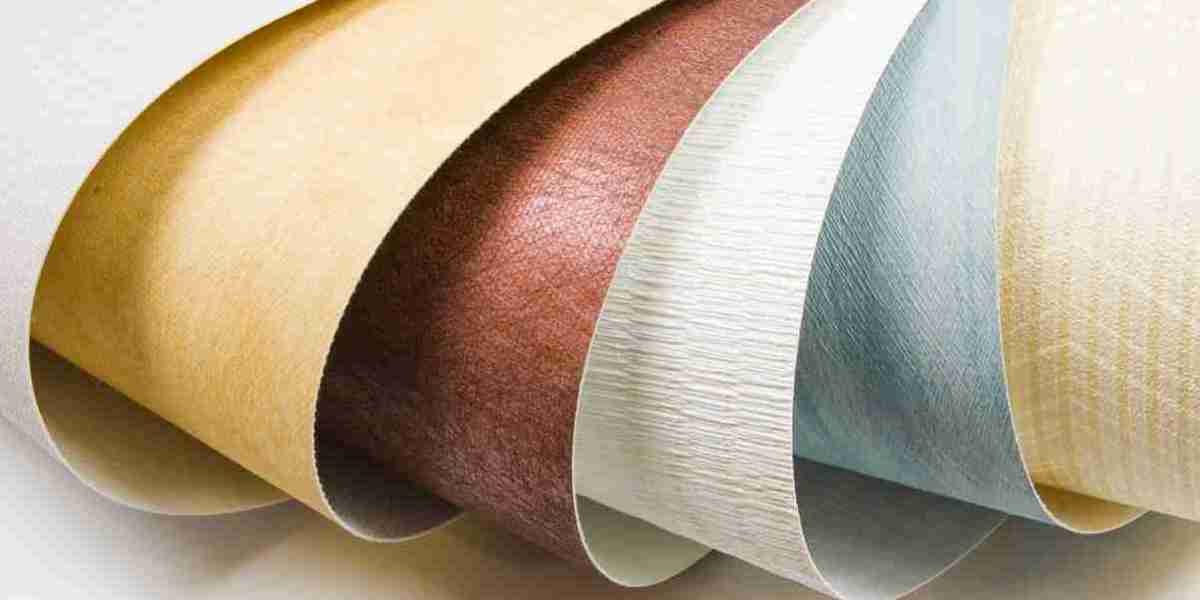

In contemporary interior environments, wall materials are increasingly evaluated through the lens of lifecycle performance rather than initial appearance alone, and the integration of MSD PVC wallcovering into long-term spatial planning reflects this shift in material thinking. Instead of functioning as a static backdrop, wall surfaces are now expected to withstand continuous interaction while maintaining visual and structural consistency.
One of the defining characteristics of PVC-based wall materials lies in their controlled surface resilience. Interior walls experience repeated low-impact contact from furniture movement, human traffic, and routine maintenance activities. A surface that is overly rigid may exhibit micro-cracking under such conditions, while an excessively soft surface may show compression marks or gloss variation. Balanced formulation allows the material to absorb minor stress while returning to its original state without visible fatigue.
Processing methods play a decisive role in achieving this balance. During production, precise control over surface temperature, pressure distribution, and cooling speed influences how polymer chains settle into a stable configuration. Improper cooling can lock internal stress into the sheet, which may later manifest as curling or edge tension during installation. Shanghai Mingst International Trading Company emphasizes coordination between formulation design and processing discipline to minimize internal stress and ensure dimensional stability across varying environmental conditions.
The interaction between wall surfaces and interior lighting also deserves careful consideration. Artificial lighting, particularly in commercial and hospitality spaces, can exaggerate surface irregularities or amplify gloss inconsistencies. Materials designed with controlled light diffusion help soften reflections and maintain a consistent appearance throughout the day. This optical stability contributes to perceived quality and prevents visual fatigue in environments where occupants spend extended periods.
Environmental adaptability is another key performance dimension. Interior spaces often experience fluctuating humidity levels due to climate control systems, seasonal changes, or localized moisture exposure. Wall materials that lack proper moisture tolerance may gradually lose adhesion or develop surface distortion. PVC-based solutions engineered for dimensional equilibrium are better suited to maintain alignment and surface tension despite moderate environmental variation.
From a practical standpoint, compatibility with different substrate conditions is critical. Walls are rarely perfectly uniform, especially in renovation projects or older buildings. Materials that can conform gently to minor surface irregularities reduce the need for extensive substrate preparation. This adaptability not only improves installation efficiency but also lowers the risk of visible imperfections after completion. Such performance outcomes are the result of deliberate material engineering rather than incidental properties.
Performance evaluation extends beyond initial testing and into simulated aging processes. Accelerated wear testing allows manufacturers to observe how surfaces respond to repeated cleaning cycles, mild chemical exposure, and extended mechanical interaction. These assessments provide valuable insight into how appearance and surface integrity evolve over time. Rather than focusing solely on peak performance metrics, this approach emphasizes consistency and predictability throughout the product’s service life.
Aesthetic flexibility remains a significant advantage in interior wall materials. Subtle texture variations can influence how a space feels without overwhelming the overall design concept. Neutral tones with controlled depth allow designers to layer other elements such as lighting, furnishings, and artwork without visual conflict. Shanghai Mingst International Trading Company supports this design flexibility by aligning material production with evolving architectural preferences and functional requirements.
Maintenance behavior ultimately shapes user perception long after installation is complete. Surfaces that retain their original appearance with minimal effort contribute to a positive long-term experience for building occupants and facility managers alike. Resistance to staining, ease of surface cleaning, and retention of tactile quality all influence how a space ages. These attributes, while often understated, significantly impact overall satisfaction with interior materials.
As architectural design increasingly emphasizes longevity and adaptability, wall surfaces must perform quietly and consistently within complex interior systems. Through attention to material behavior, processing accuracy, and real-world application needs, Shanghai Mingst International Trading Company continues to develop wallcovering solutions that support sustainable interior performance. Further technical perspectives and application insights are available at https://www.shanghaimsd.com/news/the-ultimate-guide-to-pvc-wallcovering-designs-benefits-and-more.html .