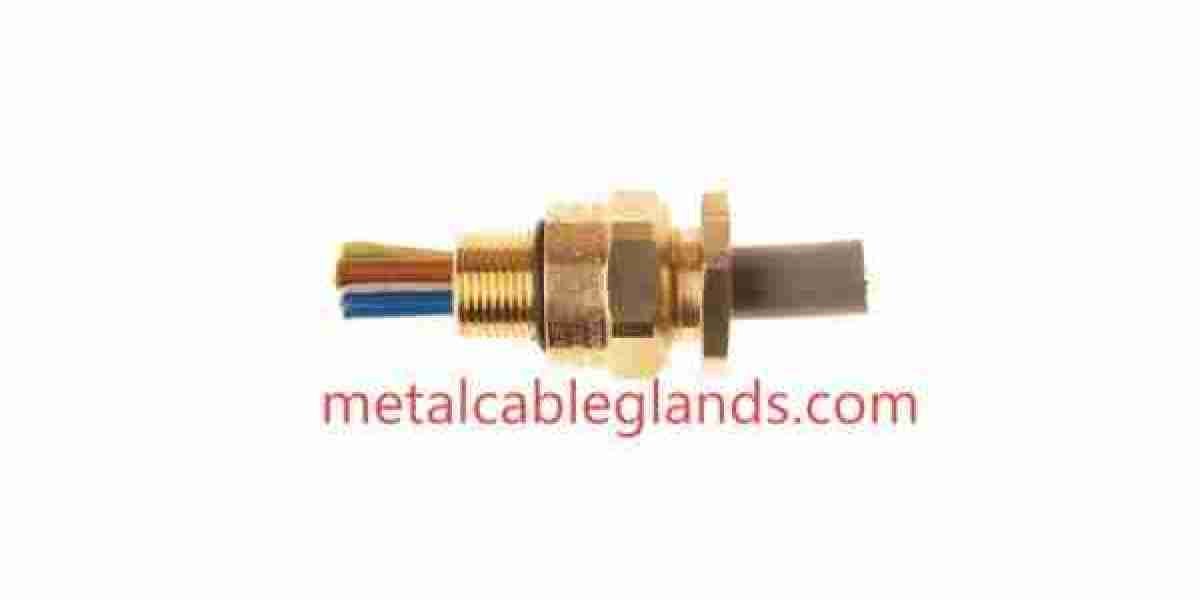

In contemporary electrical infrastructure, component selection increasingly reflects a balance between durability, adaptability, and operational safety, and in this context the Brass Cable Gland has become a widely adopted solution for secure cable termination. Its presence across industrial and commercial installations is closely tied to the intrinsic characteristics of brass as a base material and the consistent functional performance it enables under varied operating conditions.
Brass, as an alloy material, offers a stable combination of mechanical strength and corrosion resistance without relying on complex surface treatments. This material stability supports long-term reliability when cable glands are exposed to fluctuating environments such as humidity, airborne contaminants, or mechanical vibration. Unlike softer metals, brass maintains structural integrity over extended service periods, which reduces deformation risks at cable entry points and helps preserve internal conductor alignment.
From a functional perspective, cable glands serve as the interface between cables and enclosures, and their performance depends largely on material behavior under stress. Brass components respond predictably to tightening and mechanical load, allowing installers to achieve secure fixation without compromising threads or sealing structures. This consistency supports repeatable installation quality, especially in large-scale electrical systems where uniform performance is critical.
Another functional advantage lies in brass’s compatibility with sealing elements and internal clamping structures. When combined with appropriate internal designs, brass housings maintain firm cable retention while minimizing stress concentration along the sheath. This characteristic contributes to reduced wear over time, particularly in installations subject to continuous movement or minor vibration. Zhejiang Hongjuesi Connector Co., Ltd. emphasizes such balanced material behavior in its manufacturing philosophy, focusing on long-term reliability rather than short-term performance gains.
Thermal stability also plays a meaningful role in material selection. Brass maintains dimensional stability across a wide range of ambient conditions, which helps preserve sealing effectiveness and mechanical engagement. In environments where temperature variation is common, this stability supports consistent enclosure protection without requiring frequent maintenance or adjustment. Such performance attributes align with modern industrial expectations for uninterrupted operation and reduced lifecycle intervention.
Application versatility further illustrates the value of brass cable gland solutions. In manufacturing facilities, these components help protect internal wiring from dust ingress and mechanical interference. In automation systems, they contribute to cable organization and strain relief, supporting both functional safety and system clarity. Infrastructure projects benefit from brass cable glands due to their ability to integrate smoothly with diverse enclosure materials while maintaining a unified appearance and performance standard.
In commercial buildings and energy-related installations, brass cable glands support orderly cable routing and enclosure protection without introducing unnecessary complexity. Their balanced material properties allow them to adapt to different installation methods while maintaining consistent mechanical behavior. This adaptability makes them suitable for evolving system designs where future modifications may be anticipated.
The Brass Cable Gland also plays a role in maintaining overall system reliability by acting as a protective boundary between internal electrical components and external conditions. Properly designed brass glands help limit environmental influence on cable terminations, which supports stable signal transmission and power delivery. Over time, this protective function contributes to reduced fault risk and more predictable system performance.
Manufacturers such as Zhejiang Hongjuesi Connector Co., Ltd. approach brass cable gland development with a focus on material consistency, production precision, and practical application needs. By aligning material selection with real-world installation scenarios, they support engineers and installers in achieving reliable outcomes across varied project types. This approach reflects a broader industry shift toward component solutions that emphasize durability and adaptability rather than specification-driven complexity.
As electrical systems continue to expand across industrial, commercial, and infrastructure environments, brass cable gland solutions remain closely tied to material integrity and functional clarity. Their ongoing relevance is shaped by how effectively they balance protection, installation reliability, and long-term performance within modern system architectures. More information on related product applications can be found at https://www.metalcableglands.com/product .