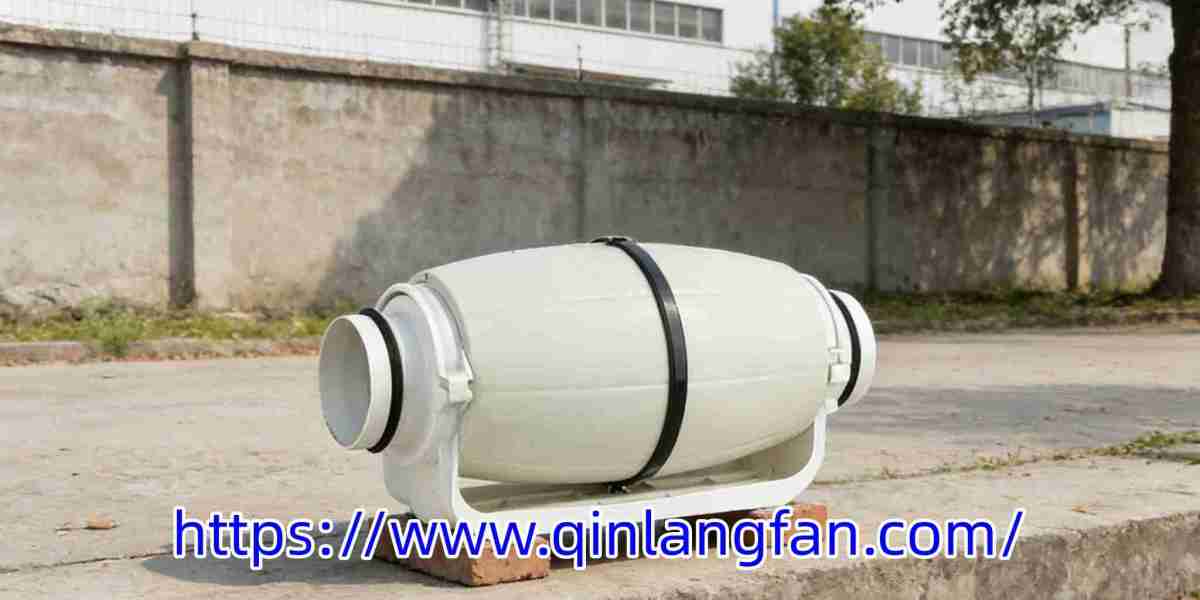

Smooth ventilation design ideas continue to shift as indoor comfort expectations rise, and Qinlang introduces its Wholesale Duct Silent Fan at a moment when quieter airflow has become an essential priority across residential and commercial environments. Many builders, contractors, and distributors now look for systems that create balanced circulation without imposing disruptive mechanical presence, and this evolving mindset encourages solutions that merge acoustic control with consistent supply movement. In various projects, interior designers notice that people want surrounding spaces to feel calm, yet they also require dependable circulation to prevent stale zones, odors, or humidity accumulation, so efficient flow patterns gain new significance. These preferences push suppliers toward technologies that generate continuous operation with minimized resonance, where thoughtful fan housings, refined impeller geometry, and balanced mounting structures work together to suppress vibration and streamline delivery throughout complex pathways.
Discussions among engineering teams frequently highlight how airflow character changes when ducts twist, split, or extend across multiple rooms, because long channels often create turbulence spikes and pressure fluctuations that challenge standard fan builds. When architects propose extended routing or concealed ceiling passages, equipment placed within those spaces must maintain steady performance under subtle directional shifts, and this calls for models that support stable torque behavior even when counteracting irregular drag points. Such performance expectations have grown across renovation work and fresh construction projects, with owners aiming for controlled circulation that does not interrupt interior activities such as resting, reading, office collaboration, or hospitality service. These conditions stimulate broader interest in durable assemblies made of rigid shells, premium bearings, and efficient drives that hold airflow values within an acceptable corridor while still restraining operational tones that might otherwise echo in narrow cavities.
Another factor influencing selection habits involves the rising focus on energy preservation, as various facility managers try to maintain ventilation around the clock while still preserving consumption margins. Many institutions now emphasize long-run stability rather than short bursts of force, cultivating demand for balanced speed profiles that avoid unnecessary peaks during sustained tasks. Efficiency goals also encourage configurations that adapt gracefully to changing interior states such as humidity variation, occupant buildup, or gradual temperature rise, where air movement must respond fluidly rather than jump abruptly between modes. This subtle environmental awareness motivates a new sense of appreciation for systems capable of creating steady support in malls, cafés, workshops, and multi-unit complexes. As interest in silent energy-minded circulation continues to expand, distributors search for equipment capable of fitting diverse ducts without constant recalibration, and they pay attention to brands that understand how construction realities differ among regions, climates, and building ages.
Across these market shifts, teams evaluating new ventilation lines often mention how dependable acoustic control improves overall spatial harmony since quiet systems allow focused work, pleasant gatherings, and relaxed nights. They also observe that supply networks benefit when equipment ships with mounting flexibility because technicians face unexpected angles, shifting ceiling cavities, and material thickness differences that call for accommodating brackets and simplified assembly. Each innovative approach adds value to large procurement channels by reducing future complaints, service calls, or disruptive maintenance cycles, especially in locations where uptime is crucial for health, safety, or comfort. When decision makers outline their expectations for durable ventilation, they often emphasize forward-looking features capable of supporting demanding schedules without spreading intrusive noise, and such requirements define current procurement strategies across wholesalers and builders alike. Qinlang continues strengthening this outlook by presenting Wholesale Duct Silent Fan solutions tailored for stable circulation within dynamic structures, and more information can be found at https://www.qinlangfan.com/