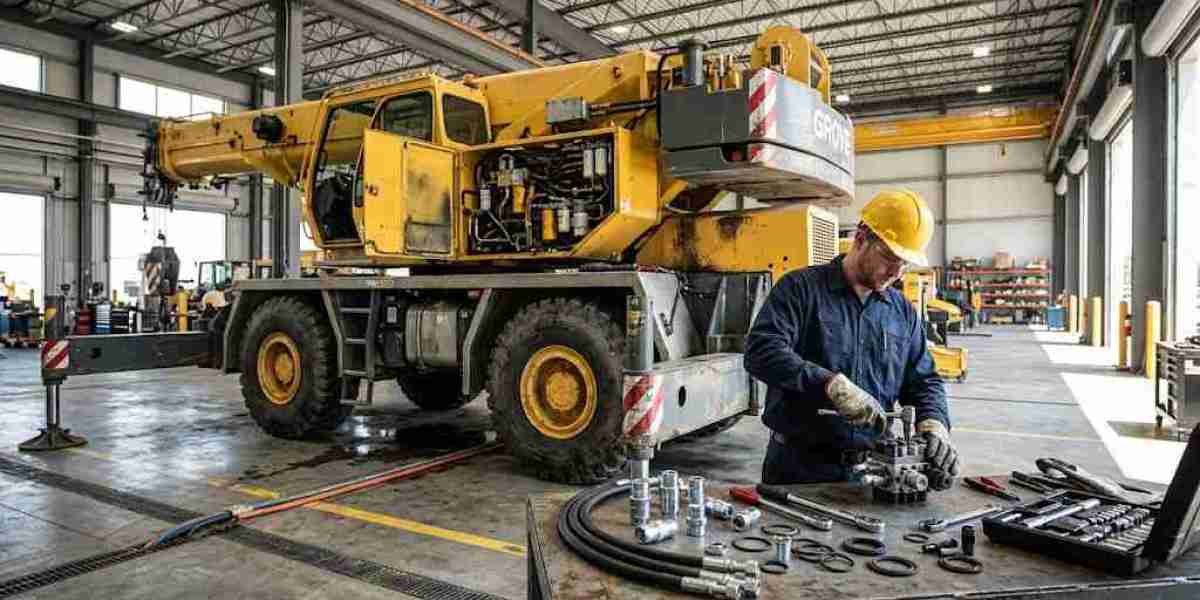

A Grove crane standing in your yard is a statement of capability. It says you can handle the heaviest lifts and meet the toughest schedules. But capability without consistent maintenance is a depreciating asset. The machine's future value depends less on its purchase price than on the components that flow through it over the years.
Every crane owner eventually learns this lesson, some the hard way. The parts you choose during maintenance either preserve the engineering that made the crane valuable or erode it. That erosion is slow, invisible, and expensive. The discussion below walks through each domain where component decisions have the most lasting impact.
Savings on Paper Rarely Survive Contact With the Field
Purchasing managers are trained to negotiate. When a component replacement hits the requisition, the instinct is to seek the lowest viable option. The aftermarket market is vast, and the price gap between generic and factory components can be striking. Rational actors pursue that gap.
Cranes operate in a mechanical environment that is anything but forgiving. Every load cycle strains components in ways that demand strict material standards. A generic hydraulic fitting may thread correctly and pass a static pressure test, yet fatigue prematurely under dynamic loading. Crane spare parts that have not been validated for the specific duty cycle introduce a level of risk that is difficult to quantify until failure occurs.
The aftermath of a cheap component failure rarely stays contained. Fluid leaks contaminate adjacent parts. Metal fragments circulate through closed systems. What began as a single replacement escalates into a multi-system repair. The savings captured at purchase are recovered, with interest, at the repair bench.
Every Component Is Part of a Larger Equation
The engineering team that designed your crane did not specify parts in isolation. Each gear, each valve, and each structural pin was selected to interact harmoniously with every other element. The load charts reflect those interactions, and the hydraulic pressures are calibrated accordingly.
Grove parts are manufactured to preserve those relationships. Their dimensions, hardness, and material properties mirror the original build exactly. That fidelity is not a marketing claim. It is a measurable characteristic traceable to the manufacturing process.
Bushing wear patterns provide a useful case study. A bushing with the correct hardness distributes contact evenly across its bore. One that is too soft develops flat spots that concentrate load on specific points. Over time, those points become wear grooves that propagate through the assembly. Factory-matched components prevent this progression by maintaining the metallurgical relationships the design requires.
When a Crane Stops, Everything Behind It Stops
Construction schedules are built on the assumption that critical equipment will be available. A crane sits at the center of that assumption for most structural projects. When the crane goes down, the entire sequence behind it halts and the costs escalate with every passing hour.
Components that consistently meet their rated performance reduce the frequency of these disruptions. They behave predictably over extended service periods. That predictability allows maintenance planning to function as intended, with inspections scheduled and replacements made before failures occur.
Fleet managers who stock crane spare parts strategically gain a further advantage. A technician who can pull a replacement filter or hose from the shelf starts work within minutes of a failure being identified. That responsiveness compresses downtime from days to hours. The investment in inventory pays for itself through recovered production time alone.
The Electronic Layer Changes the Maintenance Calculus
Cranes today are equipped with electronic systems that would have been unimaginable a generation ago. The load moment indicator, engine control module, and hydraulic management system all rely on continuous data from dozens of sensors. The operator depends on that data for every decision made during a lift cycle.
A sensor that drifts out of calibration creates an invisible hazard. The LMI will calculate capacity from whatever values it receives, even if those values are wrong. The display looks normal, the system reports no fault, and the operator proceeds on false information. Grove parts are calibrated against the crane's software environment, which ensures the data entering the system is trustworthy.
Electronic integration extends beyond individual sensors. Connector compatibility, signal ranges, and communication protocols must all align with the crane's architecture. When they do not, the result is often a cascade of error codes with no mechanical root cause. Technicians lose hours chasing symptoms. Correctly specified components prevent that diagnostic dead end.
Hydraulics Reward Cleanliness and Punish Neglect
Every powered function on a crane traces back to hydraulic pressure. Boom extension, winch torque, swing rotation, and outrigger positioning all depend on fluid moving through tightly controlled circuits. The integrity of those circuits determines the crane's availability more than any other system.
Seals represent the most common entry point for contamination. An inexpensive seal made from the wrong compound will degrade when exposed to hot hydraulic oil. As it deteriorates, it releases material into the fluid stream. That material travels through control valves, clogging spools and scoring bores. What started as a twenty-dollar seal becomes a several-thousand-dollar valve body replacement.
Temperature management deserves equal attention in hydraulic systems. An undersized pump generates excess heat through internal friction, which accelerates oil breakdown. Degraded oil loses its lubricating properties, and component wear accelerates accordingly. Grove parts are engineered to operate within thermal specifications that protect the fluid and extend the life of every downstream component.
The Structural Backbone Needs Consistent Attention
The boom may define a crane's silhouette, but the pins and bushings within it determine its structural integrity. These connections experience continuous bending, shear, and compressive forces. Their wear is inevitable, and managing that wear correctly is essential to preserving the boom's rated capacity.
A pin replaced with a softer-than-specification alternative seems adequate in the short term. It fits, it holds, and the crane returns to work. Over hundreds of cycles, however, that pin wears against the bore, which gradually enlarges. A bore that has lost its round shape concentrates stress on one side of the connection, accelerating a degradation process that ultimately demands structural repair.
Bearings, grease fittings, and driveline components follow the same rule. Consistent hardness between mating surfaces produces even wear, and dimensional stability preserves alignment. When you replace a worn item with a component that matches the original specification, you reset the wear clock instead of shortening it. Routine inspections identify items nearing replacement, but only correct components prevent those items from causing secondary damage.
The Service Record Is Your Crane's Résumé
Every crane eventually transitions to a new owner. The form that transition takes varies, but the buyer's diligence does not. Prospective purchasers examine maintenance records with the same scrutiny they would apply to a financial audit. They are looking for patterns, not just line items.
A log populated with traceable, specification-compliant components demonstrates ownership with intention. It shows that the crane was maintained to its design parameters rather than patched together to meet short-term needs. That narrative carries weight in any transaction, and it shows up in the offers that owners receive.
A maintenance history marked by unbranded or unknown components tells the opposite story. Buyers recognize that inconsistent sourcing can conceal alignment problems, contamination issues, or structural fatigue. They also know that correcting years of mismatched maintenance requires time and capital. Both factors reduce their willingness to pay. The components selected today will be examined by a buyer years from now.
Lifting Leaves No Margin for Component Failure
Every crane lift places multi-ton loads above human beings and occupied structures. The physics of that operation demand absolute reliability from every element in the load path. There is no graceful way to recover from a component failure when the load is suspended.
Wire ropes, load holding valves, brake systems, and structural connections work as an integrated safety chain. Each element has been tested and certified to perform under its rated conditions. When any link in that chain degrades, the margin of safety narrows for everything above it.
Operators need components they can trust without hesitation. Every control input must produce the expected response, every time, without exception. That level of reliability comes from components verified through testing protocols designed for lifting applications. Anything less introduces unacceptable variability into an environment where variability kills.
Stocking Shelves Beats Relying on Speed
Maintenance planning separates fleets that run smoothly from those that lurch from crisis to crisis. Emergency procurement under time pressure is one of the most expensive and error-prone activities in equipment management. Rushed decisions produce wrong orders and extended outages.
A modest inventory of common wear items eliminates most of that exposure. Hoses, filters, pins, seals, and hydraulic fluid should be on the shelf before demand arises. Having crane spare parts readily available means the repair begins the moment the diagnosis is complete. The alternative is hours or days spent waiting for delivery while the crane sits idle.
Supplier expertise extends this advantage. A partner who knows the equipment platform can verify part numbers, confirm compatibility, and identify supersessions before an order is placed. That knowledge is difficult to replicate under pressure. Over time, that relationship becomes the backbone of an efficient maintenance operation.
Decades of Discipline Compound Into Value
A crane's service life is measured in decades, not fiscal quarters. The temptation to economize on individual components is understandable during lean periods. But each of those small economies carries a hidden cost that accumulates over the machine's lifetime.
Components that align with the original engineering protect your equipment from the cascading failures that inferior alternatives so often produce. They keep downtime manageable, keep crews safe, and keep machines in the field generating revenue. They also protect the equity you have built in the asset.
When you select components for your equipment, think in terms of total ownership cost rather than invoice price. Choose parts that meet exact specifications, endure the designed duty cycle, and perform within published safety limits. That discipline is what turns a good crane into a great investment.