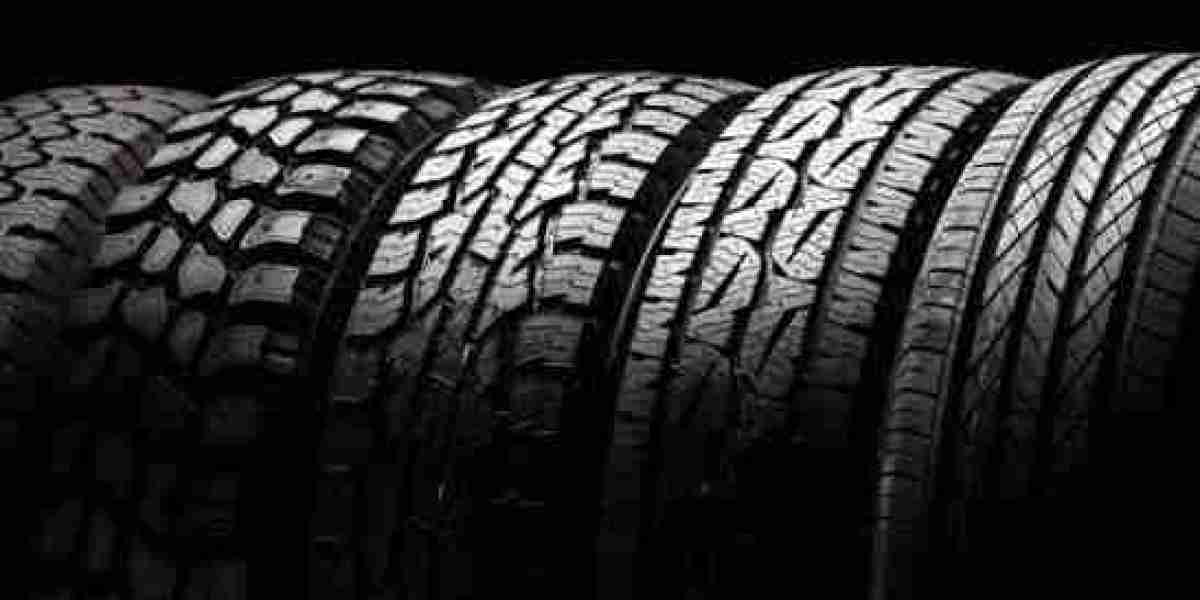

Sports utility vehicles have become an increasingly important part of the global passenger-vehicle mix, influencing demand for tires designed around higher vehicle weights, larger dimensions, stronger load requirements, and diverse driving conditions. SUV users may drive across urban roads, highways, and uneven terrain, creating demand for tire products that balance handling, durability, comfort, traction, and rolling efficiency.
According to the global SUV tire industry analysis by Markntel Advisor, the sector was valued at around USD 42.67 billion in 2025 and is projected to reach USD 45.9 billion in 2026 and USD 66.2 billion by 2032, reflecting a CAGR of 6.29% during 2026–2032. The replacement segment represented 64% of demand in 2026, while North America accounted for 37%, highlighting the importance of the installed SUV base and recurring tire replacement.
SUV Adoption Reshapes Tire Requirements
The continued shift toward SUVs is changing the requirements placed on passenger-vehicle tires. Compared with smaller passenger cars, SUVs generally require products capable of supporting greater vehicle mass and, in many cases, higher load ratings. Tire dimensions can also be larger, while vehicle owners may expect a combination of road comfort, stability, braking performance, and durability.
This vehicle transition is visible across mature automotive markets. In Europe, SUVs accounted for 51% of total new car sales in 2023, according to the European passenger-car segment data published by the European Automobile Manufacturers’ Association. The expanding SUV fleet creates both original-equipment requirements and a progressively larger base of vehicles requiring replacement tires.
Replacement Demand Remains Central
The replacement segment accounts for 64% of the global SUV tire sector in 2026. Unlike original-equipment demand, which is closely tied to new vehicle production, replacement demand develops throughout the operating life of vehicles. As SUVs remain in service for several years, tires must eventually be replaced because of tread wear, mileage accumulation, aging, road damage, or changing seasonal requirements.
The replacement cycle can also vary according to driving patterns. Urban SUVs may experience frequent braking and acceleration, while vehicles used on highways accumulate substantial mileage. Off-road applications can expose tires to stones, uneven surfaces, mud, and other demanding conditions. These differences encourage manufacturers to offer products tailored to specific applications rather than relying on a single universal design.
All-Season Tires Offer Versatility
All-season tires hold the leading position by tire type in the report. Their appeal comes from their ability to provide balanced performance across a broad range of everyday conditions without requiring consumers to change tires seasonally in regions where extreme winter conditions are limited.
For SUV owners, versatility can be particularly relevant because these vehicles are often used for multiple purposes. A single vehicle may handle commuting during the week, highway travel on weekends, and occasional trips on unpaved roads. Tire development therefore increasingly focuses on balancing traction, tread life, ride comfort, noise, and efficiency.
Electric SUVs Introduce New Design Priorities
The expansion of electric SUVs is adding another layer of technical complexity. Battery packs can increase vehicle weight, while electric drivetrains deliver torque rapidly. These characteristics can place additional demands on tire durability and traction.
Low rolling resistance is also important because tire energy losses can affect electric-vehicle efficiency and driving range. At the same time, tire engineers must preserve braking and handling characteristics. This creates a design challenge in which durability, grip, noise reduction, rolling resistance, and load capacity must be considered together.
Sustainability Is Becoming a Technical Requirement
Environmental considerations are increasingly influencing tire development. The industry is exploring recycled, renewable, and bio-based materials while seeking to preserve the performance characteristics required for SUV applications. Sustainable materials can potentially reduce reliance on virgin resources, but their integration requires careful evaluation of durability, traction, efficiency, and manufacturing consistency.
Regulation is also increasing attention on tire-related environmental impacts. The European Commission's Euro 7 framework addresses non-exhaust emissions, including particles from tires and brakes, while tire-abrasion requirements are intended to reduce microplastic emissions. The European Commission's tire legislation information also outlines existing performance and labeling requirements for tires sold in the European Union.
Raw Material Volatility Remains a Constraint
Natural rubber and other petroleum- and mineral-derived materials remain important components of tire manufacturing. Fluctuations in raw-material prices can affect production costs, procurement planning, and final product pricing. SUV tires can be particularly exposed because larger dimensions and reinforced constructions may require greater material inputs per unit.
Price volatility can also influence replacement behavior. When tire prices increase significantly, some vehicle owners may postpone replacement or select products based more heavily on upfront cost. Manufacturers consequently need to balance material efficiency with the durability and performance requirements expected from SUV applications.
Regional Demand Patterns Continue to Differ
North America leads the global SUV tire sector with a 37% share in 2026. The region's established preference for SUVs and light utility vehicles provides a large installed base for replacement products. Europe and Asia-Pacific also represent important demand centers, although vehicle preferences, climate conditions, road infrastructure, and regulatory requirements differ across individual countries.
These differences influence tire specifications. Winter-focused markets require stronger cold-weather performance, while warmer regions may place greater emphasis on heat resistance and wet-road handling. Emerging markets can simultaneously generate demand for affordable products and technologically advanced tires as SUV ownership expands.
Outlook for SUV Tire Development
The global SUV tire industry is being shaped by sustained SUV adoption, replacement demand, electric vehicle development, sustainability requirements, and advances in tire engineering. The large installed SUV base creates recurring replacement opportunities, while EV adoption is pushing manufacturers to reconsider conventional assumptions around load, torque, efficiency, and noise.
Future tire development is likely to focus on multifunctional products capable of delivering durability, safety, efficiency, and environmental performance simultaneously. Advances in sustainable materials, tread engineering, digital monitoring, and application-specific designs could further influence how SUV tires are developed and selected as the global vehicle fleet continues to evolve.