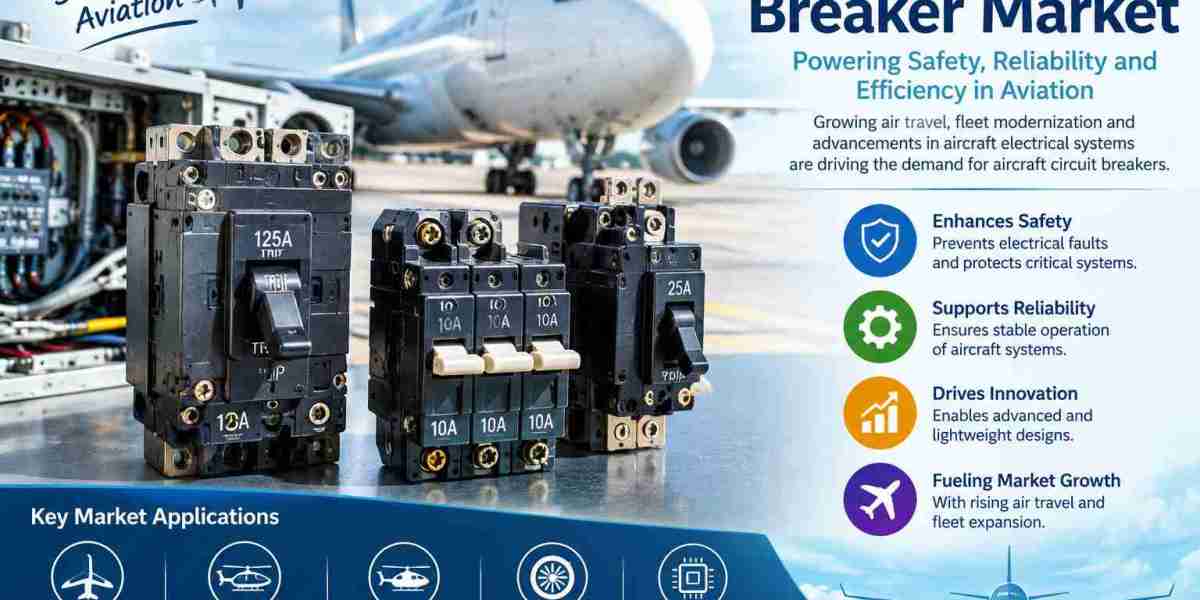

The aircraft circuit breaker market plays a significant role in supporting electrical safety within aviation systems. Aircraft depend on electrical power for a wide variety of functions, and protecting electrical circuits is essential for maintaining organized and reliable operation. Circuit breakers provide a practical means of controlling electrical circuits and responding to abnormal conditions, making them an important part of aircraft electrical architecture.
The development of aviation circuit protection technology is closely associated with improvements in aircraft electronics and electrical system design. As aircraft incorporate more sophisticated equipment, electrical protection solutions must adapt to changing system requirements. This has encouraged attention toward advanced protection mechanisms, compact designs, electronic functionality, and improved system integration.
Circuit Protection as an Aircraft Safety Element
Electrical faults can affect individual components or connected systems if they are not appropriately managed. Circuit breakers are designed to interrupt affected circuits when specific abnormal conditions occur, helping reduce the potential impact of an electrical fault.
The ability to isolate a circuit is particularly useful in complex aircraft because numerous systems may share broader electrical power infrastructure. Separating circuits can help organize the electrical architecture and support troubleshooting when an issue occurs.
Aircraft designers therefore consider circuit protection during the development of electrical distribution systems. The selection and placement of circuit breakers can influence how electrical systems are organized and maintained.
Innovation in Protection Mechanisms
Circuit breaker technology includes different approaches for detecting and responding to electrical abnormalities. Thermal, magnetic, combined, and electronic approaches can be applied depending on system requirements.
Electronic approaches are particularly relevant to modern aircraft because they can potentially provide additional control and monitoring functionality. Digital technologies can make it possible to gather information about electrical conditions and provide more detailed system feedback.
These developments may support maintenance teams by providing additional information during troubleshooting. They can also support the broader movement toward increasingly connected aircraft systems.
Role of Electrical Distribution
Aircraft electrical distribution systems must deliver power to numerous systems while maintaining suitable protection. Circuit breakers can help separate electrical loads into individual circuits.
This organization can be especially important when aircraft contain multiple avionics systems, communication equipment, lighting systems, cabin systems, and control-related electronics.
The circuit breaker therefore becomes part of a larger network rather than an independent component. Its performance needs to correspond with the characteristics of the electrical system in which it is installed.
Design Requirements in Aviation
Aviation components are exposed to operating environments that can differ substantially from those encountered in many ground-based applications. Vibration, temperature changes, limited installation space, and continuous operational demands can influence component design.
Circuit breakers must consequently be developed with aircraft-specific requirements in mind. Manufacturers may focus on materials, construction, mounting arrangements, electrical performance, and serviceability.
The emphasis on compact solutions is also significant. Aircraft designers need to manage available space carefully, particularly around electrical panels and equipment areas.
Modernization Creates Opportunities
Aircraft modernization is another factor influencing demand for circuit protection components. Older aircraft may undergo electrical system upgrades as operators seek to maintain functionality and integrate updated equipment.
When electrical systems are modified, circuit protection arrangements may also need to be reviewed. This creates opportunities for manufacturers supplying replacement or upgraded components.
Maintenance and retrofit activities can therefore complement demand generated by new aircraft production. Together, these applications create a broad market environment for circuit breaker suppliers.
Looking Toward More Connected Aircraft
The growing use of digital technologies in aircraft is creating new possibilities for circuit protection. Future solutions may combine protection, monitoring, communication, and diagnostic functions more closely.
Such developments can help move circuit breakers beyond their traditional role as basic protection devices. Their integration into aircraft monitoring architectures may provide maintenance teams with more information about electrical system conditions.
The aircraft circuit breaker market is consequently positioned within a broader transformation of aircraft electrical systems. Continued innovation in protection mechanisms, digital capabilities, compact construction, and system integration can support the changing requirements of aviation.
FAQs
FAQ 1: What role do circuit breakers play in aircraft safety?
They help protect electrical circuits by interrupting abnormal electrical conditions and isolating affected circuits.
FAQ 2: Can aircraft circuit breakers support maintenance activities?
Yes. Depending on their design, circuit breakers can support easier circuit identification, isolation, inspection, and troubleshooting.