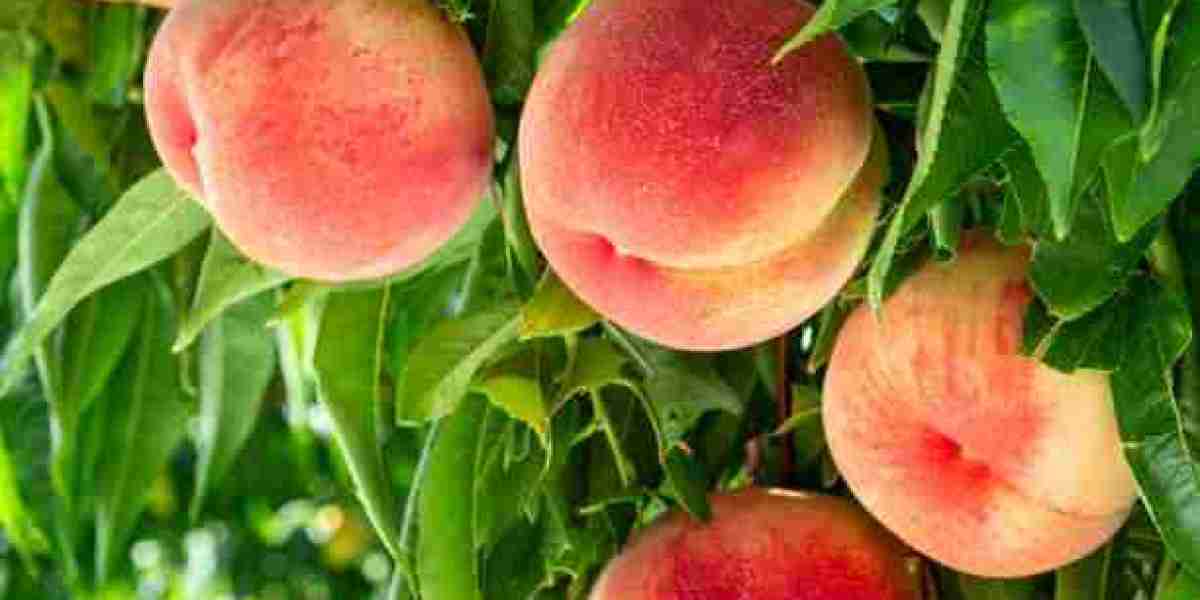

Fresh Peach Market is increasingly connected with sustainability as producers, retailers, and consumers pay greater attention to how fresh fruit is cultivated, transported, packaged, and sold. Peach cultivation requires careful management of water, soil, nutrients, weather conditions, and crop protection. As environmental awareness expands, growers are exploring ways to improve resource efficiency while maintaining the quality expected by consumers. Sustainable agriculture is therefore becoming an important consideration across orchard management and supply-chain operations. The focus is not limited to reducing environmental impact; it also includes improving production efficiency, minimizing waste, strengthening soil health, and maintaining long-term orchard productivity. These priorities can influence the future direction of peach production.
Growing interest in sustainable peach cultivation is encouraging growers to examine water management, soil conservation, integrated pest management, and responsible agricultural inputs. Water efficiency is particularly relevant because fruit production depends on reliable irrigation in many growing regions. Technologies such as drip irrigation, moisture monitoring, and automated irrigation systems can help growers make better use of available water. Soil-management practices can also support orchard health by improving nutrient availability and reducing degradation. Sustainable cultivation does not necessarily require abandoning conventional agricultural methods; instead, it can involve integrating improved technologies and management practices into established production systems. This approach can help growers address environmental considerations while maintaining commercial productivity.
Climate variability is another challenge influencing peach cultivation. Temperature fluctuations, unexpected weather events, drought conditions, and changes in seasonal patterns can affect flowering, fruit development, and harvest timing. Producers are therefore increasingly interested in technologies and management approaches that can improve resilience. Orchard monitoring, weather forecasting, crop protection, irrigation management, and variety selection can all contribute to risk management. Developing peach varieties suited to particular growing environments may also support production stability. As climate conditions evolve, growers may need to adjust planting decisions and cultivation techniques. The ability to adapt production systems can become increasingly important for maintaining consistent supply and quality across different agricultural regions.
Pest and disease management is also closely related to sustainability. Peach orchards can face various biological threats that affect fruit quality and crop yields. Integrated pest management can combine monitoring, biological controls, cultural practices, and carefully selected crop-protection methods. This approach aims to manage agricultural risks while reducing unnecessary applications. Better monitoring technologies can help growers identify problems earlier and determine where intervention is needed. Digital tools can support this process by collecting information about orchard conditions and crop health. As precision agriculture develops, growers may gain more opportunities to apply crop-protection resources selectively rather than uniformly across entire orchards.
Post-harvest sustainability is equally important because food losses can reduce the environmental efficiency of agricultural production. If peaches are damaged or deteriorate before reaching consumers, the resources used to produce them may effectively be wasted. Better harvesting practices, cooling systems, sorting, packaging, transportation, and inventory management can help reduce these losses. Retailers can also improve forecasting and stock rotation to minimize unsold fresh produce. Consumers can contribute by storing peaches correctly and using fruit before quality declines. A comprehensive approach to sustainability therefore requires cooperation throughout the supply chain rather than focusing solely on orchard production.
Packaging is another area where sustainability and product protection must be balanced carefully. Peaches require protection against bruising and physical damage during handling and transportation, but excessive packaging can increase material consumption and waste. Manufacturers and retailers are exploring packaging approaches that provide adequate protection while using materials more efficiently. Recyclable or lower-impact packaging can potentially support environmental objectives when suitable collection and recycling systems are available. Packaging design can also influence convenience, product visibility, and shelf presentation. The challenge is to create solutions that simultaneously address protection, freshness, consumer convenience, cost, and environmental considerations.
The future of the Fresh Peach Market will likely involve greater integration of sustainable agriculture, climate resilience, digital technology, and supply-chain efficiency. Growers can explore precision irrigation, orchard monitoring, improved varieties, integrated pest management, and soil-health practices to strengthen production. Distributors and retailers can focus on cold-chain improvements, efficient packaging, and waste reduction. Consumers may also influence the market through growing interest in responsible sourcing and environmentally conscious products. Sustainability can therefore become a shared objective across the entire peach value chain. As the industry adapts to environmental and consumer expectations, businesses that combine high-quality fruit production with responsible resource management can contribute to a more resilient and efficient fresh peach ecosystem.
FAQs
Q1. What does sustainable peach farming involve?
It can involve efficient irrigation, soil conservation, integrated pest management, responsible input use, orchard monitoring, and practices designed to maintain long-term productivity.
Q2. How can climate change affect peach production?
Changing temperatures, drought, unexpected weather, and shifting seasonal patterns can influence flowering, fruit development, harvest timing, and overall crop performance.
Q3. Why is reducing food waste important for the peach supply chain?
Reducing waste helps preserve the resources used during cultivation, transportation, storage, and retail while improving supply-chain efficiency.