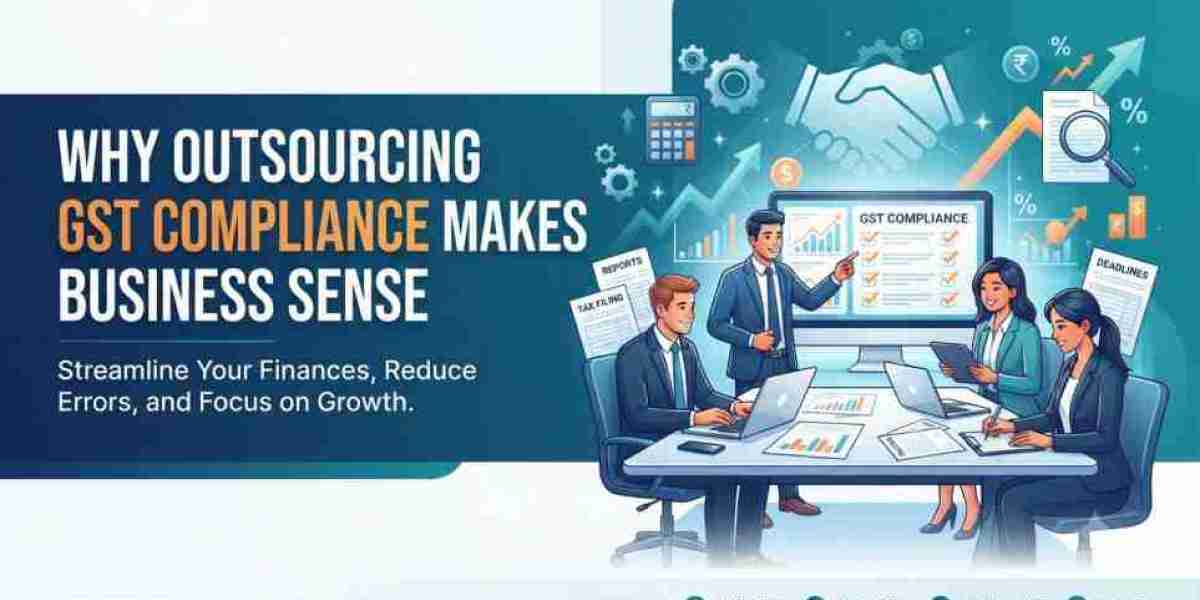

Managing GST compliance is an important part of running a business in India. Every registered business has to keep track of invoices, GST payments, returns, records, and important deadlines. As the business grows, these tasks can take more time and require greater attention.
For many businesses, handling all tax-related work internally can become difficult. This is where outsourcing GST compliance can help. By working with a professional service provider, businesses can get support with GST Registration, GST Return Filing Online, tax records, and other compliance requirements.
Outsourcing does not mean giving up control of your finances. It means getting professional support so your internal team can focus more on business operations.
What Is GST Compliance?
GST compliance means following the rules and requirements under the Goods and Services Tax system.
It can include:
GST Registration
Maintaining GST invoices and records
Calculating GST liability
Filing GST returns
Paying GST on time
Checking input tax credit
Responding to GST notices
Maintaining supporting documents
Keeping tax records updated
The exact compliance requirements can differ depending on the nature and size of the business.
Why Do Businesses Outsource GST Compliance?
Businesses outsource GST work for different reasons. Some may not have an in-house tax professional, while others may want their finance team to focus on accounting and business planning.
Here are some common reasons.
1. Saves Time
GST compliance involves regular activities such as checking invoices, preparing data, reconciling records, and filing returns.
When these tasks are handled by an external professional, business owners and employees can spend more time on sales, customers, operations, and growth.
For a small business owner, saving several hours every month can make a meaningful difference.
2. Helps Reduce Compliance Errors
GST information has to be reported correctly. Errors in invoices, tax calculations, input tax credit, or return details can create problems later.
A professional compliance team can review the available information before filing. This can help identify common mistakes and missing information.
However, outsourcing does not guarantee that errors will never happen. Businesses should still provide accurate and complete information to their service provider.
3. Makes GST Return Filing Easier
Regular return filing can become difficult when a business has many invoices or transactions.
With GST Return Filing Online, businesses can provide their relevant records to a professional team, which can help prepare and submit the required returns.
A proper process can include:
Collecting sales and purchase data
Checking invoices
Reviewing GST details
Reconciling available records
Preparing the return
Filing the return
Maintaining filing records
This structured approach can make monthly or quarterly compliance easier to manage.
4. Access to Professional Knowledge
GST rules and compliance requirements can change over time. Businesses may not always have the time to track every update.
An experienced tax professional can help businesses understand applicable requirements and identify changes that may affect their compliance process.
This is particularly useful for businesses dealing with multiple states, different types of transactions, or a large volume of invoices.
5. Better Focus on Core Business Activities
A business owner has many responsibilities. Managing customers, employees, vendors, sales, marketing, and operations already takes considerable time.
Handling every compliance task personally can reduce the time available for these activities.
Outsourcing routine GST work allows business owners to focus more on running and growing the business.
6. Helps With Record Management
Good records are important for tax compliance.
An outsourced compliance team can help organize and maintain relevant GST documents, such as:
Sales invoices
Purchase invoices
Credit and debit notes
GST returns
Payment records
Reconciliation statements
Tax-related communications
Well-maintained records can also make it easier to respond when additional information is required.
7. Can Be Useful for Growing Businesses
A business may start with a small number of transactions. As sales increase, the number of invoices and compliance activities can also increase.
An internal team that was able to manage GST work initially may find it harder to handle the increased workload.
Outsourcing can provide additional support without requiring the business to immediately build a larger tax team.
GST Compliance Is More Than Just Filing Returns
One common misconception is that GST compliance simply means filing a return.
In reality, the process can involve several activities before and after filing.
For example, businesses may need to:
Check GST registration details
Verify invoice information
Track taxable and exempt transactions
Review input tax credit
Reconcile purchase records
Calculate tax liability
Make applicable tax payments
File returns
Maintain records
Monitor notices and communications
Therefore, businesses should look at GST compliance as an ongoing process rather than a single monthly activity.
How Outsourcing GST Compliance Works
The process generally follows a simple workflow.
Step 1: Share Business and Tax Information
The business provides relevant documents and transaction information to the service provider.
Step 2: Data Review
The professional team reviews the available information and checks for missing or inconsistent details.
Step 3: Reconciliation
Sales, purchase, and tax-related records may be reconciled to identify differences.
Step 4: Return Preparation
Based on the available information, the applicable GST return is prepared.
Step 5: Review and Filing
The information is reviewed before the return is filed through the appropriate GST system.
Step 6: Record Keeping
The business receives or maintains the relevant filing records for future reference.
Outsourcing Other Tax Compliance Work
Businesses often deal with more than GST. Income tax and TDS compliance can also require regular attention.
Income Tax Return Filing
Businesses and individuals may need professional assistance with tax return preparation and filing.
Using Income Tax Return Filing Services can help taxpayers organize financial information and complete applicable return-related requirements.
Professional assistance may be useful for businesses with complex income, multiple sources of revenue, investments, or other tax-related matters.
TDS Compliance
Businesses that deduct tax at source also need to manage TDS-related compliance.
This can include calculating applicable TDS, depositing the deducted amount, maintaining records, and filing applicable returns.
Businesses can use TDS Return Filing Online services to get professional assistance with preparing and filing TDS returns.
GST Registration and Ongoing Compliance
For businesses that are required to register under GST, GST Registration is an important starting point.
However, registration is only one part of the compliance process. After registration, businesses may have continuing responsibilities such as:
Filing applicable GST returns
Maintaining proper invoices
Reporting transactions correctly
Paying applicable GST
Tracking input tax credit
Updating relevant information when required
This is why businesses should plan for ongoing GST compliance rather than treating registration as the end of the process.
When Should a Business Consider Outsourcing GST Compliance?
Outsourcing may be worth considering when:
The business does not have an in-house tax specialist.
GST transactions have increased significantly.
The finance team is already overloaded.
There are multiple GST registrations.
The business operates across different states.
Owners want professional support for tax compliance.
Internal teams frequently struggle with compliance deadlines.
The business wants to spend more time on core operations.
The right approach depends on the business's size, transaction volume, internal resources, and compliance needs.
What Should You Check Before Choosing a GST Service Provider?
Before outsourcing, businesses should look at a few important factors.
Experience
Check whether the service provider has experience with businesses similar to yours.
Scope of Services
Understand whether the service covers only GST return filing or also includes reconciliation, notices, registration, and other compliance support.
Data Security
Tax and financial information is sensitive. Ask how documents and business data are stored and protected.
Communication
There should be a clear process for sharing documents, discussing discrepancies, and confirming filing requirements.
Transparency
Understand the service charges and what is included before starting the engagement.
Why Choose Corpbiz for GST Compliance Support?
Corpbiz Advisors provides professional support for businesses dealing with tax and regulatory compliance requirements.
Businesses can get assistance with services such as:
GST Registration
GST Return Filing Online
Income Tax Return Filing Services
TDS Return Filing Online
Tax compliance support
Business and regulatory compliance
The goal is to help businesses manage their compliance requirements in an organized manner while allowing business owners to focus on their core activities.
Conclusion
GST compliance is an ongoing responsibility for businesses. As transaction volumes and business operations increase, managing GST work internally can become time-consuming.
Outsourcing GST compliance can help businesses save time, organize tax records, manage filing activities, and access professional support. It can also allow internal teams to concentrate on important business activities instead of spending too much time on routine compliance work.
Whether you need GST Registration, GST Return Filing Online, Income Tax Return Filing Services, or TDS Return Filing Online, choosing the right professional support can make tax compliance easier to manage.
FAQs
1. What does GST compliance include?
GST compliance can include GST registration, invoice management, return filing, tax payment, input tax credit review, reconciliation, record keeping, and responding to applicable GST communications.
2. Why should a business outsource GST compliance?
Businesses may outsource GST compliance to save time, access professional support, manage increasing transaction volumes, and reduce the workload on their internal teams.
3. Can I get GST Registration through a professional service provider?
Yes. A professional service provider such as Corpbiz can assist businesses with the GST registration process and related documentation.
4. What is GST Return Filing Online?
GST Return Filing Online refers to preparing and submitting applicable GST return information through the online GST system.
5. Can GST compliance be outsourced along with income tax compliance?
Yes. Businesses can seek professional support for both GST and income tax requirements, depending on their specific needs.
6. What are Income Tax Return Filing Services?
These services provide professional assistance with preparing and filing applicable income tax returns based on the taxpayer's financial and tax information.
7. Can TDS Return Filing Online be outsourced?
Yes. Businesses can use professional TDS services to assist with applicable TDS calculations, records, and return filing.
8. Is outsourcing GST compliance suitable only for large companies?
No. Small businesses, startups, growing companies, and larger organizations may all consider outsourcing depending on their transaction volume and internal resources.
9. Does outsourcing guarantee zero GST errors?
No. Professional support can help identify and reduce common errors, but accurate compliance also depends on the quality and completeness of the information provided by the business.
10. How can Corpbiz help with GST compliance?
Corpbiz Advisors can assist businesses with GST Registration, GST Return Filing Online, and other tax and regulatory compliance requirements based on their business needs.