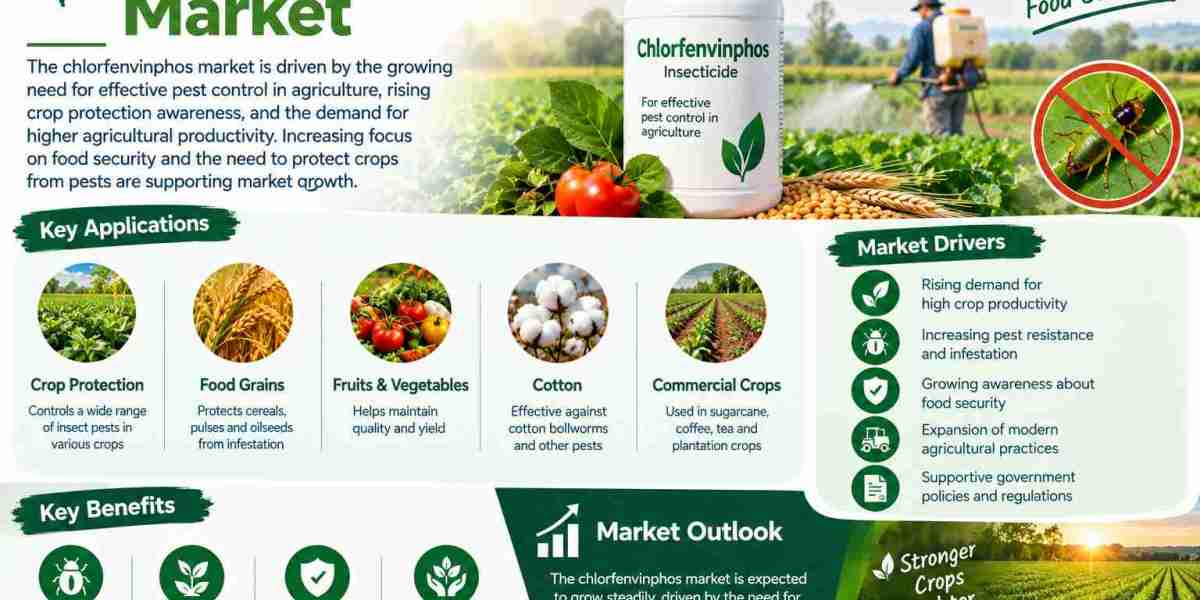

Chlorfenvinphos is an organophosphorus insecticide and acaricide that has historically been associated with agricultural, veterinary, and pest-control applications. Its role in pest management has been shaped by its ability to affect insect nervous-system activity, making it relevant to discussions surrounding crop protection and pest control chemistry. At the same time, the chemical has attracted substantial regulatory and environmental attention, which has influenced how it is handled, distributed, and considered across different markets.
The broader agricultural pest control chemicals landscape provides an important context for understanding chlorfenvinphos-related market activity. Farmers, agricultural professionals, pest-management operators, and chemical manufacturers increasingly operate in an environment where pest-control effectiveness must be considered alongside regulatory requirements, environmental protection, responsible handling, and changing agricultural practices.
The chlorfenvinphos market is therefore a specialized segment of the wider crop-protection and pest-management industry. Historically, chlorfenvinphos was used against insect pests affecting crops and livestock, as well as pests associated with animal facilities and domestic environments. These applications demonstrate the chemical's broad historical relevance within conventional pest-control systems. However, changing regulatory approaches have significantly altered its position in many regions.
One important factor shaping the market landscape is regulatory oversight. Chlorfenvinphos has faced restrictions and cancellations in several jurisdictions because of concerns surrounding toxicity and potential risks to people, animals, and ecosystems. Such restrictions create a market environment where manufacturers, distributors, agricultural businesses, and pest-control professionals must pay close attention to applicable rules before considering the handling or use of the substance. Regulations can also influence product availability, supply-chain decisions, storage practices, and demand patterns.
Environmental considerations represent another important part of the chlorfenvinphos market discussion. Conventional pesticides can interact with surrounding ecosystems, and chlorfenvinphos has been identified as a chemical requiring careful environmental consideration. Its potential effects on non-target organisms make responsible management particularly important. Consequently, market participants may increasingly focus on compliance procedures, safe storage, controlled handling, monitoring, and appropriate disposal rather than simply emphasizing conventional pest-control performance.
Agricultural modernization is also changing the broader pest-management environment. Farmers are increasingly exposed to integrated approaches that combine different pest-control techniques, monitoring practices, crop-management methods, and alternative products. This creates a more complex competitive environment for conventional chemical solutions. Instead of relying exclusively on a single active ingredient, pest-management strategies can involve multiple complementary approaches designed around specific crop conditions and pest pressures.
The veterinary connection also remains relevant when examining the historical development of chlorfenvinphos. The substance has been associated with products used for controlling ectoparasites affecting livestock and domestic animals. However, regulatory requirements and safety considerations have affected where and how such applications can occur. This makes jurisdiction-specific compliance an important consideration for organizations involved in the chemical's supply or use.
Research and development within the wider pesticide industry may also influence the future context of the chlorfenvinphos market. As agricultural businesses seek effective pest-management options that fit evolving environmental and regulatory expectations, attention is increasingly directed toward alternatives, precision application, biological approaches, and integrated pest-management systems. These developments can reshape demand for older chemical solutions and encourage industry participants to reassess product portfolios.
Overall, the chlorfenvinphos market represents a specialized area where pest-control history, agricultural requirements, regulatory policies, environmental considerations, and changing industry practices intersect. Its future market environment is likely to remain closely connected with legal requirements and responsible chemical management. For businesses operating in this field, understanding application restrictions, handling expectations, environmental considerations, and changing pest-management strategies can be essential for navigating the evolving landscape.
FAQs
1. What is chlorfenvinphos used for?
Chlorfenvinphos has historically been used as an insecticide and acaricide in agricultural and veterinary pest-control applications. Its permitted uses vary by jurisdiction because of regulatory restrictions.
2. What factors influence the chlorfenvinphos market?
Regulatory policies, environmental considerations, agricultural pest-management practices, product availability, and the development of alternative pest-control solutions can all influence the market landscape.