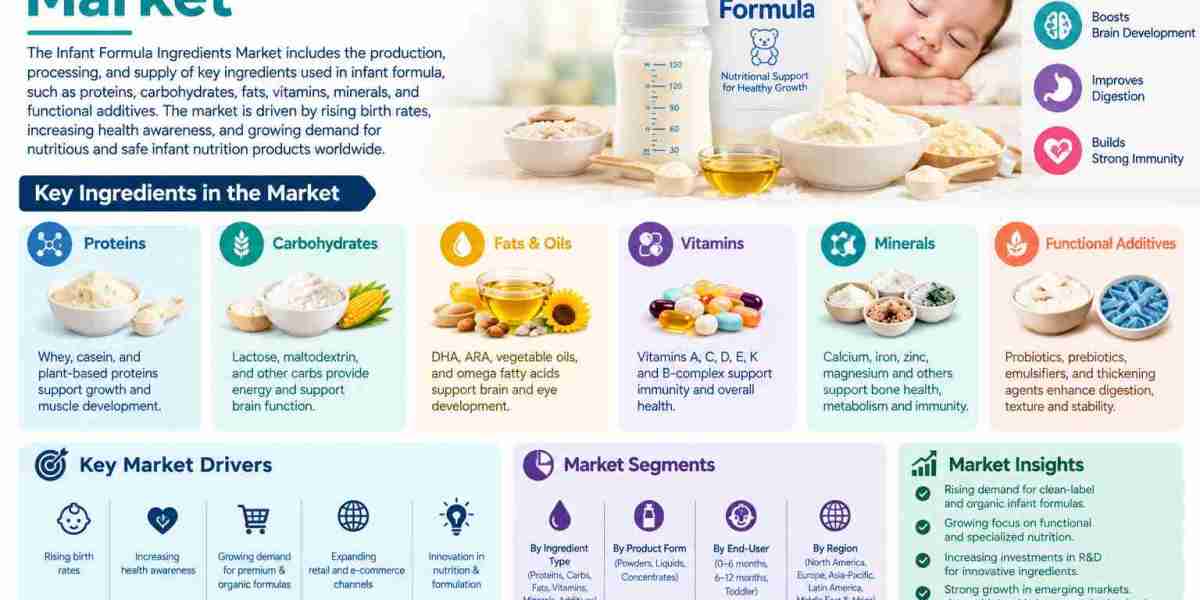

Innovation is becoming a central theme in the infant formula ingredients market as manufacturers search for more sophisticated ways to formulate nutritional products. The industry operates at the intersection of food science, nutrition, processing technology, and quality management. As formula products become more specialized, ingredient suppliers are developing solutions that can provide improved functionality while supporting the nutritional objectives of manufacturers.
The increasing interest in specialized infant nutrition ingredients demonstrates how formula development is moving toward more targeted nutritional solutions. Rather than relying only on conventional ingredients, manufacturers are exploring functional components, specialized proteins, advanced lipid systems, prebiotics, probiotics, and other ingredients that can contribute to differentiated product concepts.
One important area of innovation is protein technology. Proteins must be carefully selected and processed because they form an important part of the nutritional composition of formula. Advances in protein processing can provide manufacturers with ingredients that have different solubility, digestibility, and functional characteristics. Hydrolyzed proteins are particularly relevant to specialized formula development because processing can modify the structure of proteins and influence their application.
Lipid innovation is also transforming ingredient development. Infant formula requires carefully designed fat systems, and manufacturers are examining how different oils and lipid ingredients can be combined. Structured lipids and specialty fatty-acid ingredients are examples of technologies that can provide greater control over nutritional and technical properties. Such developments allow formula producers to design lipid systems that work effectively within specific formulations.
Carbohydrate technology is another area of interest. Carbohydrates influence the nutritional and physical characteristics of formula, meaning their selection requires careful consideration. Ingredient suppliers are developing carbohydrate solutions that can work alongside proteins, fats, vitamins, and minerals while supporting the desired characteristics of the final product.
The development of prebiotic ingredients has further expanded the functional ingredient landscape. Prebiotics are associated with the digestive environment and can be incorporated into certain formula concepts. Their effectiveness and stability depend on formulation conditions, which means manufacturers must carefully evaluate how these ingredients interact with other components.
Probiotics and related functional ingredients are also attracting attention. Maintaining the quality and functionality of these ingredients throughout manufacturing and storage can be challenging. As a result, ingredient technology is increasingly focused on stability and protection. Encapsulation and controlled processing approaches can provide potential solutions for incorporating sensitive ingredients into formula products.
Human milk oligosaccharides represent another significant area of innovation. These specialized carbohydrates have become an important topic within modern infant nutrition because of their connection with the composition and functionality of human milk. Advances in biotechnology and ingredient production are supporting the development of suitable HMO ingredients for approved applications.
Micronutrient systems also remain essential. Vitamins and minerals must be incorporated carefully so that they complement the broader nutritional structure of formula. Ingredient suppliers may develop premixes designed to simplify manufacturing while supporting consistency across production batches. This can help manufacturers manage complex formulations more efficiently.
Manufacturing technology is closely connected to ingredient innovation. Powder processing, blending, drying, emulsification, encapsulation, and other techniques can affect the performance of ingredients. Manufacturers therefore need ingredients that can withstand appropriate processing conditions while maintaining their intended characteristics.
Quality assurance continues to influence innovation across the market. Every ingredient must meet appropriate specifications, and manufacturers need reliable processes for testing and verification. Consistency between ingredient batches is particularly important because unexpected variation can affect the final product. Strong supplier relationships and traceability systems can help reduce uncertainty throughout the supply chain.
Sustainability is also entering ingredient development discussions. Ingredient producers are examining responsible sourcing, resource efficiency, manufacturing practices, and supply-chain transparency. Sustainable approaches can help companies respond to broader environmental expectations without compromising ingredient quality or nutritional requirements.
The infant formula ingredients market is consequently becoming a highly innovative field. Advances in protein processing, lipid systems, functional carbohydrates, micronutrient premixes, probiotics, prebiotics, and specialized ingredients are giving manufacturers more formulation possibilities. The continuing combination of nutrition science and food technology is expected to remain an important driver of product development.
FAQs
FAQ 1: What innovations are influencing infant formula ingredients?
Important areas include protein processing, specialty lipids, functional carbohydrates, prebiotics, probiotics, micronutrient systems, and human milk oligosaccharides.
FAQ 2: Why is ingredient stability important in infant formula?
Stability helps ingredients maintain their intended characteristics during manufacturing, storage, and preparation, supporting consistency in the finished product.