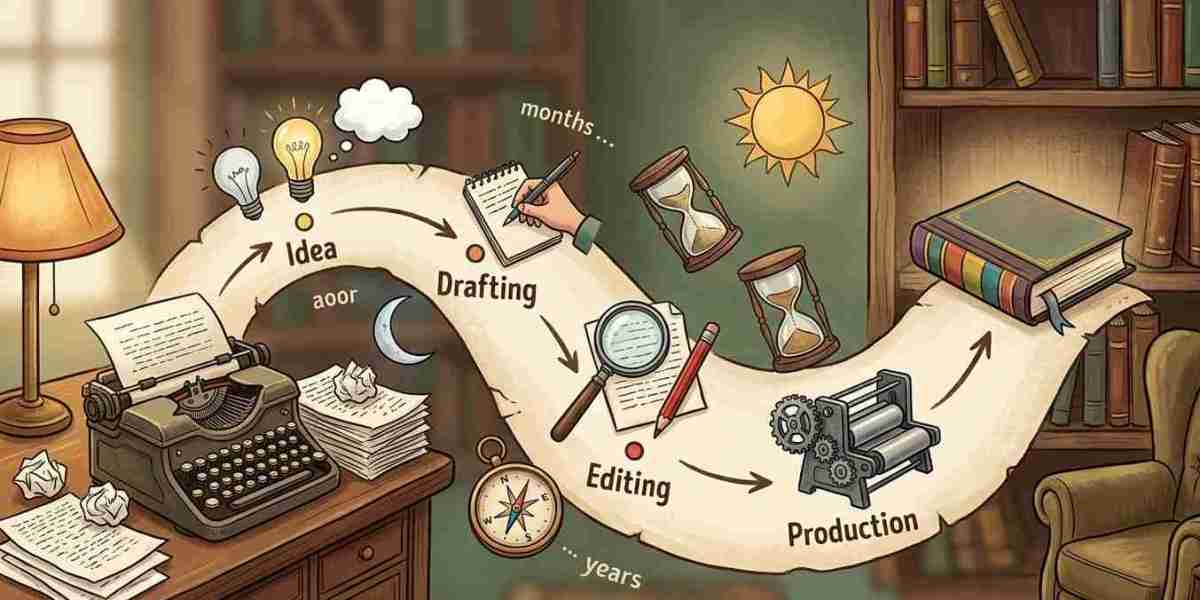

One of the most common questions first-time authors ask is, “How long does it take to publish a book?” There is no single timeline that applies to every author. The process can take weeks or months depending on the manuscript's condition, editing requirements, formatting, Book cover design, publishing format, distribution, and marketing needs.
A completed manuscript is only the starting point. Professional Book Publishing can involve several stages, from reviewing and editing the manuscript to designing the interior, preparing the cover, setting up publishing accounts, and making the book available to readers.
Working with a publishing service such as Potter Publishers can help authors understand which stages their particular book requires and how the process can be organized from manuscript to publication.
Table of Contents
- What Determines the Publishing Timeline?
- Step 1: Manuscript Preparation
- Step 2: Manuscript Review and Editing
- Step 3: Proofreading
- Step 4: Book Formatting
- Step 5: Book Cover Design
- Step 6: ISBN and Publishing Setup
- Step 7: Distribution and Publication
- Step 8: Marketing and Book Launch
- Can Authors Speed Up the Publishing Process?
- Why Rushing a Book Can Create Problems
- Conclusion
- FAQs
1. What Determines the Publishing Timeline?
The time required to publish a book depends on several factors.
Some of the biggest factors include:
- Length of the manuscript
- Condition of the manuscript
- Amount of editing required
- Number of revisions
- Type of book
- Complexity of interior formatting
- Cover design requirements
- Number of publishing formats
- ISBN and metadata preparation
- Distribution requirements
- Author approval times
- Marketing and launch planning
For example, a short novel with a clean manuscript and straightforward formatting may move through production more quickly than a heavily illustrated children's book, cookbook, workbook, or technical publication.
This means authors should think of publishing as a series of stages rather than expecting one universal timeline.
2. Step 1: Manuscript Preparation
The publishing timeline begins with the manuscript.
Before professional production starts, the author should make sure the manuscript is complete and organized. This does not mean the manuscript needs to be publication-perfect. Professional editing can identify issues that the author may not notice.
At this stage, authors should review:
- Chapter order
- Overall structure
- Character or subject development
- Repeated sections
- Missing information
- References and supporting material
- Author and book information
The more complete the manuscript is when it enters the publishing process, the easier it can be for editors and designers to work with it.
3. Step 2: Manuscript Review and Editing
Editing can be one of the most time-consuming stages of Book Publishing, particularly when a manuscript requires substantial structural changes.
Different types of editing may be appropriate depending on the book.
Developmental Editing
Developmental editing looks at the larger structure and content. For fiction, this can involve plot, pacing, characters, and story structure. For nonfiction, it may focus on organization, clarity, arguments, and overall presentation.
Copy Editing
Copy editing focuses on language, grammar, punctuation, consistency, and readability.
Line Editing
Line editing examines the writing at sentence level, helping improve clarity, flow, wording, and style.
The exact amount of editing required varies from manuscript to manuscript. A book that has already undergone several revisions may need less work than a first draft.
4. Step 3: Proofreading
After the major editing work has been completed, proofreading provides another opportunity to catch remaining errors.
A proofreader may check for:
- Spelling mistakes
- Typographical errors
- Punctuation issues
- Formatting inconsistencies
- Missing words
- Incorrect page references
- Other small errors
Proofreading usually happens relatively late in the production process because making major changes after the final proof can require additional formatting work.
Allowing enough time for this stage can help authors avoid preventable mistakes in the final book.
5. Step 4: Book Formatting
Once the manuscript is edited, the interior needs to be formatted for its intended publication format.
Print formatting may include:
- Page dimensions
- Margins
- Fonts
- Chapter headings
- Page numbers
- Headers and footers
- Front matter
- Back matter
- Images and tables
Ebook formatting has different requirements because the text needs to work across different devices and screen sizes.
A simple text-based novel may have relatively straightforward formatting. A book containing photographs, illustrations, tables, charts, or complex layouts can require considerably more design work.
6. Step 5: Book Cover Design
Book cover design is another important stage that can affect the publishing timeline.
A professional cover needs to be appropriate for the book's genre and target audience. It also needs to meet the technical requirements of the intended publishing platform.
Depending on the project, cover production can involve:
- Cover concept development
- Typography
- Image selection
- Illustration
- Front cover
- Spine
- Back cover
- Barcode placement
- Print specifications
An ebook generally requires a front cover, while a paperback or hardcover requires additional elements such as the spine and back cover.
Authors should allow time for reviewing the design and requesting reasonable revisions before the final cover is approved.
7. Step 6: ISBN and Publishing Setup
Before publication, the book needs to be prepared for its intended publishing and distribution channels.
This can include:
- ISBN preparation
- Book title
- Author information
- Book description
- Categories
- Keywords
- Pricing information
- Publisher information
- Retailer account setup
Potter Publishers states that its publishing process can include ISBN registration and retailer account setup, with accounts configured under the author's login.
The amount of time required depends on the number of formats and distribution channels involved.
8. Step 7: Distribution and Publication
Once the manuscript, interior, and cover are finalized, the book can be uploaded and prepared for distribution.
Depending on the author's publishing strategy, this may involve ebook retailers, print-on-demand platforms, bookstores, libraries, or other distribution channels.
Potter Publishers currently describes distribution support through platforms including Amazon KDP, IngramSpark, Apple Books, Kobo, Google Play Books, and Barnes & Noble Press.
Each platform can have its own technical requirements and review processes, so publication timing may vary.
Authors should also carefully review the final digital or print proof before considering the project complete.
9. Step 8: Marketing and Book Launch
Marketing does not necessarily have to wait until the book is published.
In fact, many authors begin preparing promotional materials before the official publication date.
Pre-launch activities can include:
- Finalizing the book description
- Preparing social media content
- Building an email list
- Creating promotional graphics
- Contacting potential reviewers
- Planning launch announcements
- Preparing advertising campaigns
Potter Publishers describes launch coordination and marketing services as part of its support for indie authors.
The marketing timeline can therefore overlap with the final stages of production.
How Long Can Each Publishing Stage Take?
There is no universal duration for each stage, but authors can think about the process this way:
| Publishing Stage | What Can Affect the Timeline? |
|---|---|
| Manuscript preparation | Length and completeness of manuscript |
| Editing | Word count and amount of editing required |
| Proofreading | Number of remaining corrections |
| Formatting | Book type and interior complexity |
| Book cover design | Design complexity and revision rounds |
| Publishing setup | ISBN, metadata, and retailer requirements |
| Distribution | Number of platforms and their review processes |
| Marketing | Launch strategy and promotional requirements |
These stages may overlap, and some books require more work than others.
Can Authors Speed Up the Publishing Process?
Authors can help keep the process moving by being prepared and responsive.
Provide a Complete Manuscript
Sending an organized manuscript reduces unnecessary delays.
Respond to Feedback Promptly
Editors and designers may need author decisions before moving to the next stage.
Prepare Book Information Early
Having the title, author name, description, categories, and other information ready can make publishing setup easier.
Decide on Formats Early
Knowing whether you want an ebook, paperback, hardcover, or multiple formats helps production planning.
Plan the Cover in Advance
A clear vision for your Book cover design can make the design process more efficient.
Set Realistic Deadlines
A realistic timeline allows enough room for revisions and quality checks.
11. Why Rushing a Book Can Create Problems
It can be tempting to publish as quickly as possible, especially when an author is excited to share their work.
However, rushing can increase the risk of:
- Uncorrected errors
- Poor formatting
- Cover problems
- Missing publishing information
- Incomplete revisions
- Metadata mistakes
- Insufficient launch preparation
Taking the appropriate amount of time for each stage can help create a more polished final product.
The goal should not simply be to publish quickly. The goal should be to prepare the book properly and then publish it efficiently.
How Can Potter Publishers Help With the Timeline?
First-time authors may not know which services their book needs or how the different production stages fit together.
Potter Publishers provides support across several parts of the publishing process, including editing, formatting, ISBN registration, distribution, Book Publishing, and professional Book cover design.
The company states that each project begins with a free consultation and manuscript review, followed by a written quote, allowing authors to identify the services required for their particular book.
Conclusion
So, how long does it take to publish a book from start to finish? The answer depends on the manuscript and the services required. Editing, proofreading, formatting, Book cover design, publishing setup, distribution, and marketing can all influence the overall timeline.
A straightforward project may move through the process relatively quickly, while a complex or heavily illustrated book may require significantly more time. Author feedback and revision requirements can also affect the schedule.
Understanding each stage of Book Publishing makes it easier to set realistic expectations and plan a successful launch. With professional support from Potter Publishers, authors can receive assistance with the production and publishing tasks required to turn a completed manuscript into a finished book.
Rather than focusing only on publishing as quickly as possible, focus on completing each stage carefully so your final book is properly prepared for readers.
FAQs
1. How long does it normally take to publish a book?
There is no fixed timeline. The overall process depends on editing, formatting, Book cover design, publishing setup, distribution, and the complexity of the manuscript.
2. What is usually the longest part of publishing a book?
Editing can take significant time, especially when a manuscript requires structural or extensive copy editing. Complex formatting and illustration can also extend the timeline.
3. Does Book cover design affect the publishing timeline?
Yes. The cover needs to be designed, reviewed, revised when necessary, and prepared according to the requirements of the chosen format and publishing platform.
4. Can I publish my book in a few weeks?
Some relatively simple projects may move quickly, but there is no guarantee. The timeline depends on the manuscript's condition, services required, author approvals, and publishing platforms.
5. Should I start marketing before my book is published?
Yes. Authors can prepare their marketing strategy, promotional materials, author platform, and launch activities before publication.
6. Does publishing an ebook take less time than publishing a printed book?
It can, because ebooks do not require physical printing and shipping. However, editing, cover creation, formatting, and publishing preparation are still required.
7. Can I speed up my Book Publishing timeline?
Being organized, providing a complete manuscript, responding promptly to revisions, approving designs efficiently, and deciding on formats early can help reduce unnecessary delays.
8. Can Potter Publishers help with the entire publishing process?
Potter Publishers offers support for several stages, including editing, formatting, ISBN registration, distribution, Book cover design, and other Book Publishing services.
Ready to Start Publishing Your Book?
If your manuscript is complete and you're ready to understand the next steps, professional guidance can help you plan the journey from manuscript to finished book.
Potter Publishers can support authors with Book Publishing, editing, formatting, distribution, and professional Book cover design. Get your manuscript reviewed, understand which services your book needs, and start planning your path toward publication.