
Dubai's rapid urban development has created a city where residential, commercial, leisure, and hospitality destinations increasingly exist within connected districts. This evolution is also changing how people think about Dubai real estate, as residents and investors look beyond individual buildings and consider the wider environment surrounding a property.
The Evolution of Dubai's Urban Landscape
Dubai's earlier residential development was often organized around individual towers, villa communities, or dedicated commercial areas. Over time, however, a different model has become increasingly visible.
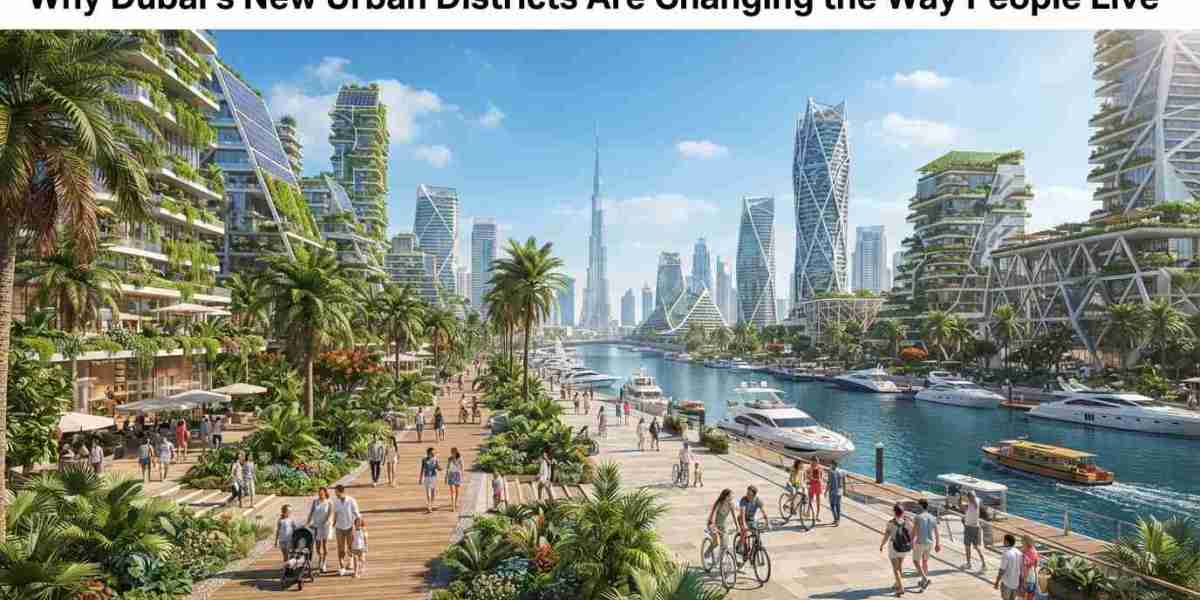
Newer districts are being designed with multiple uses in mind. Residential buildings may sit alongside restaurants, retail outlets, offices, entertainment venues, fitness facilities, landscaped spaces, and transportation connections.
This approach creates neighbourhoods where people can potentially complete more of their daily activities within the same general area.
For residents, that can translate into greater convenience. For developers, it creates opportunities to build communities around particular lifestyles rather than simply constructing residential units.
Convenience Is Becoming a Bigger Part of Residential Demand
The location of a home has always mattered, but convenience is becoming more closely connected to the overall residential experience.
A property near major roads may reduce commuting friction. A development close to restaurants and retail can make everyday errands easier. Access to parks, schools, healthcare facilities, and recreational areas can also influence how attractive a neighbourhood becomes to different groups of residents.
This means buyers increasingly need to consider what exists around a property rather than evaluating the building in isolation.
The surrounding district can influence everything from daily routines to the type of tenants interested in the property.
Mixed-Use Districts Appeal to Different Residents
One reason mixed-use developments are becoming increasingly important is their ability to accommodate different lifestyles.
A young professional might value proximity to offices, restaurants, gyms, and entertainment. A family may place greater emphasis on schools, parks, healthcare, and larger residential spaces.
Meanwhile, international residents may prioritize convenient access to major business districts, airports, public transportation, and leisure destinations.
A well-connected district can therefore attract several types of residents without depending on a single demographic.
This diversity can also create a more active environment throughout the day, rather than concentrating activity exclusively during working hours.
Residential Projects Are Becoming More Lifestyle-Focused
The changing structure of Dubai's districts is also influencing residential development itself.
Developers are increasingly incorporating lifestyle facilities directly into residential projects. Swimming pools, fitness centres, wellness areas, social lounges, landscaped spaces, children's facilities, cinemas, and outdoor areas can form part of the overall residential concept.
A good example of this broader approach is Mercer House by Ellington Properties, a residential development in Uptown Dubai that combines apartments and larger residences with a substantial collection of lifestyle and recreational facilities.
The significance of developments like this is not simply the number of amenities available. It reflects a wider shift toward designing homes around how residents want to spend their time.
The Importance of Connectivity
As Dubai continues to expand, connectivity remains one of the key factors shaping residential demand.
A neighbourhood may offer attractive homes, but its long-term appeal can also depend on how easily residents can reach other parts of the city.
Road networks, public transportation, business districts, airports, schools, shopping destinations, and entertainment areas all contribute to the practical value of a location.
Uptown Dubai, for example, forms part of the wider Jumeirah Lakes Towers area and is positioned within a major urban district with residential, commercial, and retail uses.
For people choosing a home, this wider connectivity can sometimes be just as important as the design of the apartment itself.
Technology Is Supporting More Connected Communities
Technology is another factor changing modern residential environments.
Smart access systems, digital building services, automated home controls, online maintenance requests, and community applications can simplify everyday interactions between residents, property managers, and service providers.
For property owners who live outside the UAE, digital systems can also make remote ownership and management more convenient.
Technology is therefore becoming less of an optional luxury and more of an expected part of modern residential infrastructure.
Outdoor Spaces Are Gaining Importance
The design of outdoor environments is also becoming more significant.
Landscaped walkways, waterfront promenades, gardens, swimming pools, terraces, recreational areas, and outdoor seating can provide residents with alternatives to spending all of their leisure time indoors.
This is particularly relevant in Dubai, where many residential developments compete by offering distinctive lifestyle environments.
Outdoor spaces can also influence the visual identity of an entire neighbourhood, helping developments feel less like collections of buildings and more like cohesive communities.
What This Means for Property Buyers
The changing structure of Dubai's urban districts gives buyers more factors to consider when evaluating a property.
Instead of looking only at the apartment's size, price, or appearance, prospective buyers can examine the complete environment.
Questions worth considering include:
What services are available nearby?
How easy is the commute?
What type of residents does the area attract?
Are schools and healthcare facilities accessible?
What recreational facilities are available?
How much new development is planned nearby?
Does the neighbourhood offer a balance between residential and commercial activity?
Could the area become more connected over time?
These questions can help buyers understand the practical experience of living in a particular district.
A Broader Definition of Location
Dubai's changing development model suggests that the traditional definition of location is becoming broader.
Location is no longer simply an address. It can represent connectivity, accessibility, lifestyle, amenities, employment opportunities, entertainment, and the quality of the surrounding environment.
For residents, this means the best-suited property may depend heavily on their daily habits and priorities.
For investors, understanding these factors can provide additional context when assessing the potential appeal of a property to future buyers or tenants.
The Next Stage of Dubai's Urban Growth
Dubai's real estate landscape continues to develop alongside its population, infrastructure, business activity, and international appeal.
As new districts emerge, the distinction between where people live, work, shop, exercise, and socialize is becoming less rigid.
Residential developments are increasingly being integrated into larger urban ecosystems, creating communities designed around convenience and lifestyle.
For anyone following the real estate in UAE market, this shift provides an important perspective: the future of urban development may be defined not only by individual buildings, but by how effectively entire districts support the people who live and work in them.