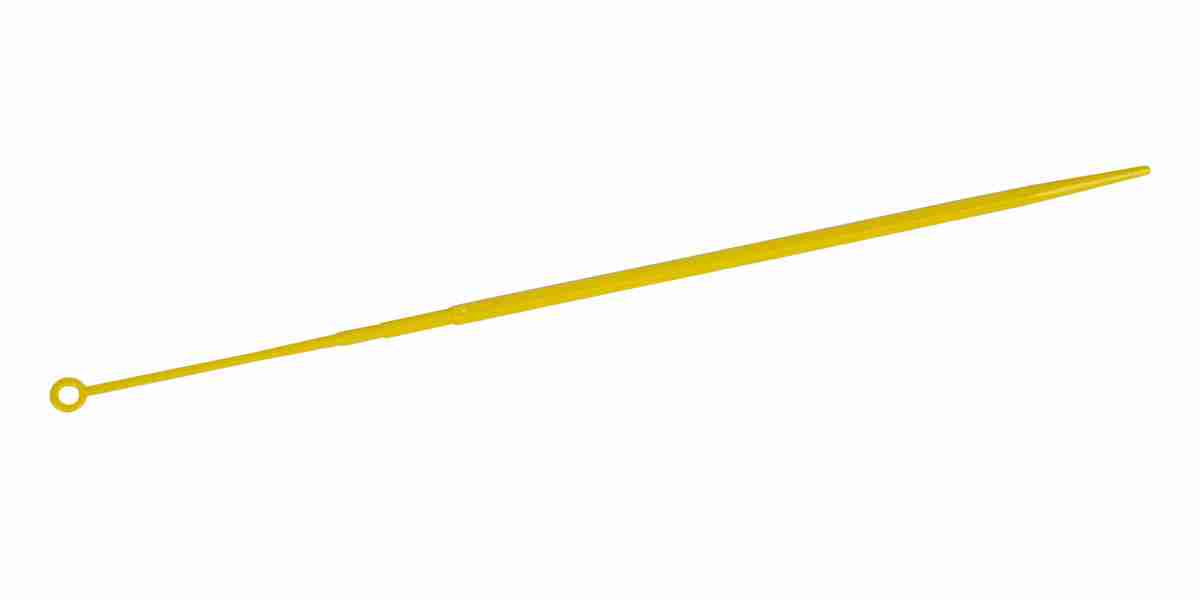

The working end of Sterile Disposable Loops is designed to collect and transfer a small quantity of microbial material. Common loop volumes include 1 µl and 10 µl, with the appropriate size depending on the laboratory method and the amount of sample required. A 1 µl loop can be used when a smaller transfer volume is needed, while a 10 µl loop provides a larger working volume.
Loop volume should therefore be considered together with the testing procedure rather than selected only by appearance. Color coding can also help operators distinguish between different configurations when several loop sizes are being used at the same workstation. For example, different colors may correspond to different loop volumes, making product identification easier during routine handling.
Material is another factor that affects how a disposable loop behaves during use. Inoculating loops may be manufactured from polymers such as medical-grade polystyrene or polypropylene. The working end needs to maintain its shape during sample transfer and streaking, while providing an appropriate degree of flexibility for the intended technique. A loop that bends too easily may be difficult to control, whereas excessive rigidity may change how it contacts the culture surface.
The handle also contributes to the overall handling experience. A defined grip allows the operator to guide the loop across an agar surface or toward a selected colony with controlled movement. Consistent handle dimensions and loop geometry can be useful when laboratories use large numbers of individual units during repeated procedures.
The single-use design is one of the main differences between disposable loops and reusable inoculation tools. After completing a transfer or streaking procedure, the loop is discarded rather than cleaned and sterilized for another sample. This removes the need for flame sterilization between individual operations and can simplify workflows involving multiple samples.
Disposable loops may be used for colony transfer, subculturing, inoculation, and streaking on agar media. The exact technique depends on the sample, culture method, and laboratory protocol. Single-use equipment does not replace appropriate aseptic practices, but it can reduce some of the preparation steps associated with reusable tools.
For sterile versions, packaging is closely connected with the intended use. Individually wrapped loops provide a barrier that helps keep each unused unit protected until opening. Selected configurations may be supplied in packs of 25 pieces and cases of 1,000 pieces. Laboratories can select the packaging quantity according to their sample volume and storage requirements.
Other product specifications may also be relevant to controlled laboratory work. Depending on the selected model, buyers may need to review sterility status, material, loop volume, dimensions, packaging, and characteristics such as DNase-free, RNase-free, or non-pyrogenic status. These details should be checked against the requirements of the specific laboratory procedure rather than treated as interchangeable across every model.
Manufacturing consistency also matters for a small consumable like this. Control of polymer material, molding dimensions, loop geometry, handle assembly, sterilization, and packaging can influence whether individual units maintain the expected configuration. When purchasing in larger quantities, laboratories can therefore compare the exact model, loop volume, color, packaging format, and sterility status to keep routine sample handling consistent.