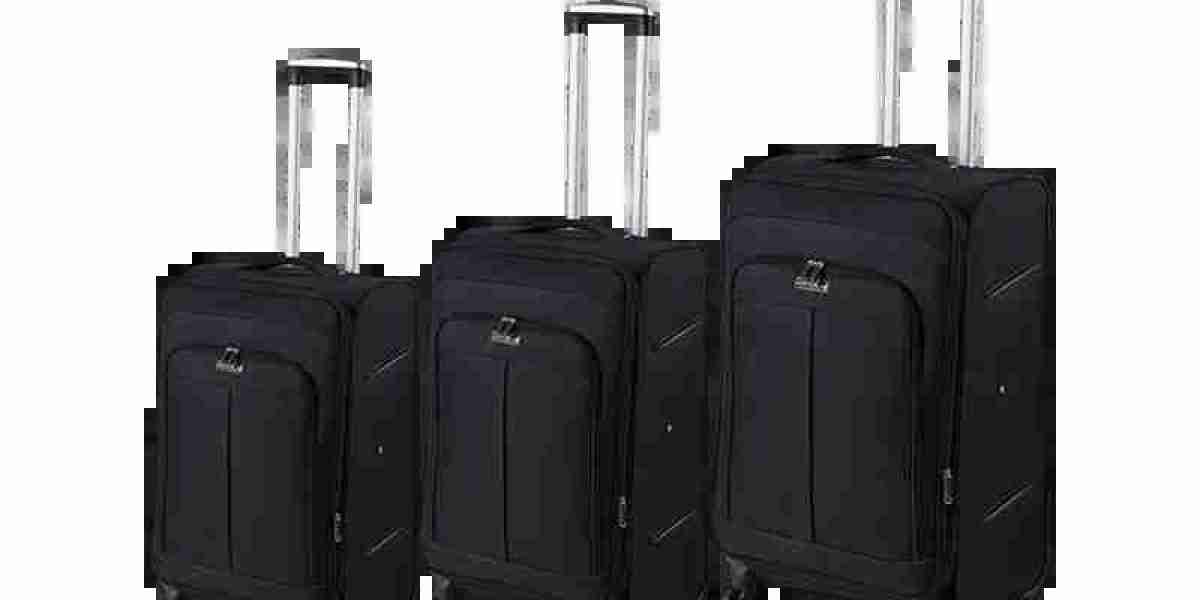

A suitcase does not always need to behave like a completely rigid shell. In some applications, a degree of flexibility can make the case easier to handle while still providing structural support. EVA Fabric Luggage uses EVA, or ethylene-vinyl acetate, together with a fabric-like outer surface to create a different balance between softness and support.
The behavior of EVA is one of the main differences from conventional hard-shell luggage. The material has a certain degree of flexibility and elasticity, allowing the case to respond to moderate pressure rather than remaining completely rigid. This can be useful when luggage is placed beside other cases, stored in a limited space, or handled during transportation.
However, flexibility does not come from the outer material alone. The final behavior of an EVA Fabric Luggage case also depends on its internal structure, lining, reinforcement, frame, hardware, wheels, and handle system. A case that is too flexible may have difficulty maintaining its shape, while excessive reinforcement can reduce some of the handling characteristics associated with EVA construction.
Surface design is another practical consideration. Fine twill textures can add visual depth without relying entirely on large printed graphics. Under different lighting conditions, the texture may produce subtle changes in appearance. This makes it possible to create different colors or surface variations while maintaining a consistent overall case design.
Weight is also closely connected with luggage construction. Travelers need to consider not only the weight of their belongings but also the empty case itself. The material is therefore one factor in the overall weight calculation, but it cannot be evaluated separately from the wheels, telescopic handle, lining, reinforcement, and other hardware.
Moisture resistance requires a similar approach. EVA can provide resistance to light surface moisture, but the complete luggage structure determines how well the interior is protected. Zippers, seams, joints, and openings can all become pathways for water. For this reason, the outer material should not be treated as the only factor when evaluating moisture performance.
For product developers, color and pattern selection can also influence how an EVA luggage collection is organized. Different sizes can share similar textures or design elements while using different colors or patterns. This creates visual consistency without requiring every model to have exactly the same appearance.
The final result is therefore shaped by the interaction between material, surface treatment, internal support, hardware, and assembly. EVA Fabric Luggage occupies a middle ground between soft textile luggage and rigid cases, with its practical characteristics determined by the complete construction rather than EVA alone.