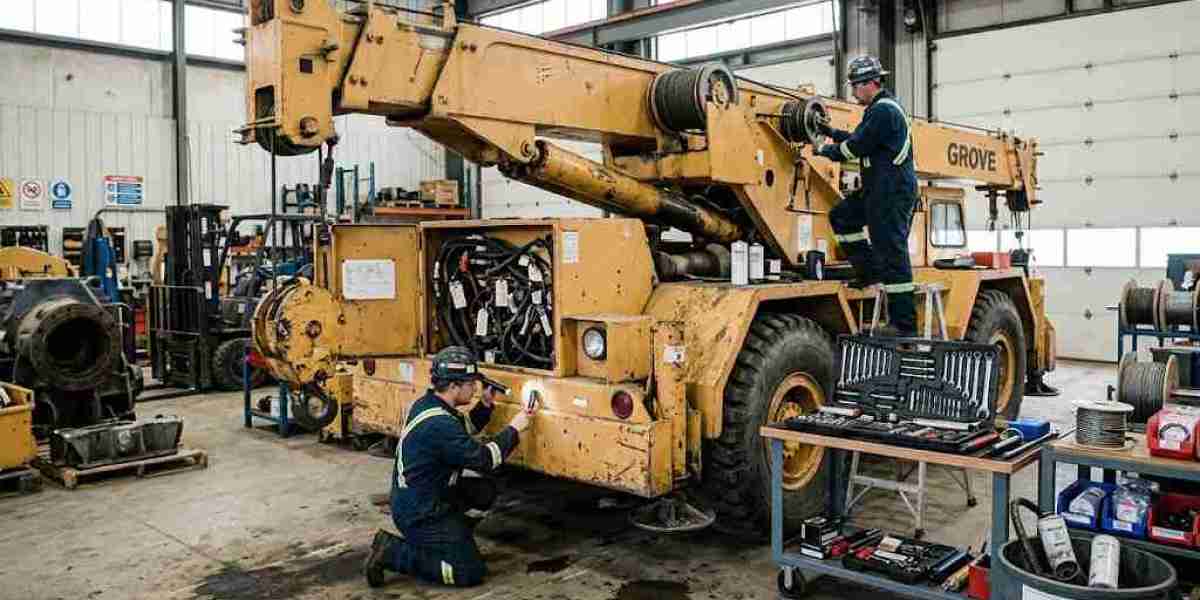

Fleet operators know the signs. Your Grove mobile crane runs every day, completes its scheduled work, and earns its keep. Yet the downtime calls are coming closer together. A seal weeps under pressure. The swing drags on cold mornings. A warning light flickers with no clear cause. The machine is telling you something. Eventually, you have to answer — with another patch, or with a real upgrade plan.
Upgrading an older crane is not a reinvention. It is a series of focused improvements aimed at the specific points where age has taken its toll. Done with care, these changes restore confidence in the machine and extend its useful window. Done carelessly, they add complexity and cost without solving the underlying issues.
Inspect Everything Before You Order Anything
Start with a hands-on walkdown of the entire machine. Examine boom sections for fatigue cracks, corrosion pitting, deformed plating, and elongated pin bores. Evaluate the swing bearing, brake assemblies, wire rope condition, sheave grooves, hook block, and all hydraulic hose runs. Look at cylinder rods for scoring and external weeping. Trace the electrical harness, battery cables, ground points, relays, and switches for signs of deterioration.
Older cranes often develop faults that feel complex but resolve easily once the cause is found. A loose ground wire can make gauges behave erratically. A moisture-laden connector can drop a sensor signal without warning. A blocked filter can starve an entire hydraulic branch of flow. Track the root cause before committing to a purchase. Document your findings and separate urgent repairs from items that can wait for a scheduled window.
Fix What Is Dangerous Before Improving What Is Comfortable
A crack in a boom section is a repair — not an upgrade opportunity. Worn brakes, fatigued load-sensing pins, damaged swing bearings, and compromised hook hardware belong in the same category. Safety-critical defects demand proper correction before you spend money on Grove parts intended for performance or comfort gains.
A clean paint job means nothing about internal condition. Structural fatigue, hidden cracking, and bore enlargement develop gradually across years of service. If any structural observation raises a question, bring in a qualified inspector for a formal assessment. Grease, cosmetics, and a single trial lift do not constitute proof that a machine is structurally fit.
Sharpen the Controls
How the crane responds to operator input shapes everything — cycle times, positioning accuracy, and mechanical stress on the structure. Older Grove models may depend on basic lever mechanisms, early joystick assemblies, or simple electronic control modules. Worn valve spools and sloppy linkage connections produce vague, imprecise movement. Operators compensate instinctively, which extends cycle times and accelerates wear across multiple subsystems.
A total control system replacement is rarely justified. Better proportional valves, refreshed joystick internals, cleaned signal wiring, and recalibrated linkages can transform the operator experience. The aim is smooth, linear, and proportional response through the full range of motion. When an operator can feather loads into position without wrestling the controls, productivity rises and component stress drops.
Restore Hydraulic Power
Hydraulic decline is one of the most pervasive issues on machines with long service histories. Worn cylinder packing, eroded pump surfaces, clogged filters, and consistently overheated oil all reduce available power. Heat deserves special mention. It destroys elastomeric seals, degrades fluid chemistry, and accelerates internal wear on every component it touches.
Replacing worn cylinders with quality crane parts can recover lifting force that has slowly diminished over years of work. Cleaner hose routing eliminates recurring abrasion points and reduces unplanned hose failures. Upgraded filtration is a small investment that pays dividends by protecting pumps, motors, and directional valves. On machines with variable displacement pumps, check pilot lines, solenoid coils, and control pressure carefully. A weak pilot signal can make a sound pump appear sluggish.
Watch the Wire Rope, Sheaves, and Hoist Assembly
Wire rope condition deserves more attention than most operators give it. A rope that looks acceptable during a walk-around may carry internal broken wires, flat-spotted sections, or corrosion beneath the outer layer. Proactive replacement on a working crane is always cheaper than managing a failure during a lift cycle.
Inspect every sheave for bearing play and groove profile distortion. Worn sheaves accelerate rope destruction dramatically. Look at the hook block, swivel, safety latch, and all fastening hardware closely. If the block shows substantial wear, sourcing dependable crane parts for a rebuild or full swap is the safer decision. Every hoist component should rotate freely and track correctly. Misalignment in one location frequently cascades into wider damage.
Layer In Modern Safety Systems
Many older cranes were built with basic overload protection and little else. Adding current-generation load moment indicators, anti-two-block protection, boom angle sensors, and crisp operator displays improves awareness in the cab considerably. This is not about technology for decoration. It delivers real, actionable information at the moment a decision must be made.
Reliable instrumentation helps the operator avoid side loading, overtravel, and unstable rigging arrangements. When selecting these systems, insist on compatible Grove parts or components engineered specifically for the machine platform. Mismatched electronics routinely generate phantom fault codes. An incompatible sensor or display can produce more downtime than it eliminates.
Tend to the Electrical System
Electrical faults accumulate quietly on aging machines. Intermittent lights, drifting gauges, unexplained alarms, and unpredictable control inputs are familiar symptoms. Start with the basics: battery state of charge, alternator output, starter draw, ground path resistance, and the relay panel. Corroded terminals and degraded wire insulation are responsible for a remarkable number of recurring faults.
Aged wiring harnesses dry out and crack with repeated thermal cycling. Connectors lose their seals and admit moisture. Switch contacts arc and pit over many duty cycles. Replacing a compromised harness segment or installing sealed connectors can end problems that have persisted for seasons. When wiring new safety devices into the system, use fused connections, clean routing paths, and proper strain relief. Haphazard splices turn a worthwhile upgrade into a recurring diagnostic burden.
Upgrade the Cab for the Person Working Inside It
An operator who is physically uncomfortable loses focus faster. Poor climate control, excessive cabin noise, reduced outward visibility, and a worn-out seat all contribute to fatigue over a long shift. On a crane handling heavy loads, that fatigue carries a real safety cost.
Practical cab upgrades deliver measurable returns. Fresh weather seals, cleaner glass, improved HVAC output, modern interior lighting, and a properly mounted seat reduce daily strain meaningfully. LED work lights are a strong investment — they consume less current while producing broader, more focused illumination. Just confirm that the electrical system can absorb the additional load without overstressing the alternator or battery.
Protect the Boom and Underlying Structure
Grove structural designs are typically solid, but accumulated hours produce fatigue regardless of initial quality. If the boom carries evidence of past welding repair, verify those repairs followed correct procedures with approved materials and qualified welders. Welds in high-stress zones require certified consumables and post-weld inspection. Pin bores, weld toes, bolted interfaces, and wear pads should be reviewed on a defined schedule.
Grease points that are hard to access can be fitted with remote fittings or automatic lubrication systems. This work lacks glamour, but it directly protects moving surfaces from rapid deterioration. Pins and bushings that run dry degrade quickly under load. A disciplined lubrication schedule prevents avoidable structural damage and reduces future labor costs.
Source Replacement Parts With Disciplined Judgment
The supply landscape for Grove parts covers current-production machines and models built decades ago. Quality, fitment accuracy, and material consistency vary widely across vendors. For any component that carries rated load, rely on established suppliers with traceable quality records. Request material certifications where the application demands it. Cross-reference every part number against the machine's serial number and factory build documentation.
Older models frequently carry superseded numbers that have shifted in current catalogs. A reference number from a vintage manual may not correspond to what the crane actually requires. Generic crane parts can fill non-critical positions effectively, but "close enough" has no place on load-bearing items. Measure, compare, and confirm every specification before authorizing an order.
Match Modifications to the Actual Crane
A blanket upgrade plan does not exist for every machine. A Grove rough terrain model may need different work than an older all-terrain unit from the same manufacturer. Boom length, capacity class, counterweight layout, tire sizing, and emissions configuration all shape which modifications are appropriate and safe.
Replacing a hydraulic pump demands careful matching of flow, pressure, and control signal parameters. Updating electronic modules may require calibration sequences or model-specific software. If a modification affects the crane's rated capacity in any way, secure an engineering review before proceeding. A crane is only as strong as the weakest component in its load chain.
Create Records and Validate Under Load
After upgrades are complete, assemble a thorough file. Retain invoices, part numbers, installation notes, inspection reports, and every test result. Quality crane parts paired with rigorous documentation make future troubleshooting faster and more accurate. Complete records also support resale — buyers look for evidence of deliberate, sustained maintenance.
Testing should never be rushed. Begin with no-load function checks across all motions. Listen for unexpected noise, watch for leaks, track response times, and note operating temperatures. Validate all safety limit devices under controlled conditions. If capacity-related components changed, verify against published load charts before resuming full-duty operation. Then let the operator run the machine in normal service. Small issues surface quickly under real working conditions.
Recognize When Further Upgrading Stops Making Sense
An older Grove crane can remain a productive, reliable asset for many years with disciplined maintenance and well-chosen improvements. Every upgrade should address a specific weakness, enhance dependability, or protect the people around the machine. Begin with a genuine inspection. Prioritize structural integrity, hydraulic function, and safety systems. Choose quality Grove parts that match the crane's exact specifications. Document everything. Test methodically before returning to service.
Eventually, the economics tip. If breakdowns multiply and each round of upgrades delivers diminishing returns, replacement is the more rational path. The purpose is not to rescue an old machine from retirement out of sentiment. It is to keep it functioning safely, predictably, and affordably — for as long as the numbers continue to work.