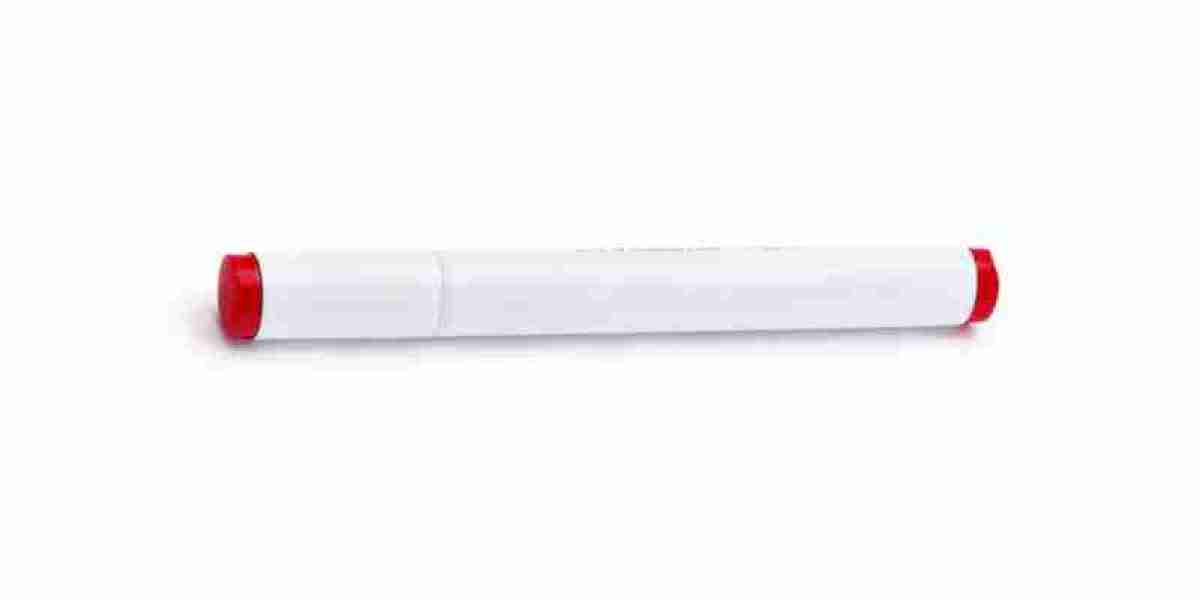

A conventional highlighter is mainly designed to make selected text easy to notice, so brightness and transparency are usually more important than long-term durability. A Permanent Highlighter Marker approaches the same task differently by combining fluorescent visibility with an ink system designed to leave a more durable mark.
The ink formulation is one of the most important differences. Fluorescent colorants are selected for their ability to produce bright, noticeable marks, but some fluorescent colors can be more sensitive to light exposure than conventional marker colors. When a permanent effect is also required, the formulation needs to balance color intensity with resistance to fading. The carrier system also influences drying speed, adhesion, and the way the color remains on the writing surface.
Solvent-based ink can provide characteristics that are difficult to achieve with a typical water-based highlighter. After application, the solvent evaporates and leaves the colorant on the surface. Depending on the formulation, this can improve resistance to smudging and allow the marker to work on a wider range of materials. The relationship between solvent, colorant, and surface therefore becomes important when the marker is intended for uses beyond ordinary paper highlighting.
Surface compatibility can expand the practical role of the pen. Paper remains an obvious application, but some permanent marker formulations can also be used on materials such as plastic, glass, or metal. A fluorescent mark can be useful when an item needs to remain highly visible, such as during labeling, sorting, equipment identification, or temporary visual organization.
The nib also has a direct effect on the finished mark. Chisel tips can produce both broad highlighting strokes and narrower lines depending on how the tip is positioned, while bullet tips provide a more consistent line width. Nib material and fiber density influence ink absorption and release. If the ink flows too quickly, the stroke may become overly saturated; if the flow is too restricted, the color may appear uneven.
Ink and nib development therefore need to be considered together. Changing the viscosity or solvent characteristics of an ink can alter how quickly it travels through the nib and how much is deposited onto the surface. Small differences in these properties can become noticeable when a large number of pens are produced, particularly when consistent fluorescent color is expected across the same batch.
The barrel and cap are also part of everyday usability. A secure cap helps limit evaporation when the marker is not in use, while the barrel needs to accommodate the reservoir and nib assembly without making the pen difficult to handle. For a Permanent Highlighter Marker, these relatively small design details work together with the ink chemistry to determine how the writing tool behaves from the first stroke through repeated use.
A Permanent Highlighter Marker is therefore not simply a brighter version of a permanent marker or a stronger version of a conventional highlighter. Its design depends on balancing fluorescent visibility, ink adhesion, drying behavior, surface compatibility, and controlled ink delivery. These factors determine whether the final mark remains bright, legible, and consistent across different writing situations.