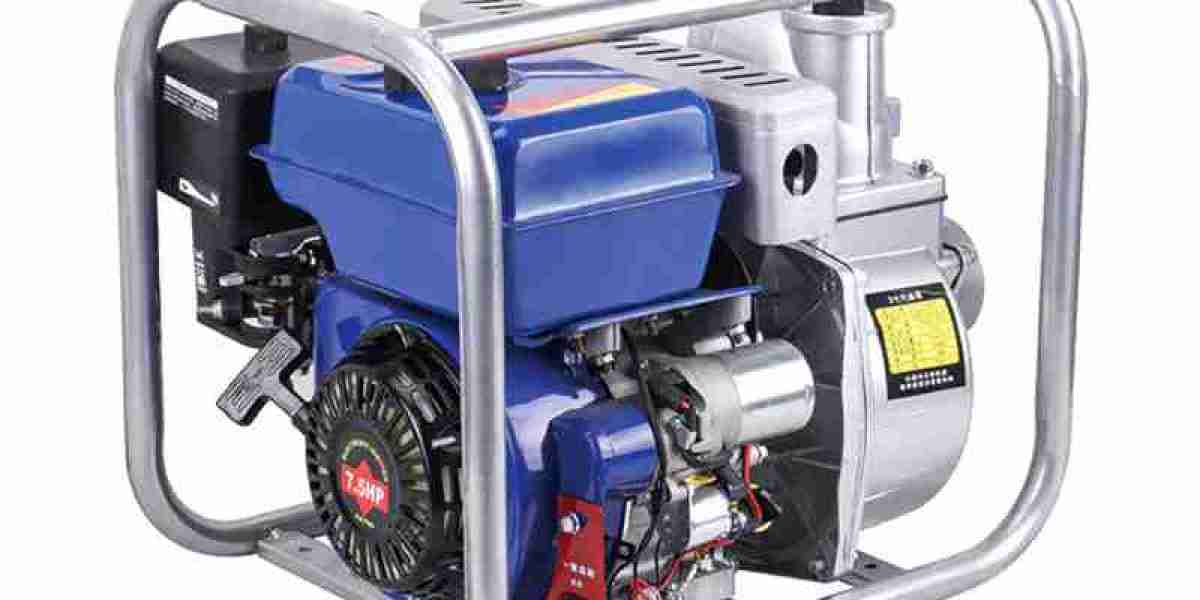

The operating process of a Gasoline Engine Water Pump often begins before the engine starts moving water. Because these pumps are generally positioned outside the water source, the suction line and pump casing need to contain enough water for the pumping process to begin. A self-priming design can simplify this process by using the pump casing and internal flow path to remove trapped air and establish water flow.
Priming performance depends on more than the name of the pump. Casing volume, impeller design, suction-line length, and the vertical distance between the pump and water source can all influence how quickly the system establishes stable flow. A pump working beside a shallow irrigation ditch may experience different conditions from one drawing water several meters below the pump position. For this reason, buyers should consider the intended suction conditions alongside the published flow rate.
The connection between the gasoline engine and pump assembly creates another area worth examining. Unlike an electric pump with an integrated motor, a gasoline-powered configuration transfers mechanical rotation from the engine through a drive shaft. Engine vibration and shaft alignment can therefore influence the mechanical seal that separates the water side from the engine-side components. Consistent mounting and accurate alignment help reduce unnecessary movement at the seal during repeated operation.
Seal requirements can become more noticeable on configurations using multiple impellers or stages. Additional hydraulic stages can change the loads acting on the shaft, so the relationship between shaft support, coupling alignment, and seal construction becomes increasingly important. This is one reason why looking only at engine displacement or maximum flow does not provide a complete picture of pump durability under continuous field conditions.
Fuel capacity is another practical specification for mobile pumping equipment. Irrigation and drainage work may continue for several hours, sometimes in locations where refueling is inconvenient. A larger fuel tank can extend operating time between refills, but it also adds weight to equipment that may need to be transported manually or moved around a field. The useful tank size therefore depends on the expected working period and how frequently the pump needs to be relocated.
For buyers comparing a Gasoline Engine Water Pump, priming behavior, suction conditions, shaft alignment, mechanical seal construction, fuel capacity, and engine output are best considered as a connected system. These factors can have a direct effect on startup, operating stability, maintenance requirements, and practical use in irrigation or drainage applications.