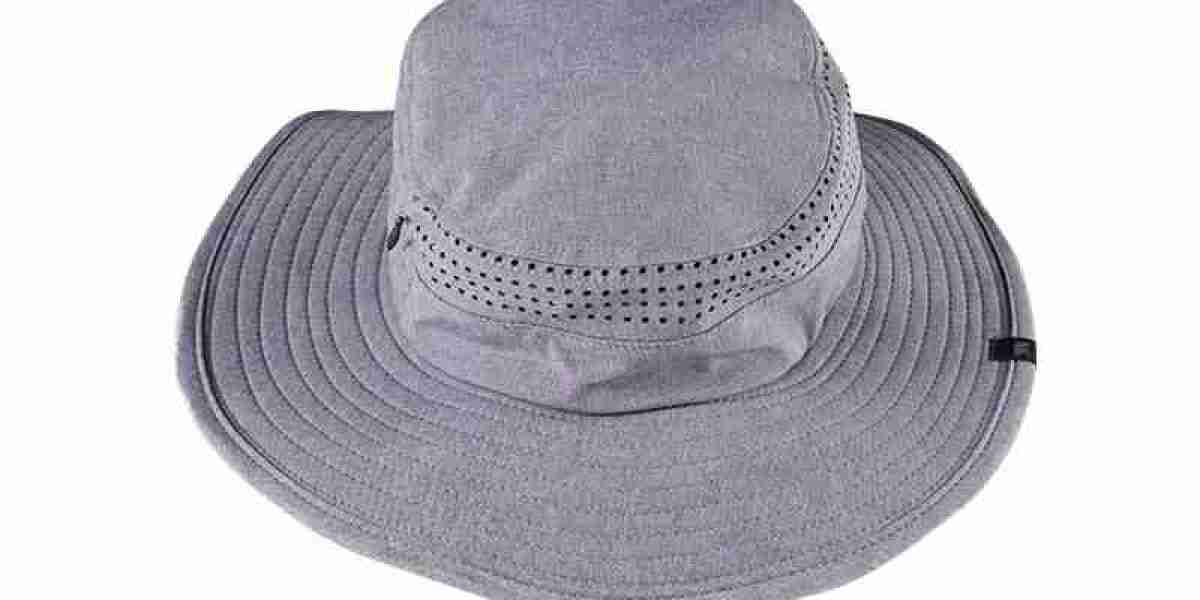

The structure of a Woven Straw Bucket Hat begins with the braid rather than a separate interlining. Fabric bucket hats often depend on an internal layer to help the crown and brim retain their shape. Woven straw can provide a certain level of rigidity naturally because the fibers are tightly arranged and interlaced. The density and tension of that weave therefore influence how the brim holds its curve and how firmly the crown sits around the head.
The term “straw” also covers several different materials. Paper straw can create a relatively fine and uniform braid, while raffia and natural palm fibers tend to show more visible texture and variation. Toyo straw is another option used for woven headwear when a more consistent surface is needed. These materials can differ in flexibility, surface appearance, moisture response, and recovery after being packed. As a result, the material listed on a product specification sheet can be just as important as the overall design.
Braid consistency becomes particularly noticeable when production moves beyond the initial sample. On a rigid woven surface, changes in braid tension or spacing can remain visible because there is no soft fabric layer to conceal minor differences. If one section is woven more loosely than another, the variation may affect both appearance and local flexibility. For bulk orders, checking the density and regularity of the weave across multiple finished pieces can therefore provide more useful information than inspecting a single sample.
The basic woven structure can still accommodate different design details. Crown height, brim width, contrast underbrims, grosgrain bands, and drawstrings can be adjusted without necessarily changing the underlying braid. This allows the same general woven construction to appear in different seasonal styles while maintaining a familiar production method. However, changes in brim dimensions can still influence how the hat balances on the head, so decorative modifications should be considered alongside the pattern.
The wearing environment also affects material selection. A Woven Straw Bucket Hat is commonly associated with beaches, travel, outdoor events, gardening, and other warm-weather activities where airflow and low weight are useful. The open structure of many straw weaves allows more ventilation than densely constructed wool or fleece headwear, making this category more closely connected with summer and warm-climate use.
For buyers comparing samples, useful points include the type of straw, braid density, brim width, crown depth, trim construction, and the way the finished hat responds to folding or packing. These details help distinguish a woven hat that merely looks similar in a photograph from one whose construction is suited to the intended use and handling conditions.