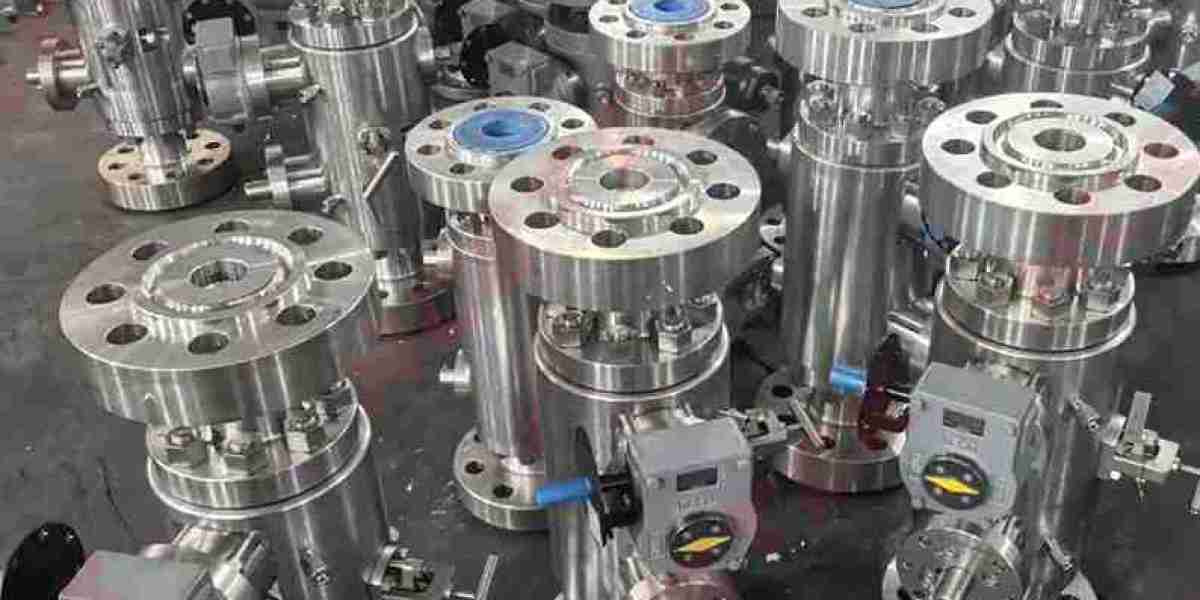

Industrial valves play an important role in transporting, isolating, and managing fluids across modern infrastructure. They are used in oil and gas pipelines, chemical processing plants, power stations, water treatment systems, district heating networks, and many other industrial environments. Although a ball valve may appear mechanically simple, its reliability depends on a combination of material selection, structural design, machining accuracy, sealing performance, assembly control, and inspection. For companies evaluating a Ball Valve Factory, understanding the complete manufacturing process is essential when selecting equipment for a particular pipeline application.
The production of industrial ball valves begins with engineering analysis. Manufacturers must understand the operating medium, pressure, temperature, flow direction, operating frequency, connection requirements, and installation environment. A valve intended for clean water service may have different material and sealing requirements from one used for corrosive chemicals, high-temperature gas, cryogenic media, or abrasive process fluids. Engineering teams therefore need to select a suitable valve structure before production begins.
Floating ball valves and trunnion mounted ball valves are two common structural categories. In a floating design, the ball can move slightly under line pressure and press against the downstream seat. This arrangement is relatively compact and may be suitable for many general industrial systems. In a trunnion mounted design, the ball is supported by fixed upper and lower points. This reduces the load transmitted to the stem and can help control operating torque in larger or more demanding applications.
Material selection is another major part of valve manufacturing. Carbon steel is commonly used for general industrial service because it provides a practical balance of strength and availability. Stainless steel may be considered where corrosion resistance is important. Alloy steel and other specialized materials can be selected for applications involving elevated temperatures, mechanical stress, or specific chemical conditions. The body material must be evaluated together with the ball, stem, seats, fasteners, and other internal components.
Industrial valve bodies may be produced through casting or forging. Casting allows manufacturers to create complex body shapes and internal passages. The process requires control of mold design, molten metal quality, pouring conditions, cooling, and inspection. Forging shapes heated metal through controlled mechanical force and may provide a dense material structure suitable for demanding applications. Both methods require subsequent machining, testing, and quality control.
Precision machining determines the accuracy of important functional surfaces. The body cavity, ball, stem connection, seat pockets, trunnions, and pipeline ends must be produced according to the design requirements. The ball must have a smooth and consistent surface so that it can rotate correctly and maintain contact with the seats. Machining errors may increase torque, create uneven wear, or contribute to leakage.
Sealing technology must be matched to the operating environment. Soft seats may be suitable for many conventional applications when their temperature and chemical limits are respected. Metal seated structures may be considered for high-temperature, abrasive, or solid-containing media. Stem packing and other external seals must also be compatible with the medium and surrounding conditions. A reliable sealing system depends on material compatibility, surface quality, assembly accuracy, and correct operating conditions.
Welding may be used in the manufacture of fully welded ball valves or in the fabrication of related components. Welding quality depends on joint preparation, welding procedures, heat input, material control, and inspection. Non-destructive testing may be used to identify potential defects without damaging the component. The inspection scope should reflect the valve’s intended service and the requirements of the project.
Assembly is performed after the main components have been machined and inspected. Cleanliness is important because foreign particles can damage the ball or seats. The body, ball, stem, seats, bearings, and fasteners must be aligned correctly. Uneven tightening can create stress or distortion, while excessive packing compression may increase operating torque. Controlled assembly procedures help reduce these risks.
Testing is used to verify pressure containment, shutoff performance, and operating function. Body pressure testing examines the integrity of the pressure boundary. Seat testing evaluates whether the valve can isolate the pipeline as required. Functional testing confirms that the ball can complete its intended movement and that the operating mechanism responds correctly. Additional inspections may include dimensional checks, material verification, visual examination, hardness testing, and non-destructive examination.
Quality documentation supports traceability throughout the manufacturing process. Material certificates, heat treatment records, machining reports, inspection results, and pressure test records can help users understand the production history of a valve. Such documentation is particularly valuable for critical pipelines, large industrial projects, and equipment installed in difficult-to-access locations.
A professional valve manufacturer must also consider installation and maintenance. Pipeline alignment, support conditions, cleaning procedures, actuator selection, and access requirements can influence valve performance after delivery. A valve that is suitable in design may still experience problems if it is installed under excessive external stress or operated outside its specified limits.
For industrial buyers, selecting a Ball Valve Factory involves reviewing engineering capability, manufacturing methods, material options, inspection procedures, documentation, and technical support. The most suitable supplier is one that can match the valve structure to the actual service environment and communicate the design limitations clearly. Industrial users can review relevant product categories and valve solutions through https://www.ncevalve.com/product/ when planning pipeline and process control systems.