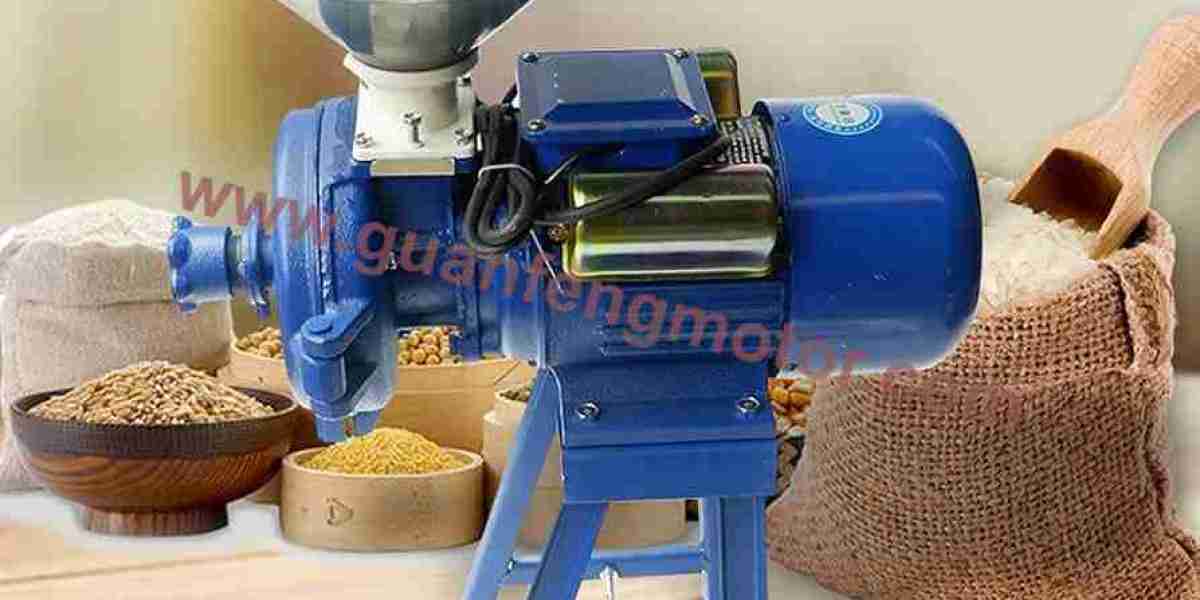

Choosing equipment for household grain preparation begins with understanding the materials that need to be processed. Wheat, rice, corn, barley, millet, oats, and other cereals can differ in hardness, moisture, structure, and intended use, so the grinding method needs to match the material and desired result. A suitable Domestic Grain Grinder can turn whole grains into flour, meal, or other particle sizes for cooking and food preparation, while guanfengmotor offers a range of grinding equipment that provides a useful reference for buyers considering different household grain applications. So, which grains can actually be processed?
Wheat and Rice
Wheat is one of the most familiar materials associated with household flour preparation. Whole wheat kernels can be reduced into flour for bread, noodles, pastries, and other recipes, while the desired particle size may vary according to the final food product. A grinding system therefore needs to provide a suitable interaction between the grain and grinding components rather than simply reducing everything to the same texture.
Rice represents another common material. Rice flour is used in a wide variety of cooking and baking applications, including rice cakes, noodles, desserts, and specialty recipes. Compared with wheat, rice has different physical characteristics, which means the grinding process needs to be considered according to the condition of the grain and the intended output.
Guanfeng's published product information specifically lists wheat and rice among the grains that its grinding machines can process. Its product range includes several configurations using different grinding heads and discs, allowing buyers to compare equipment according to their application requirements.
Corn, Barley, and Millet
Corn is another widely processed grain. Depending on the intended use, it can be reduced into a coarse meal or a finer powder. Cornmeal can be used in cooking and baking, while finely processed corn material can become an ingredient in other food preparations. The appropriate result depends on the recipe, grain condition, and grinding setup.
Barley also has several potential uses. It can be processed for flour blends, cereal preparations, and other food applications. Because barley has its own grain structure, the grinding process should be selected with attention to the required particle condition instead of relying solely on the appearance of the raw material.
Millet is often associated with cereal foods and mixed-grain recipes. When processed into flour or powder, it can become part of a broader range of household food products. Guanfeng's published product information identifies corn, barley, and millet among the grain materials suitable for its grinding equipment.
The ability to handle several grain categories can be useful for households that prepare different recipes throughout the year. Instead of selecting equipment around only one ingredient, buyers can consider whether the machine fits the wider range of materials they expect to use.
Oats and Other Cereals
Oats are another material that may be processed into meal or flour for household food preparation. Oat particles can be incorporated into breakfast foods, baked products, mixed-grain recipes, and other preparations. The desired texture may change depending on whether the user wants a coarse cereal base or a finer ingredient.
Other cereals and dry grain materials can also be considered, although suitability should always be checked against the equipment specifications and the manufacturer's recommendations. Grain condition matters because moisture, hardness, particle size, and cleanliness can influence how material enters and moves through a grinding chamber.
Guanfeng's agricultural application information also discusses grain and coarse-grain processing, including oats, buckwheat, and quinoa, and describes their use in mixed-grain flour and instant powder applications. This shows how grain grinding can extend beyond conventional wheat flour and become part of a wider food preparation process.
Matching the Grain With the Desired Output
Knowing that a machine can process a particular grain is only one part of equipment selection. The intended output also deserves attention. Some users may want a fine powder for baking, while others may prefer a coarser texture for porridge, cereal mixtures, animal feed, or other preparations.
The grinding components have an important relationship with this result. Guanfeng's product portfolio includes steel heads, aluminum heads, stainless steel grinding heads, replaceable grinding discs, and other configurations. Different structural options can provide different approaches to material processing, so buyers can discuss their actual grain types and desired output before selecting a model.
The condition of the incoming grain can also influence the process. Grain that contains excessive moisture may behave differently from dry material, while unusually hard or oversized particles may place different demands on the grinding system. Preparation before grinding can therefore become part of the overall workflow.
A practical approach is to describe the complete application to the supplier. Instead of simply asking whether a machine can grind wheat or corn, a buyer can explain the grain variety, approximate condition, expected particle size, working frequency, and intended food application. Such information gives the supplier a clearer basis for discussing the equipment.
Household Use and Small Food Preparation
Household grain processing does not always mean preparing large quantities. Some users may grind grain for fresh flour, while others may process ingredients occasionally for specific recipes. Small food businesses, bakeries, farms, and local food preparation spaces may have similar requirements, although their operating frequency can be different.
Guanfeng's published product information describes its grain grinding machines as suitable for households, bakeries, commercial food processing businesses, and small-scale production. This range of applications means that buyers can evaluate the machine according to their actual workload rather than assuming that grain grinding equipment belongs to only one type of user.
For household settings, cleaning and handling are also important. Grain residue can remain around the hopper, grinding components, or other contact areas after use. GuanFeng's product information notes that removable grinding components and detachable parts can support routine cleaning and maintenance. This can be useful for users who process different grains and want to manage material changes between batches.
Considering the Motor and Grinding Structure
The motor provides the mechanical force needed to move the grinding components, while the grinding head and disc interact directly with the grain. These elements work together, so evaluating only one specification may not provide a complete picture of how equipment will perform in a particular application.
Guanfeng's product portfolio extends beyond grain grinding machines and includes single-phase asynchronous motors, three-phase asynchronous motors, and several related motor series. This product structure reflects the company's wider involvement in electromechanical equipment rather than focusing exclusively on a single food processing category.
For buyers, this can make the initial discussion more specific. They can explain the intended grain, operating environment, available electrical conditions, desired output, and expected working pattern. The supplier can then assess which machine configuration is appropriate for the application.
Cleaning and Long-Term Use
Grinding equipment comes into direct contact with food materials, so cleaning should be included in the selection process. Different grains can leave different levels of dust or residue, particularly when several materials are processed during the same working period.
Removable components can make routine cleaning easier because operators can access areas that would otherwise be difficult to reach. Regular inspection of grinding discs and related components can also help identify wear before it affects the processing routine.
Maintenance requirements may vary according to how frequently the machine operates and what materials pass through it. A household user who processes grain occasionally will have a different operating pattern from a bakery or small food producer that uses the equipment repeatedly.
This is why the intended application should be communicated before purchase. The machine is not simply being selected for a grain name. It is being selected for a combination of grain type, material condition, output requirement, operating frequency, available space, power supply, and cleaning practice.
For buyers researching household and small-scale grain processing equipment, Guanfeng provides a product range that connects grinding machinery with electric motor technology and food processing applications. The company's published product information identifies wheat, rice, corn, barley, and millet among compatible grain materials, while its wider application pages discuss agriculture and food processing uses.
When planning a household flour or cereal preparation setup, buyers can compare the grain types they regularly handle with the grinding structure, desired fineness, cleaning requirements, and operating conditions of each machine. The available equipment can be reviewed through https://www.guanfengmotor.com/, while the Domestic Grain Grinder concept can be considered according to the actual materials and food preparation tasks that need to be handled.